
 July 8, 2026
American horse sport faces its most consequential inflection point since the post-war expansion—not because of any single crisis, but because the economic ecosystem that sustains the industry has outgrown the governance structures designed to manage it. Understanding that mismatch requires understanding how the industry’s economics actually work, not just how they appear from the show ring. This four-part series aims to do precisely that.
Every institution inherits a history. Every generation inherits a responsibility.
Every industry reaches an inflection point.
These moments are rarely obvious in real time. They are often recognized only in hindsight, when historians can point to a leadership transition, a technological breakthrough, an economic disruption, or a cultural shift and say, “That was the moment everything changed.”
American horse sport now stands at one of those moments.
The retirement of a long-serving Chief Executive Officer Bill Moroney at the United States Equestrian Federation (USEF) is, on its face, a routine governance event. Organizations change leaders. Boards conduct searches. Executives retire. New visions emerge.
But viewed through the lens of history, leadership transitions are something much larger.
They are moments when institutions have the opportunity to ask themselves fundamental questions.
What are we trying to accomplish?
What does success look like?
Who do we serve?
And perhaps most importantly, are the structures we inherited still the structures we need?
Those questions extend far beyond any one organization. They belong to every rider who has spent weekends at local horse shows. Every trainer who has built a business around the sport. Every breeder who has invested decades into bloodlines. Every veterinarian, farrier, braider, photographer, ring crew member, secretary, sponsor, media outlet, hotel owner, restaurant manager, truck driver, and volunteer whose livelihood is connected—directly or indirectly—to American horse shows.
Because horse shows are not simply competitions.
They are institutions, marketplaces, cultural traditions, and economic ecosystems—all at once.
And like every institution that has survived for more than a century, they are products of thousands of decisions made by generations of people who rarely imagined the long-term consequences of their choices.
Today’s debates—participation, affordability, governance, technology, data ownership, horse welfare, media rights, and the relationship between grassroots and elite sport—did not suddenly emerge.
They are the latest chapter in a story that began long before any of us entered the show ring. To understand where American horse sport should go next, we must first understand where it came from.
History is not simply a record of events. It is a record of incentives.
It explains why institutions were created, how they evolved, what problems they solved, and what new challenges they unintentionally created. That’s important. Because before we debate the future of American horse shows, we should first understand the remarkable history that built them.
The horse that built America
Before horse shows, there were horses—not as luxuries, but as infrastructure.
Before railroads connected the continent, before automobiles transformed transportation, before airplanes made distance almost irrelevant, horses powered the American economy.
They plowed fields that fed growing communities.
They carried soldiers into battle.
They delivered mail across expanding frontiers.
They hauled freight through cities.
They transported families to church on Sunday and children to school during the week.
In the 19th century, the horse was not merely part of daily life. It was indispensable. Because horses were essential, breeding them became essential. Training them became essential. Evaluating them became essential. And eventually, celebrating them became essential.
The earliest American horse exhibitions were therefore not sporting events in the modern sense.
They were agricultural demonstrations.
Throughout the mid-1800s, county and state fairs emerged across the country as annual gatherings where farmers exchanged ideas, showcased livestock, evaluated breeding programs, and introduced innovations in agriculture. Horses stood alongside cattle, sheep, and other livestock—not because they were entertainment, but because they represented productivity, reliability, and economic value.
A draft horse capable of working long hours in difficult conditions could determine the success of an entire farm. A well-bred carriage horse represented prestige and prosperity. A dependable saddle horse could be the difference between isolation and opportunity. Early judging reflected those priorities.
Strength, conformation, temperament, and utility—each mattered.
Competition existed, but commerce remained the primary objective. As America industrialized during the second half of the 19th century, something unexpected began to happen. The horse gradually acquired a second identity. It remained a working partner. But it also became a symbol of recreation, refinement, and sport.
Nowhere was this transition more evident than in the growing cities of the Northeast. Families with the financial means to pursue leisure embraced horseback riding as a social activity. Fox hunting expanded. Private hunt clubs developed. Carriage driving became fashionable. Horsemanship increasingly reflected not only necessity, but culture.
Horse shows evolved alongside these changing social dynamics.
Instead of solely evaluating breeding stock, competitions increasingly rewarded the quality of riding, presentation, partnership, and athletic performance. The horse was beginning its transformation from working animal to athlete. The rider was beginning the same transformation.
One event captured this transition better than any other.
In 1883, New York hosted the inaugural National Horse Show at Madison Square Garden. For perhaps the first time, equestrian competition occupied the same cultural stage as America’s premier sporting and entertainment events. The significance extended beyond sport.
The National Horse Show demonstrated that equestrian competition could attract public attention, corporate patronage, media coverage, and civic prestige. Horse shows were no longer simply regional agricultural gatherings. They had become cultural events. Other competitions soon followed.
The Devon Horse Show, established in 1896, combined competitive excellence with community tradition, creating a model that would endure for generations. Across the country, regional horse shows reflected local riding cultures while contributing to an increasingly interconnected national identity.
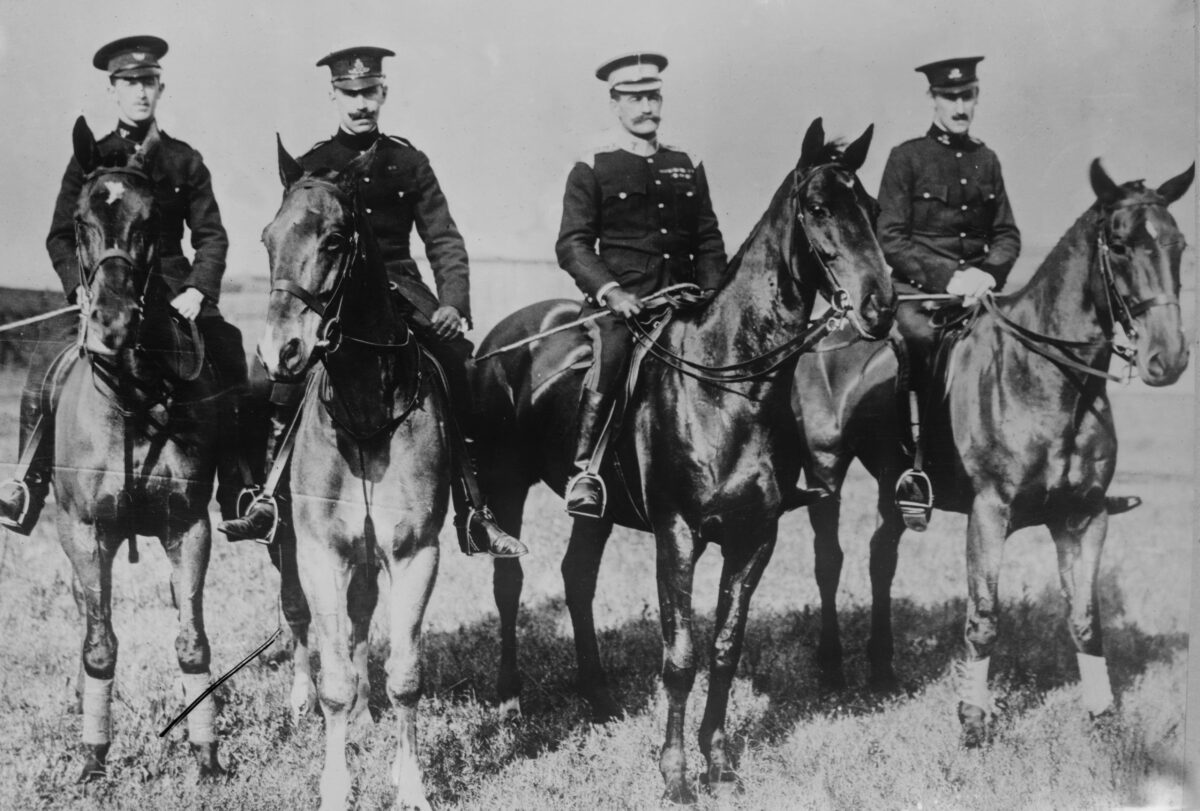
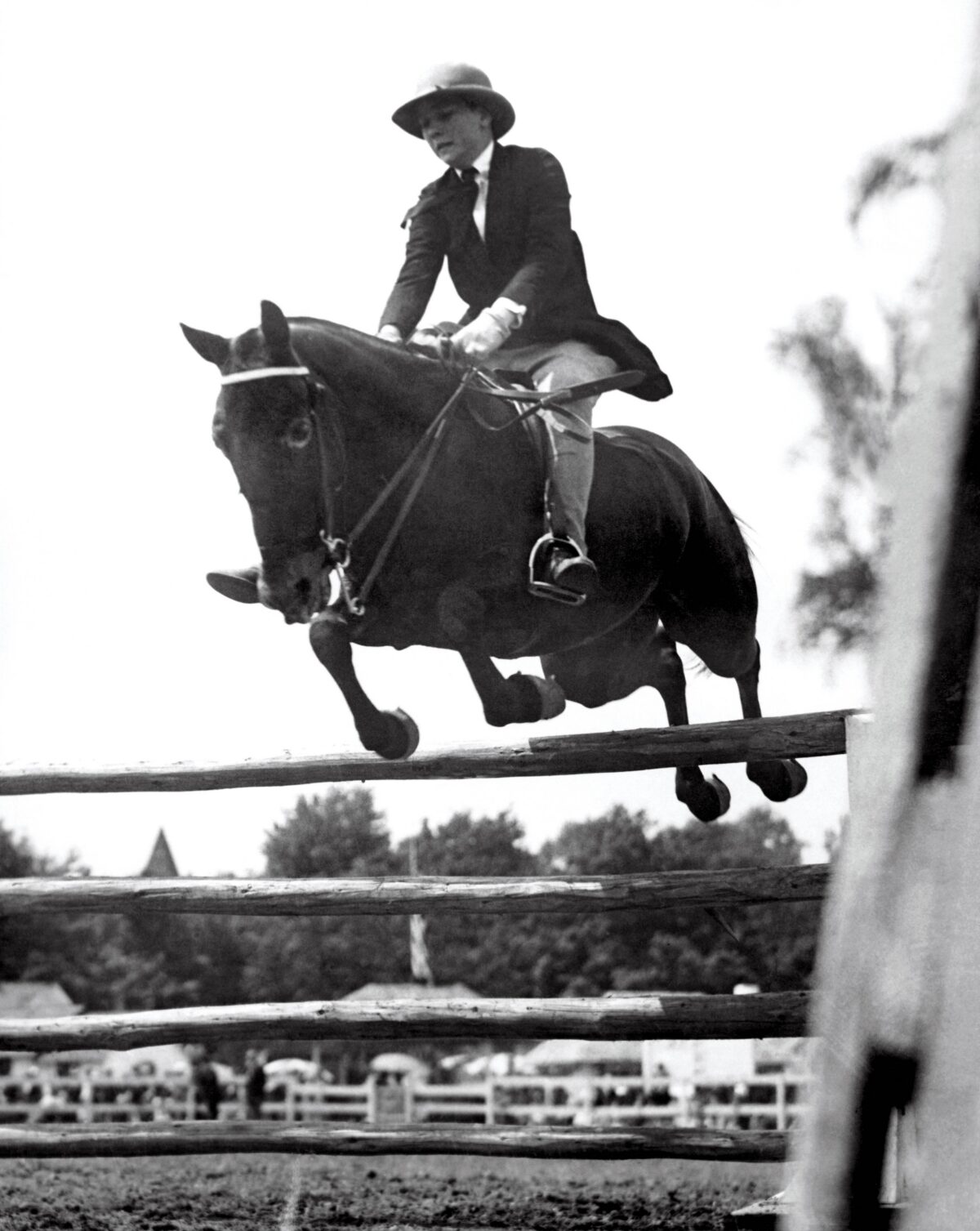
Meanwhile, another institution quietly shaped American horsemanship: The United States military.
Throughout the late 19th and early 20th centuries, cavalry officers refined riding techniques emphasizing balance, effectiveness, discipline, and partnership between horse and rider. Many of these principles migrated directly into civilian instruction.
Military influence helped standardize horsemanship at a time when riding styles varied widely by region. In many respects, modern equitation owes as much to cavalry training manuals as it does to sporting tradition.
As these influences converged, horse shows became more organized.
Rules became more consistent. Judging standards became increasingly uniform. Organizations emerged to coordinate competitions, maintain records, and promote fair competition. The foundations of institutional governance were beginning to take shape.
Then history intervened.
The early 20th century transformed America at extraordinary speed. Industrial production accelerated.
Cities expanded. Roads improved. Henry Ford’s assembly line fundamentally changed transportation. Within a generation, automobiles began replacing horses in everyday life.
At first glance, this appeared to threaten the horse’s future. In reality, it transformed it. As horses disappeared from commerce, they became increasingly valuable in recreation.
No longer competing with machines for practical necessity, horses found a new role rooted in partnership, competition, and lifestyle. Paradoxically, the automobile may have preserved equestrian sport. Had horses remained the nation’s primary source of transportation, there may never have been widespread demand for organized recreational riding.
Instead, necessity gave way to passion. By the outbreak of World War II, the foundation of modern American horse showing had been established. Horse shows had evolved from agricultural exhibitions into organized sporting events.
Regional traditions had become national institutions.
Horsemanship had developed shared standards.
Governance structures were emerging.
Most importantly, the horse had successfully transitioned from an economic necessity to a culturally significant entity.
The industry existed, what it lacked was scale. That would come after the war.
Post-war prosperity, suburban expansion, rising disposable income, and the growth of the American middle class would transform horse showing from a respected pastime into one of the nation’s most significant recreational industries.
The decades that followed would redefine what American horse shows could become.
Up next: Part 2: The Golden Age of American Horse Shows (1945–1995)
Sources:
- Wayne D. Rasmussen, Taking the University to the People: Seventy-Five Years of Cooperative Extension (Ames: Iowa State University Press, 1989); United States Department of Agriculture, historical publications on agricultural fairs.
- National Horse Show. History of the National Horse Show. Lexington, KY: National Horse Show Association. Accessed July 7, 2026. https://nationalhorseshow.org.
- Devon Horse Show and Country Fair. History. Devon, PA: Devon Horse Show and Country Fair. Accessed July 7, 2026. https://www.devonhorseshow.net.
- United States Cavalry School. Cavalry Drill Regulations. Washington, DC: U.S. Government Printing Office.
- American Horse Council. Economic Impact Study of the U.S. Horse Industry. Washington, DC: American Horse Council.
- Henry Ford, My Life and Work (Garden City, NY: Doubleday, 1922).