
 July 8, 2026
American horse sport faces its most consequential inflection point since the post-war expansion—not because of any single crisis, but because the economic ecosystem that sustains the industry has outgrown the governance structures designed to manage it. Part 2 of this four-part series examines the industry’s most rapid period of growth.
Every golden age begins quietly. Rarely does an industry recognize it while it is happening. There is no ribbon cutting. No proclamation that history has turned a page. Instead, transformation arrives gradually, disguised as ordinary decisions made by ordinary people responding to extraordinary circumstances.
That is precisely what happened to American horse shows after the Second World War. The soldiers returned home. America’s economy expanded.
The GI Bill opened doors to higher education and homeownership. New suburbs emerged almost overnight. Families purchased automobiles in record numbers. The Interstate Highway System began connecting communities that had once been separated by days of travel. Disposable income increased. Leisure time became a defining feature of post-war America.
None of these changes were intended to transform horse sport.
Yet together, they created the conditions for one of the greatest periods of growth in the industry’s history.
The horse had already survived its greatest existential challenge. The automobile had replaced it as America’s primary means of transportation. Agriculture was becoming increasingly mechanized. The horse was no longer indispensable to commerce.
Ironically, that may have been the greatest gift modern America ever gave the horse. Freed from necessity, horses became something different.
They became partners.
Teachers. Athletes. Companions.
And for an entire generation of Americans, they became the centerpiece of a lifestyle.
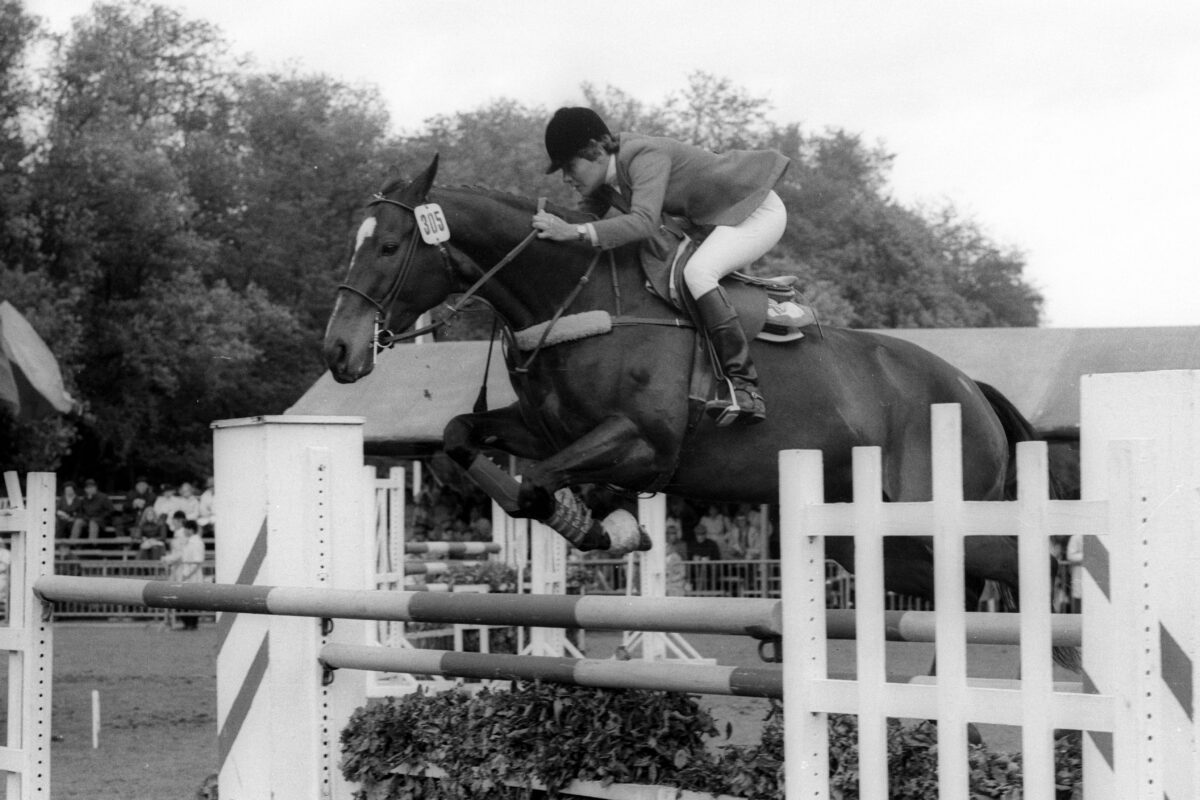
Throughout the 1950s and 1960s, horse shows began appearing across the country with remarkable speed. Some were organized by hunt clubs that had existed for decades. Others grew from county fairs that slowly added recreational classes alongside agricultural exhibitions. Many were created by local riding associations whose only goal was to provide opportunities for children to compete close to home.
Looking back, what is perhaps most remarkable is how decentralized the industry truly was.
There was no national blueprint. No master development plan. No strategic initiative directing growth from the top down.
Instead, thousands of horsemen made independent decisions that collectively built something none of them could have imagined.
A trainer accepted another student. A family bought a truck and trailer. A veterinarian opened an equine practice. A farrier specialized in performance horses. A local riding club decided to host one more horse show each year.
One hotel realized competitors filled every room on weekends. One restaurant discovered horse shows brought hundreds of customers through its doors. One photographer started selling show photos. One feed dealer expanded inventory. One breeder imported new bloodlines.
None of those decisions changed the industry by themselves. Together, they transformed it forever.
Industries are built this way—not through singular moments, but through countless individual acts. Horse shows became something larger than competitions.
They became communities.
For many families, weekends followed a familiar rhythm.
The truck was loaded on Thursday evening. Hay nets were tied. Tack trunks packed.
Children finished homework in the backseat while parents mapped directions to fairgrounds hundreds of miles away. Long before sunrise, coffee brewed in horse trailers and barn aisles echoed with the sounds of horses eating breakfast. The first ribbons of the day rarely became the memories people carried home.
Instead, they remembered shared dinners after the show.
Friends who became family. Children who grew into professionals. Parents who volunteered countless hours simply because someone had to help. Horse shows were teaching much more than riding.
They taught responsibility.
Accountability. Patience. Sportsmanship. Humility. Young riders learned that success began long before entering the ring. Stalls had to be cleaned. Water buckets filled. Leather polished. Horses cooled out.
The best horsemen understood that winning was earned in the hours no one else saw. Entire generations were raised inside that culture. It became one of the defining characteristics of American horse sport.
As participation expanded, institutions naturally evolved alongside it.
Organizations representing individual breeds experienced remarkable growth. Hunter, jumper, saddleseat, dressage, western, eventing, and driving disciplines each developed increasingly sophisticated competitive structures.
Rulebooks became more comprehensive. Licensed judges established greater consistency. National championships gained prestige.
Historic competitions such as Devon, Washington International, Harrisburg, and the National Horse Show became destinations every young rider dreamed of attending.
Qualifying for those events represented more than competitive success. It represented membership in a tradition stretching back generations.
Yet despite increasing professionalism, American horse sport remained fundamentally local.
California developed its own style. The Northeast preserved its hunt traditions. The Midwest reflected its agricultural heritage. The Southeast emerged as an increasingly important winter destination.
Every region contributed something unique. There was no single pathway into the sport. There were dozens. That diversity became one of the industry’s greatest competitive advantages. At the same time, another transformation was quietly taking place.
Horse showing was becoming an economy.
Every successful trainer hired assistants. Every growing lesson program required additional horses. Veterinary practices expanded. Farriers specialized. Transportation companies purchased more trucks.
Feed manufacturers introduced specialized nutrition programs. Insurance companies created equine products. Retailers stocked increasingly sophisticated equipment. Photographers built careers documenting championships. Braiders traveled nationally.
Course designers became specialists. Professional horse show managers emerged. The horse show industry was no longer simply supporting jobs.
It was creating entirely new professions.
By the 1970s and 1980s, horse shows had become significant economic events for the communities that hosted them. Hotels planned staffing around major competitions. Restaurants anticipated busy weekends. Fuel stations, grocery stores, florists, printers, medical providers, and countless small businesses benefited from recurring equestrian tourism.
Although few people used the language of economics at the time, horse shows had become textbook examples of what economists today describe as the multiplier effect.
A dollar spent on a hotel room becomes income for the hotelier, who spends part of it on supplies, which becomes income for the supplier, who spends part of it on wages, and so on.
Horse shows generate the same cascade. Every dollar spent on an entry fee generated additional spending throughout the surrounding community.
One horse arriving at a competition rarely represented one customer. It represented an owner. A trainer. A groom. Family members. Support staff. Hotel rooms. Meals. Fuel. Supplies. Local purchases. The horse show itself became only the catalyst. The real economic story extended far beyond the show grounds.
Perhaps that is why this era is remembered with such affection. It was not simply because horse shows were smaller. Or because competition was less intense.
It was because growth felt shared.
The local horse show mattered. The regional championship mattered. The national finals mattered. There was room within the industry for all of them.
Participation expanded without fundamentally changing the sport’s identity. Horse shows still belonged to communities. Communities still shaped horse shows.
By the early 1990s, American horse sport stood at the height of its post-war expansion.
Participation was strong. Regional competitions flourished. Professional opportunities had never been greater. American riders were increasingly successful on the international stage. From almost every perspective, the industry appeared healthier than ever. But history teaches an important lesson: Growth changes institutions.
Success creates complexity. As industries mature, they seek efficiency.
As competition becomes increasingly international, governance becomes increasingly centralized.
Technology accelerates communication. Capital seeks scale.
What had once been a collection of largely independent regional ecosystems was about to become something much more interconnected.
The next chapter would not simply redefine horse showing. It would redefine the business of horse showing. And many of the questions facing the industry today can trace their origins to that transformation.
Up next: Part 3: Globalization, Consolidation, and the Modern Era (1995–present)
Sources:
- Servicemen’s Readjustment Act of 1944. Pub. L. No. 78–346, 58 Stat. 284 (1944).
- Federal-Aid Highway Act of 1956. Pub. L. No. 84–627, 70 Stat. 374 (1956).
- John Maynard Keynes, The General Theory of Employment, Interest and Money.