June 23, 2026
I’ll be honest. I had preconceived notions about the “circuit kids.”
You know the ones.
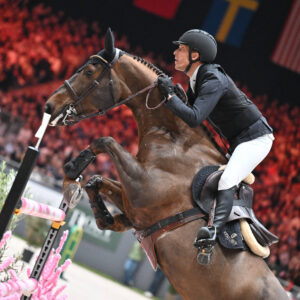
The young riders that horse kids follow on social media. The ones who bounce from fancy horse show to fancy horse show with strings of beautiful horses, custom jackets, and lives that seem to revolve entirely around the next big class.
The teens galloping around derby fields and posting Indoors photos while the rest of us watch from our phones. The kids that qualify for more than one division at Devon—and don’t just qualify, they dominate.
The more my daughter watched them online, the bigger her dreams inflated. The more she followed their careers through Instagram posts, the more she wanted to emulate them. She wanted to ride better. Dream bigger. Be one of them.
She studied their riding. We live 15 minutes from the historic Devon Horse Show where, this year, she walked around with a notebook, taking notes while announcers echoed through the Dixon Oval and polished hunters floated past like sets out of a movie.
She envisioned herself there one day.
She talked about her last junior year as if qualifying for indoors was simply the natural next step if she worked hard enough. If she studied her notes, was dutiful in her lessons, and kept her eye on the prize. She believed she could make it into the Dixon Oval.
And, honestly, that was incredibly hard for me.
Because deep down, I knew there were financial realities my daughter did not yet fully understand. I knew hard work alone does not magically create unlimited opportunities in this sport; that there were parts of that world we simply could not afford.
As a parent, that can be heartbreaking.
Often, I feel like I’ve done my kids a disservice by exposing them to this world of privilege, one where it often feels like a case of ‘keeping up with the Joneses’ on steroids. Where your level of success so often seems dictated by a shared, famous last name.
If I’m being completely honest, I sometimes unfairly blamed those circuit kids for feeding my kid’s impossible dream.
Not directly, of course—they’d done nothing wrong. But when you’re the parent trying to balance your child’s dreams with financial reality, emotions can get complicated.
It was easier to feel frustrated with the polished social media version of “circuit life” than it was to sit with the heartbreak: knowing your child wants something you most likely will never be able to give them. To wrestle with that inside yourself while you clap at your daughter’s lessons, drive her to clinics, and nurture her passion to the best of your ability.
I think a lot of horse parents quietly carry that tension now. Some of us even have to pull our kids from the sport they love because the cost is astronomical.
Today’s horse kids do not just ‘ride with the kids’ at their local barn anymore.
They grow up watching riders from Wellington, Devon, Indoors, medal finals, and international derby fields every single day online. Their version of “normal” is shaped by social media and streaming.
I have found my daughter huddled under blankets in her dark room long after midnight, her phone glowing against her face as she watches round after round, because she loves it all that much. But she does not fully understand the ramifications of watching her idols nonstop—and I do not think my daughter is alone in this.
So many riders now grow up consuming the highest levels of the sport every single day online. It can make ordinary horse life feel smaller than it really is.
So, when my daughter and her friend finally worked up the nerve to talk to some of the “circuit kids” during Junior Week at Devon this year, I felt a deep pit in my stomach. Would they fit the stereotype I’d created in my mind?
Would they be dismissive? Exclusive? Too fancy for the horse-crazy girls standing there, starstruck, beside them?
I had already envisioned who they were before they even opened their mouths. And yet, the circuit kids surprised me in the best way.
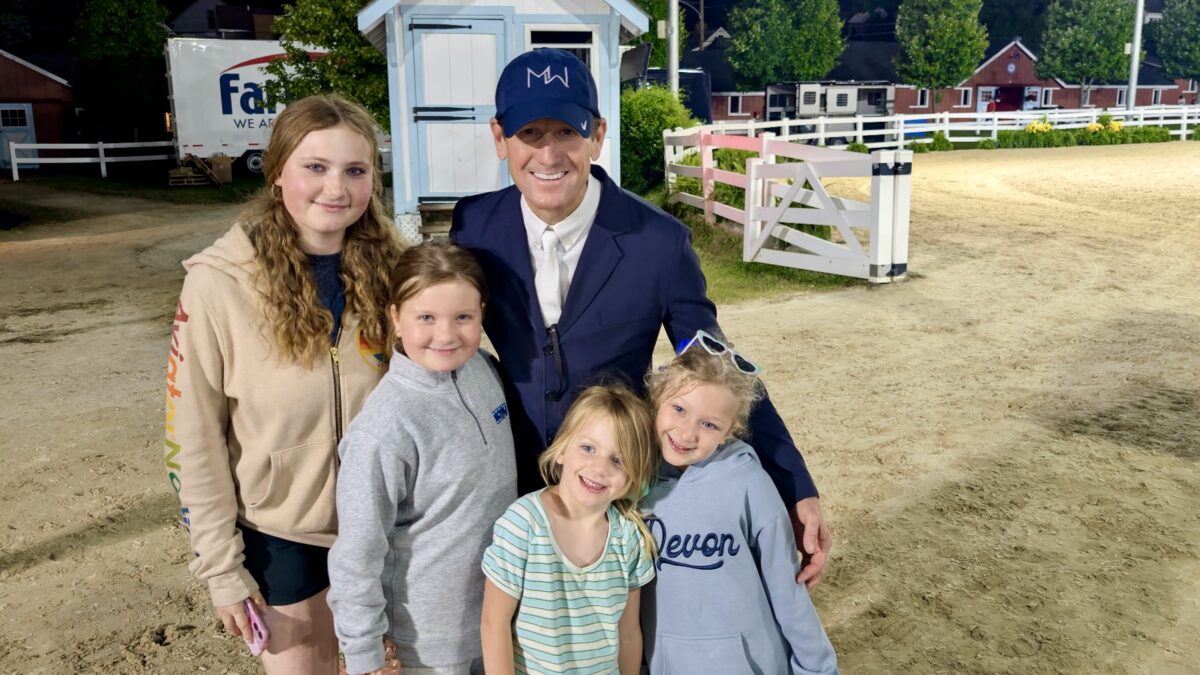
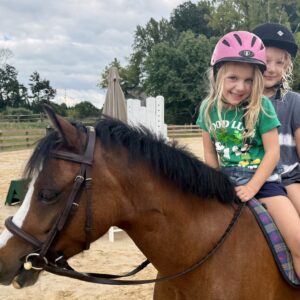
While my daughter and her friend stood pressed against the rail, watching classes with nervous excitement, these riders invited them right into their group.
They talked with them. Sat with them. Included them. When my daughter’s friend said she wished she could show at Devon, one of the girls said she felt “privileged” to ride there and live this life. The kids talked about the intensity of their schedules, riding horse after horse at home, trying to stay competitive at the highest level.
When my daughter came back to me afterward, absolutely glowing because she’d spent part of Devon “hanging with their crew,” and was excited to go back the next day to see them again, I realized something uncomfortable about myself.
I had turned these kids into symbols instead of people.
Symbols of privilege. Symbols of opportunity. Symbols of the part of this sport that sometimes makes other horse people feel inadequate or overwhelmed.
When, in reality, the circuit kids were—in different ways—hard-working horse-crazy kids too.
Kids who still love talking about their rounds, obsessing over horses morning to night. And who, despite their fancy show schedule and beautiful horses, still remembered what it feels like to look up to other riders. That means a great deal.
Because this sport already feels divided enough financially, and social media widens those gaps even further. It is easy to fall into the trap of assuming the kids at the top of the sport must automatically be spoiled and disconnected from everyone else, living in their own bubble. But in my experience, that wasn’t the truth.
Maybe most of them are just kids, growing up inside the version of the horse-life they know, the same way our own children are. At the end of the day, most riders are looking for the same thing, regardless of what ring they compete in: connection, belonging, and being with other people who love horses as much as they do.
I still cannot give my daughter the fully polished “circuit kid” life she sometimes imagines online. But after Devon, I realize that’s not entirely the point anyway.
What mattered most to her, in the end, had nothing to do with emulating social media at all. It was compassion. Inclusion. Feeling seen by the riders she admired most.
My kid got a glimpse of their world, but she also realized that the horse world is bigger than any fancy ring, six-figure warmblood, or perfectly filtered snapshot. At its core, our sport is still built on horse-crazy kids, sitting in the stands together, watching rounds, and loving the animals in front of them with their whole hearts.
And, honestly, I think I needed that life lesson too.