
 July 8, 2026
American horse sport faces its most consequential inflection point since the post-war expansion—not because of any single crisis, but because the economic ecosystem that sustains the industry has outgrown the governance structures designed to manage it. In Part 4 of this series looks to the future.
Economists have a habit of asking questions that most industries never think to ask.
What is the product? Who is the customer? Where is value actually created? How do incentives shape behavior?
And perhaps most importantly:
What are we measuring?
The answers are rarely as obvious as they first appear. For decades, American horse sport has naturally measured what happens inside the arena.
Championships. National titles. Medals. Prize money. Rankings. Participation. These are all important metrics.
But they tell only part of the story. Because the horse show is not the product. It is the platform upon which an entire economic ecosystem creates value.
It is where the industry meets. That distinction changes everything.
A manufacturer produces automobiles. A university produces education. A hospital produces healthcare. A horse show produces something entirely different.
It produces opportunity.
Opportunity for trainers to grow businesses. Opportunity for breeders to demonstrate bloodlines.
Opportunity for veterinarians, farriers, photographers, retailers, transportation companies, feed manufacturers, insurance providers, technology firms, media companies, hospitality businesses, and local communities to participate in a marketplace that exists only because horses came to compete.
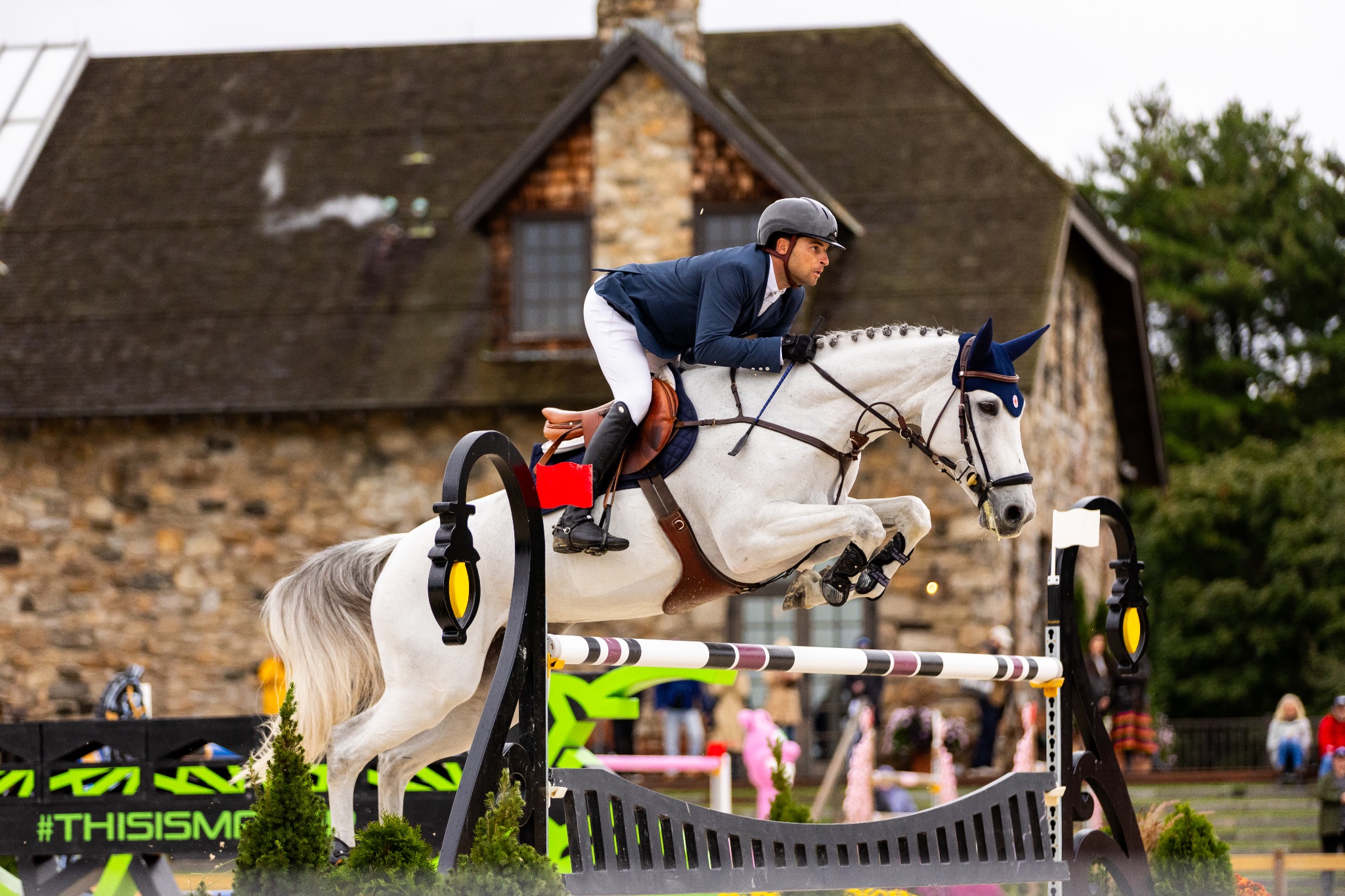
The jumping round may last 90 seconds. The economy surrounding it lasts all year.
That is why economists refer to industries like this as ecosystems rather than markets. No participant succeeds independently. Every business depends upon another.
The trainer depends on the veterinarian. The veterinarian depends on healthy horse populations. Horse owners depend on trainers. Horse shows depend on exhibitors. Hotels depend on horse shows. Restaurants depend on hotels. Sponsors depend on audiences. Media depends on compelling competition. Technology companies depend on organizers.
Organizers depend on volunteers, officials, judges, course designers, and countless professionals whose work remains largely invisible to spectators.
The entire system functions because each participant creates value for another. Remove one component, and pressure begins building throughout the rest of the system.
This is what economists describe as an interconnected marketplace. Most people call it a horse show.
One of the greatest misconceptions surrounding American horse sport is that horse shows are expenses.
They are not. They are investments.
Every entry fee represents future spending throughout dozens of industries. Every horse arriving at a competition creates demand for transportation. Housing. Feed. Veterinary medicine. Farrier services. Fuel. Equipment. Retail. Hospitality. Photography. Insurance. Technology. Construction. Marketing. Temporary labor. Municipal services.
The horse show itself is merely the catalyst.
The true economic activity radiates outward like ripples across a pond. This concept is well understood in economics.
Communities often measure the impact of professional sporting events because visitors spend money far beyond the stadium. Horse shows operate similarly.
The difference is that horse shows occur hundreds of times each year in communities across America. Collectively, they support an economic footprint far larger than most participants ever consider.
Yet surprisingly little public conversation focuses on understanding that system holistically.
Instead, discussions often center on individual issues.
Entry fees. Rule changes. Prize money. Governance. Horse welfare. Technology. Media rights.
Each matters. None exists independently.
Economics teaches us that systems matter more than individual transactions. That lesson is particularly relevant for horse sport.
Every institution ultimately becomes what it chooses to measure.
If success is measured primarily by international medals, institutions will naturally prioritize elite pathways. If success is measured by participation, different incentives emerge.
If success is measured by financial sustainability, resource allocation changes again. No metric is inherently correct. Each simply reflects a different philosophy about organizational purpose. That raises an important question for American horse sport. What should success actually look like? Should it be measured by membership growth?
Horse show participation? Economic impact? Horse welfare? Grassroots accessibility? International competitiveness? Financial resilience? Public trust? Innovation? Transparency?
Perhaps the answer is not choosing one. Perhaps the challenge for the next generation of leadership is recognizing that all of these measures are interconnected.
Healthy local horse shows strengthen national competition. Strong governance builds public trust. Transparency encourages participation. Technology expands access. Economic sustainability supports horse welfare. Visibility creates opportunity.
One of the clearest examples of these interconnected principles can already be seen in how the industry is beginning to rethink the presentation of elite competition itself. If economics teaches us anything, it is that expanding markets often begins by expanding audiences.
For much of its history, American horse sport has primarily marketed itself to participants already within the equestrian community. Horse shows have excelled at serving riders, trainers, owners, breeders, and dedicated enthusiasts. Yet every mature industry eventually reaches a point where long-term growth depends not only on retaining existing participants, but on attracting entirely new audiences.
Professional sports have long understood this principle. The world’s most successful leagues are not simply competitions; they are entertainment products. They invest heavily in storytelling, team identities, broadcast production, sponsorship activation, and fan engagement—because visibility creates demand, and demand attracts investment.
Equestrian sport now appears to be entering that same conversation.
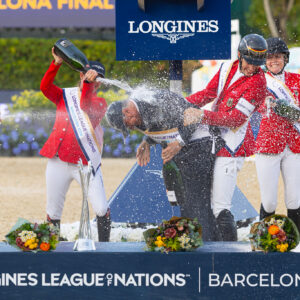
Emerging models such as the Premier Jumping League (PJL) represent an effort to present elite equestrian competition in a format that is more accessible to spectators while creating new opportunities for commercial partnerships, media rights, sponsorship, and fan engagement. Team-based competition, recognizable brands, simplified formats, and enhanced media production have the potential to introduce horse sport to audiences who may have never considered attending a horse show.
Whether any single league ultimately succeeds is less important than what it represents economically.
It represents a shift from competing for existing market share to growing the overall market itself.
Economists distinguish between those two ideas because they produce fundamentally different outcomes. Competing for market share redistributes existing participants among organizations.
Historically, growth within American horse sport often occurred organically. Local horse shows introduced families to riding, who eventually progressed into regional and national competition.
Today’s challenge is different.
The industry is now competing for attention in an entertainment economy unlike anything previous generations faced. Young people have more choices than ever before for how they spend their time, money, and attention. Expanding the sport therefore requires more than preserving existing participants—it requires creating compelling reasons for entirely new audiences to engage.
For an industry seeking long-term sustainability, expanding the audience may prove just as important as expanding participation. The future of horse sport will likely depend not only on preserving the traditions that have sustained it for generations, but also on finding innovative ways to introduce those traditions to people who have never experienced them before.
How we grapple with that balance will set the tone for what’s to come. Every decision creates consequences elsewhere within the system. Economics teaches this lesson repeatedly.
History demonstrates that industries rarely fail because people stop caring. They struggle when institutions stop adapting to changing economic realities.
Railroads adapted. Airlines adapted. Professional sports adapted. Universities continue adapting. Horse sport has adapted for more than 150 years.
The question now is not whether change is coming. It already has.
Artificial intelligence will reshape business operations. Data will increasingly influence decision-making. Digital media will continue changing fan engagement.
New generations will expect greater transparency, greater accessibility, and different experiences than those who came before them.
Every institution must decide whether it intends to react to those changes… Or lead them.
Which brings us to perhaps the most important question of all. Who should be entrusted with leading an institution through that transformation? Because the search currently underway is not simply about selecting the next CEO.
It is about selecting the steward of an industry whose economic influence extends far beyond competition itself. The next CEO will inherit more than a governing body.
They will inherit an interconnected economic system built over 150 years by generations of horsemen, entrepreneurs, volunteers, and visionaries. Their responsibility will not simply be to preserve that legacy.
It will be to ensure that the next generation has the opportunity to build upon it. And that may be the most consequential leadership challenge American horse sport has faced in decades.
Where do we go from here?
History teaches us that institutions are not defined by a single decision.
They are defined by the accumulation of thousands of decisions made over decades—sometimes centuries. American horse shows are no exception.
From county fairs and agricultural exhibitions to nationally recognized competitions and international championships, every generation has inherited a sport shaped by those who came before it. Each generation has expanded it, refined it, and, in its own way, redefined it. The horse show industry has never been static.
It has adapted to industrialization, survived the automobile, flourished in the post-war economy, embraced globalization, and entered the digital age. Through every transformation, one constant has remained: the horse has continued to bring people together in pursuit of something larger than competition alone.
That may be the industry’s greatest economic advantage. Horse shows create far more than champions.
They create communities. They create careers. They create lifelong friendships, family traditions, and opportunities for entrepreneurship.
They support veterinarians, farriers, grooms, trainers, breeders, photographers, retailers, hospitality workers, technology companies, transportation providers, nonprofit organizations, and countless small businesses whose livelihoods are connected by a common passion.
In economic terms, horse shows are not isolated events. They are marketplaces. They are innovation hubs. They are engines of local commerce. Most importantly, they are investments in the future of the sport. Which brings us to the question every industry must eventually ask:
What are we trying to build? If our goal is simply to preserve what already exists, we risk falling behind a changing world.
If our goal is to pursue growth without purpose, we risk losing the traditions and community that made the sport worth growing in the first place. The tension between tradition and innovation is not a choice to be resolved. It is a balance to be managed.
This moment feels significant precisely for that reason.
Leadership transitions are rare opportunities—not simply to select a new executive, but to reconsider the mission of an institution and the future of an industry.
The next generation of leaders will inherit challenges unlike any faced before: changing demographics, rising costs, technological disruption, evolving expectations around governance and transparency, and an increasingly competitive landscape for people’s time and attention.
Those challenges will not be solved by history alone. But history provides perspective.
It reminds us that the horse show industry has never succeeded because it resisted change. It has succeeded because each generation found a way to evolve while preserving the values that mattered most.
Perhaps that is the lesson worth carrying forward. The future of American horse shows will not be determined by one organization. Or one championship. Or one CEO.
It will be determined by whether all of us—riders, owners, trainers, officials, organizers, breeders, businesses, and governing bodies—can agree on what truly matters and have the courage to measure success accordingly.
Because in the end, the economics of American horse shows have never been just about dollars and cents.
They have always been about creating value. Value for our horses. Value for our communities. Value for the next generation.
And if history is any guide, the decisions we make today will not be judged by the ribbons we awarded or the meetings we held.
The test will be whether, 25 years from now, a young rider pulls into their first horse show with the same sense of possibility that generations before them found.
That is the true return on investment. That is the legacy worth building.
That is the metric that matters.
Sources:
- American Horse Council. Economic Impact Study of the U.S. Horse Industry. Washington, DC: American Horse Council.
- Kim, W. Chan, and Renée Mauborgne. Blue Ocean Strategy. Expanded ed. Boston: Harvard Business Review Press, 2015.
- McKinsey & Company. The Economic Potential of Generative AI: The Next Productivity Frontier. New York: McKinsey Global Institute, 2023.
- Porter, Michael E. Competitive Advantage: Creating and Sustaining Superior Performance. New York: Free Press, 1985.
- Premier Jumping League. “The Premier Jumping League (PJL) Launches with a Record-Breaking $300 Million Guaranteed Prize Pot, Defining a New Era for Show Jumping.” Business Wire, March 30, 2026.