
 April 17, 2026
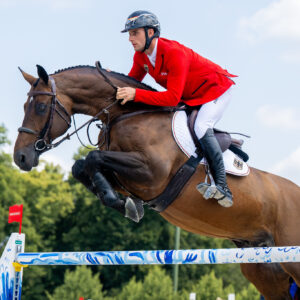
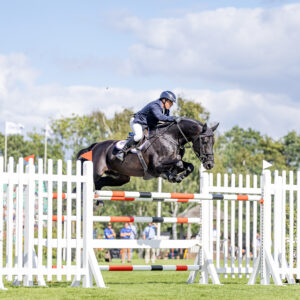
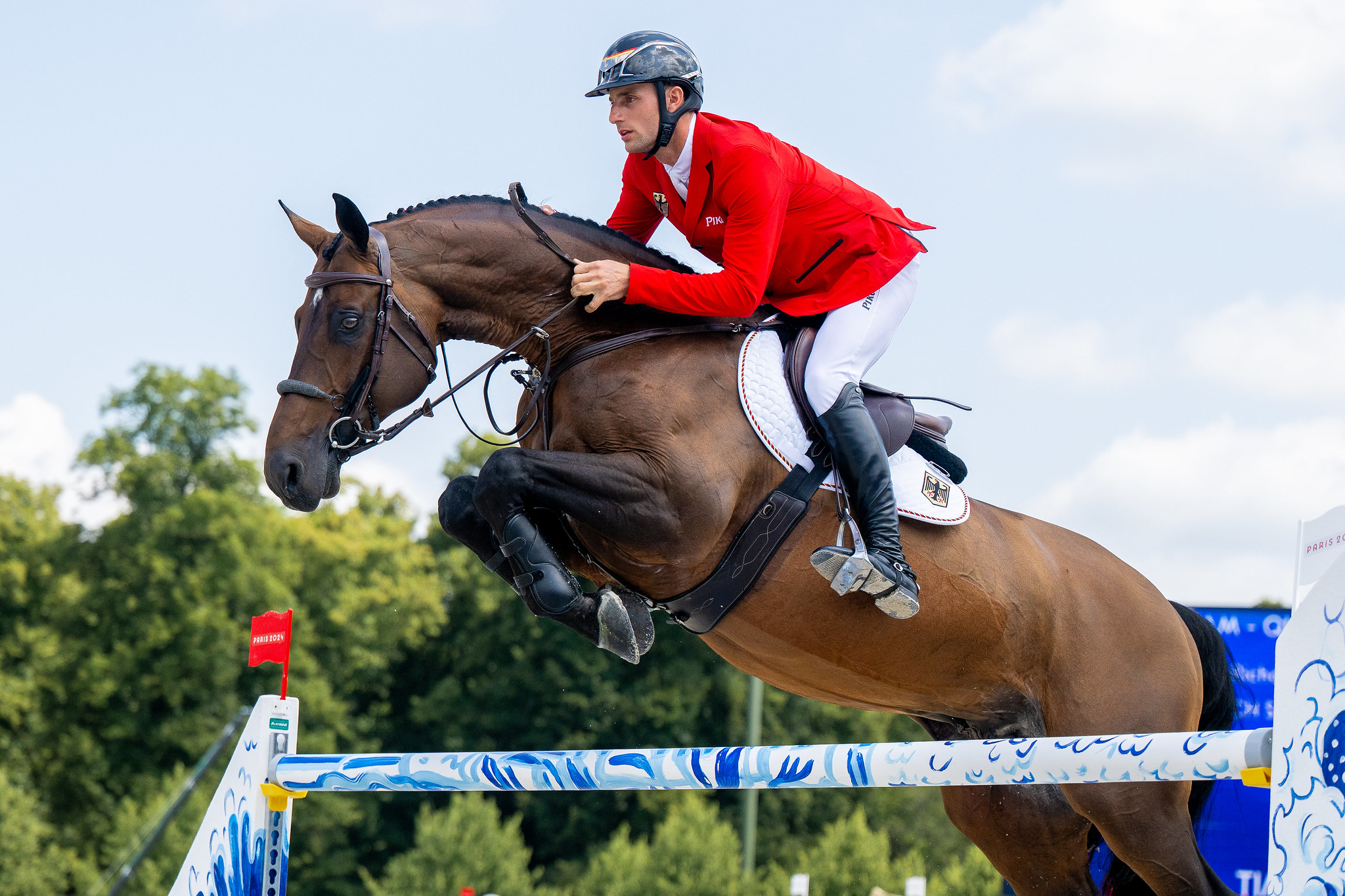
It was the very last rail down of the opening course of the FEI Jumping World Cup™ Final: A single obstacle on a speed course of 16 individual efforts.
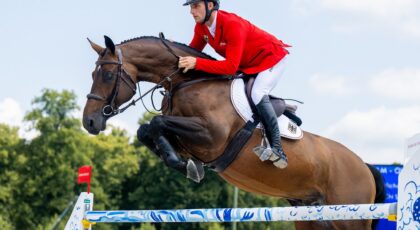
In the end, it amounted to just three penalty seconds. But for Richard Vogel and the 10-year-old Selle Français stallion Gangster Montdesir, it was, unequivocally, heartbreak alley.
A combination’s performance in the opening round of the World Cup Final has a major impact on where they end up in the overall standings on day four‚ with many arguing you need to be in the top 10, seven—or, as recent history shows, much higher—to take the title.
Alas, Vogel and Gangster’s rail and the penalties that accompanied it dropped them into 14th place overnight. Still within striking distance of a top-10 finish, but almost certainly out of the running for a win in the 2026 Final.
And then, things got worse.
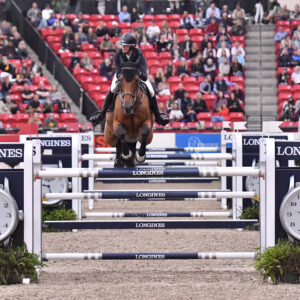
In Competition II on Friday, the pair was putting in a strong performance until they lowered a pole coming into the last combination on course. Then, they scrambled in the landing to the final bending line, where they suffered a miscommunication at take-off; Gangster crashed through the fence, unseating Vogel, who just managed to hang on through the timers, saving himself from elimination.
Fortunately, both horse and rider were unharmed, and Vogel’s first priority was to jump up from the ground and jog over to collect and check over his horse. So much to say, for an up-and-coming combination with such innate natural talent and—many hoped—a shot at the title, this was far from the championship they had wanted.
“I had different expectations coming here, this week, than what it’s looking like at the moment,” Vogel reflected in a disarmingly frank interview after Competition II.
“[Gangster is] quite new on this level, but he did already so many good rounds and every round he surprises us new. [We were] unlucky this week. I rode him quite [terribly], to be very honest to you,” Vogel continued, adding that he didn’t give the stallion a chance to show what he was capable of.
“Nevertheless, Gangster is a very exciting horse for the future, and I just need to fix my riding now.”
In a sport where the majority of our focus tends to be on podium finishes and victory gallops, the tougher moments are often harder to parse. Even if no one—including Richard Vogel, the current World No. 3 and reigning European Champion—is immune to them.
The response to the inevitable ‘bad days,’ for most top riders is to either clam-up or sugar coat. And while there are exceptions to the rule (see: fellow German show jumper Christian Kukuk’s “embarrassing” day at the European Championships, or 2026 FEI World Cup Finals Champion Kent Farrington’s “stupid riding” at the 2025 IJRC Top 10 Final), they tend to be few and far between.
But Richard Vogel has a reputation for taking a different, more open and pragmatic tack, and if the 29-year-old’s performance in the second half of FEI Jumping World Cup Finals is any indication, he seems to have cracked the code.
“Probably, no one wants to fail, I think this can be said. I don’t like to lose, to fail, or to [make] a mistake,” Vogel told Horse Network last July. “That’s obviously not something I enjoy, but I very quickly realize that it’s part of the process to get better. It’s just about how you deal with it.”
And, during the two-round Competition III, Vogel did just that, jumping double-clear on Sunday to move up a full eight placings in the overall standings to finish in 9th place. He was one of just three riders that day to jump a double-clear (even Farrington and Greya had a rail) and the other two—Katie Dinan (USA) and Daniel Deusser (GER)—both finished on the podium.
So how did he do it, and what can we take away from Vogel’s impressive, 180-degree turnaround to use in our own riding?
“It can really happen to anyone, so you have to be clear about that,” Vogel said, when asked what advice he would give to the next generation of riders coming up the ranks. Accepting that no one is perfect, and that both horses and riders have “off” days and moments comes with the territory.
“The second advice is that, for sure, I’m very disappointed right now, and I’m pretty much down. But, eventually, you have to push the emotions a little bit by the side.
“[You need to] really analyze, very clearly, what went wrong, why did it go wrong, and how you can fix it for the next time. I think the most important part is to learn [from] your mistakes in order to not make them happen again.”
In fact, it appears that Vogel not only dissected his errors and moved on by day four, he completely flipped the script. The second half of his World Cup Finals appearance was foot-perfect and, despite their mishap, it appears Gangster Montdesir will emerge from his first championship experience a stronger horse who is better prepared for the questions of the next one.
In the meantime, Vogel continues to practice what he preaches, and his message is clear: even on days when you know you can’t win, you can always learn something.
“The hardest thing about our sport—but maybe also one of the good things about it—[is that] it’s very humbling and it’s a good life lesson,” he said. “Horses, in general, teach us a lot of life lessons and I strongly believe they make us better humans.”