
 July 31, 2025
You couldn’t blame Richard Vogel if he was walking on air right now.
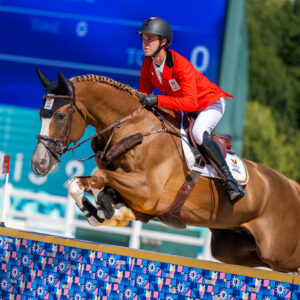
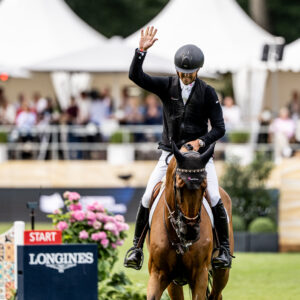
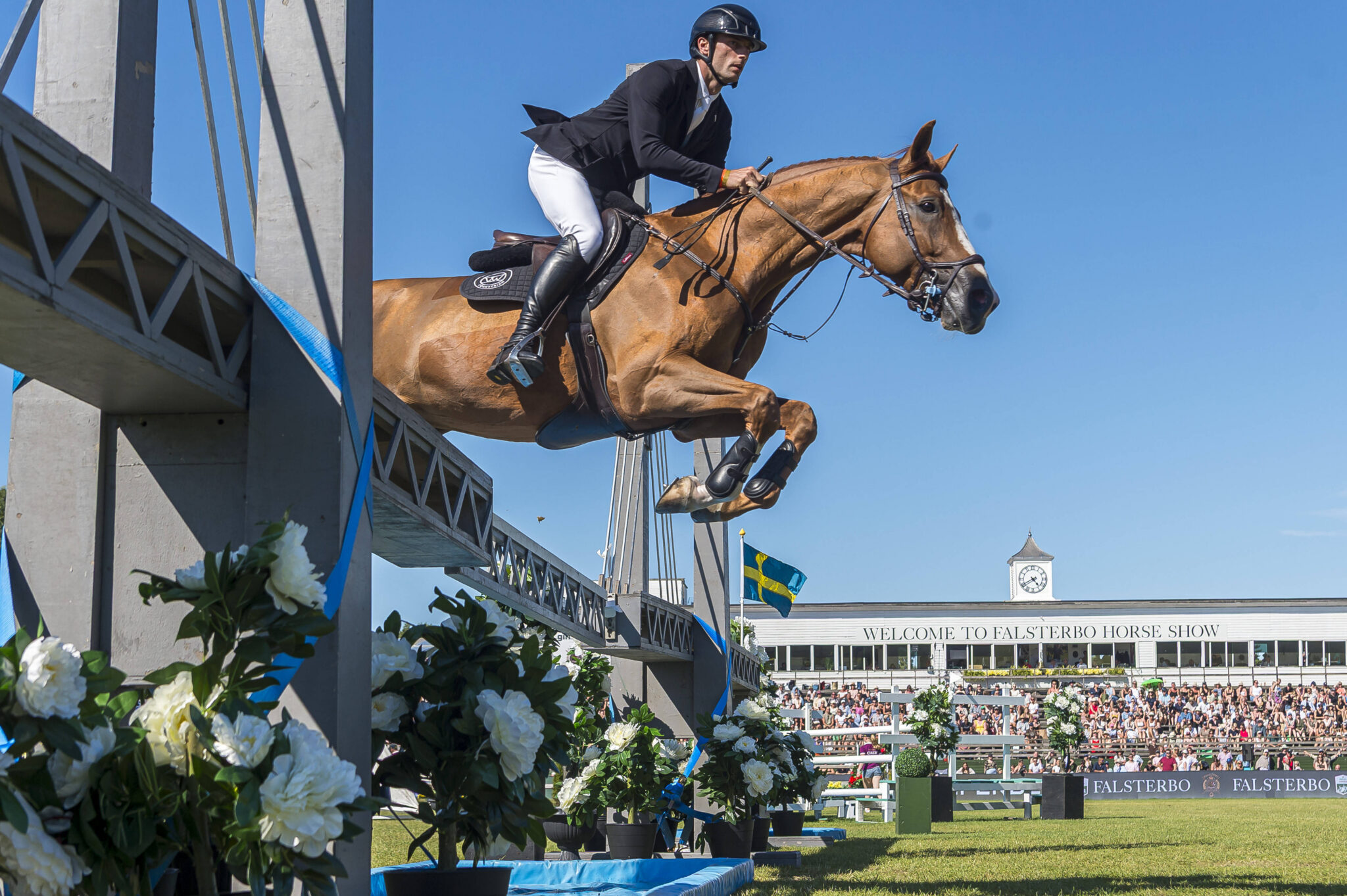
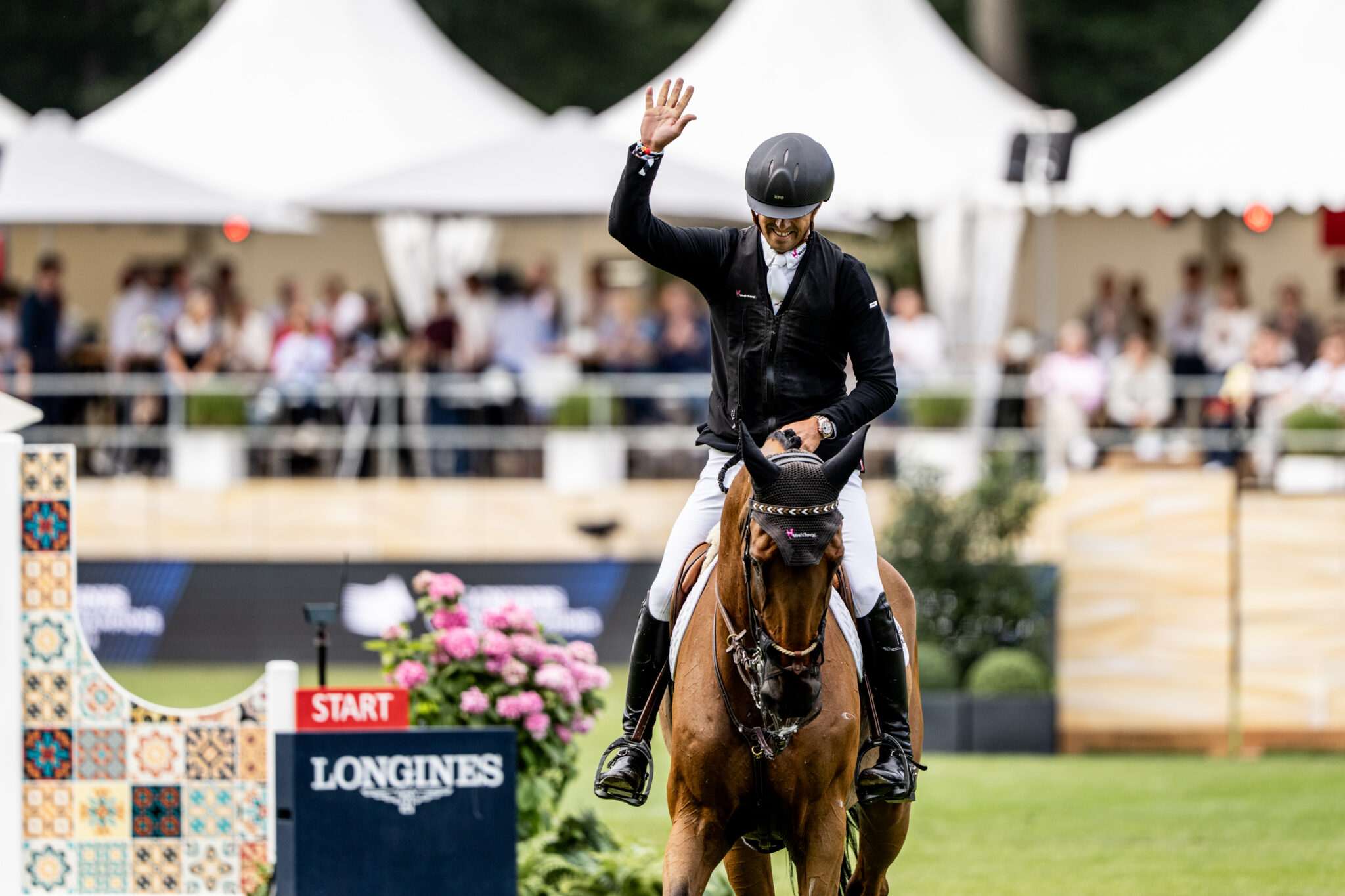
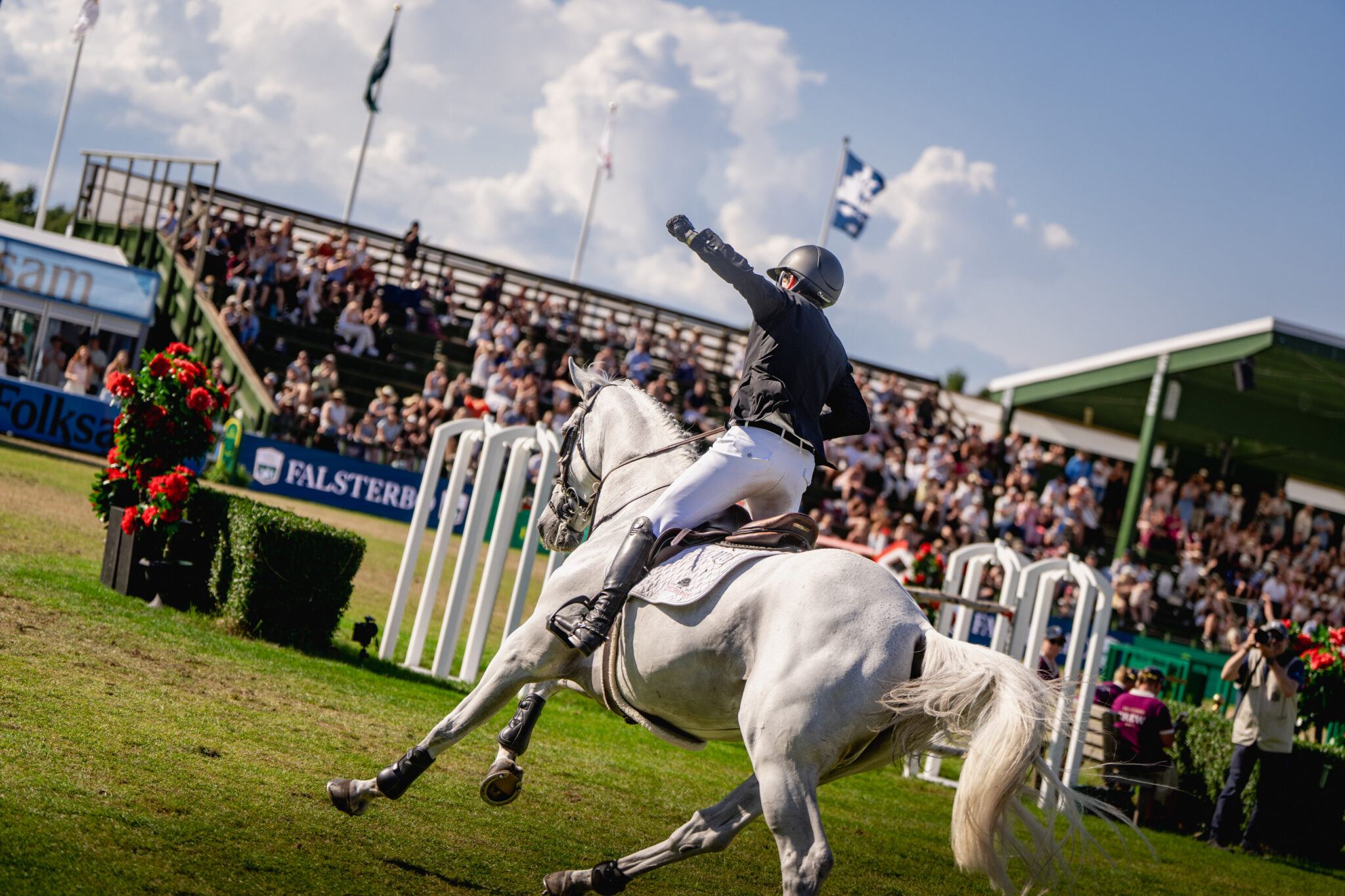
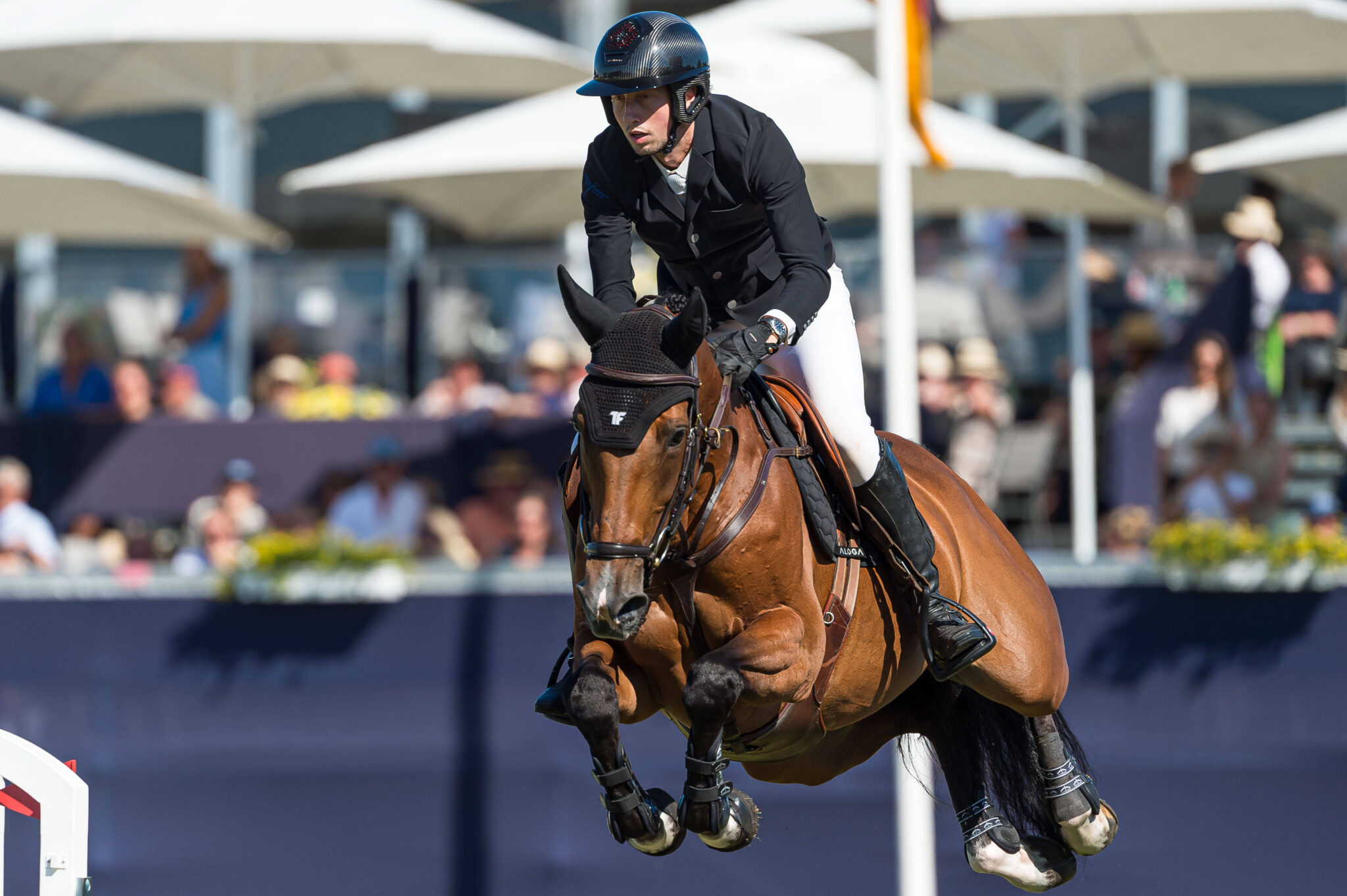
The 28-year-old German rider won the individual gold medal at the European Championships aboard his longtime partner United Touch S—widely considered one of the most gifted show jumping horses of his era.
What’s more? They did so on a record-setting penalty score of 0.01.
But it might surprise you to learn that, while other riders would be basking in the glory of that victory for the next few weeks, Vogel may very well be fending off a case of the post-victory blues.
That’s right. When it comes to his competitive mindset, a brilliant win, according to Vogel, can often be harder for him to compartmentalize than a far harder day at the office.
If at first you don’t succeed…
“It sounds very illogical, but often, after a really bad round or failure, yes, you’re down and frustrated. [Maybe] you lost the class because of rail, [maybe you were] too deep and there’s a frustration for a couple of hours. But then, quickly, there comes a motivation,” he explains.
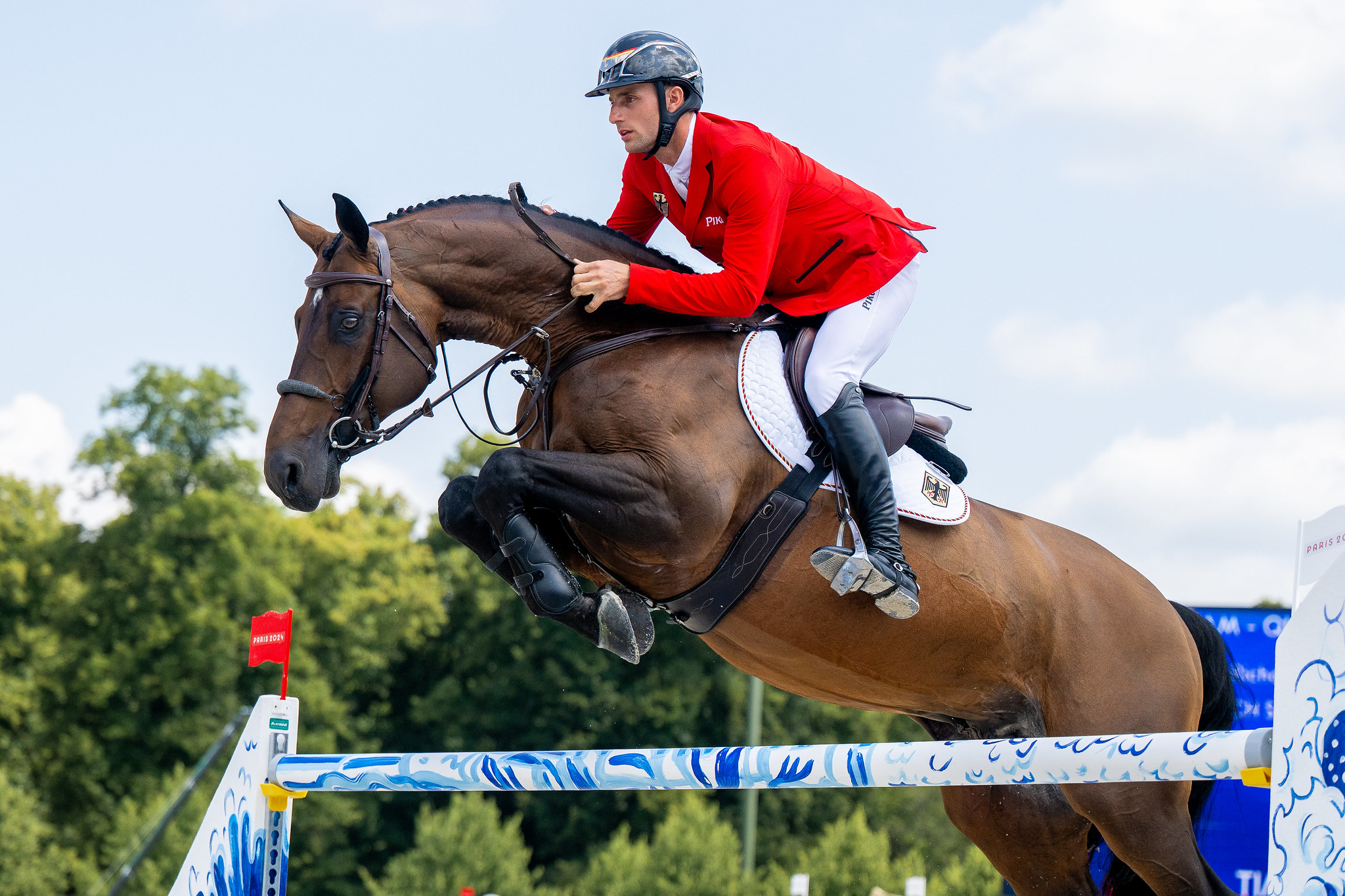
His example: the 2024 Paris Olympic Games. Vogel is the first to tell you he did not produce the results he and his team were hoping for at his Olympic debut. The German team led on day one, but ended up fifth overall. He finished 55th individually. That result and, more importantly, his ability to process the outcome has helped to lead him to subsequent successes such as this year’s European Championship.
“Yes, I was frustrated [after Paris]. I was down and everything, but that lasted a couple of days, and I actually got kind of a fighting instinct, or an energy, that said, Okay, I need to use [this].
“Out of that frustration, I get a huge motivation to improve and to do something better. When I work up to something, and I win a Grand Prix, or have a good result, [actually in] the days after, I feel a bit empty.
“Like, the mission is completed. But what do you get out of it? To win a class doesn’t make you a better rider.
“To ride a jump-off and to not be quick enough, or turn too tight, be too deep, catch a rail, things like this—they make you a better rider, because you can analyze it, and you can improve.”
That idea that some degree of ‘failure’ offers an opportunity to improve is a cornerstone of Vogel’s growth mindset. While he admits to being as susceptible as the rest of us when it comes to negative thinking after a disappointment in the ring, Vogel says he allows himself those feelings—for a time. Then, he puts them to work.
“I think you have to try to get over that point quick enough, and then really analyze, Okay, where were the mistakes? What can I do better? What do I have to improve if I get in such a situation one more time in my life, or the next time in my life? What do I have to do better to get a different result?
“Probably, no one wants to fail, I think this can be said. I don’t like to lose, to fail, or to [make] a mistake. That’s obviously not something I enjoy, but I very quickly realize that it’s part of the process to get better. It’s just about how you deal with it.”
Pressure is a gift
The German rider takes a similarly glass-half-full approach when it comes to how he copes with pressure in the ring. Despite regularly competing in international championships—where he jumps Reese-Witherspoon-sized fences at speed—Vogel says his ability to cope with pressure isn’t any different than a rider competing in the .80 jumpers at a local horse show.
Sure, the stakes may be higher, but Vogel argues his five-star medal round is just as important to him as a clear, safe round at a far lower height would be to any junior or amateur rider. The only difference? The way Vogel (and the rest of us) either succeed or fail to channel feelings of pressure to our competitive advantage.
“You get to deal with pressure, which [kind of] prepares you a bit for life outside of horses,” Vogel explains. “I think that’s also a nice thing about the sport.
“I can almost focus better when I when I [know] it’s important. And that’s why I would call [pressure] a gift.
“I get nervous, yes, but in a very positive way.
“I think some people get nervous in the way that they slow down, or it handicaps [them]. They get into those situations, and they freeze a little bit; they’re afraid to do something wrong when they feel it’s very important, and then they hesitate a little longer to [make] a decision.
“Whereas, in those moments, I always like to say I see more what I can win than what I can lose,” Vogel continues.
“I have a tendency to stick with my first idea, with my first impression, [or] reaction. And, often enough, that’s also the right choice. And then, the earlier you react, the better you can execute a plan—especially on a course where every second counts in the moment.”
Own your errors
Even champions, as we know, have hard days. But there’s no such thing as a free lunch in show jumping (or at horse shows, for that matter). For Vogel, competitive setbacks can fuel an even higher level of performance, but it takes honesty and introspection, and it has to start with you.
In order to learn from your mistakes, he says, you first have to own them.
“You can ignore [failure] or you can put it on something else; on your surroundings—maybe the tack wasn’t good enough, this was wrong, that was wrong, [the footing] wasn’t good enough. At the end of the day, you can deal with failure and with mistakes [better when] you can accept that it’s in your hands.
“Even if the tack was wrong, it’s in your hands. Maybe you have to put more thought into what tack you use, or what bit is right for what horse, etc.
“There’s obviously a lot of details that go into our sport. But, if you can accept that you made a mistake, and you always start with yourself—What can I do to not make the same mistake again? Then, I think, you start to get better. That’s where you start to improve and to learn.”
The newly minted European Champions is the first to admit that riding a stallion like the now-13-year-old United Touch S has put him in a privileged position, and also, that that position is a temporary one. “The reality is, [it’s not] every period in your career that you have a horse like United Touch. You have some horses that can jump to that level, but not as easily, and [they are] not as gifted as United Touch.
“So that’s, for sure, coming; some harder tasks for me as a rider than having United Touch going into those Grands Prix or big shows,” he reflects.
True to form, however, it’s an eventuality that drives rather than paralyzes Vogel—who looks forward to embracing the coming challenges head-on. (Though, hopefully, he stresses, only after many more years of United Touch under his saddle.)
“I think [the thing that separates] a loser from a champion [is] how quickly they can stand up when they get beaten down,” he says. “And, at the end of the day, you have to always stand up one more time than you fall down.”