
 May 13, 2026
This is a true story.
There was a famous blizzard in South Dakota, I believe it was 1949. My dad was eight years old, and he was on the family ranch out on section 69, which is 20 miles or so from the ranch house—you got there on horses. There was a summer cabin with corrals for the cattle.
Near the Black Hills, the weather can be really wicked. The blizzard came in, and my dad and my grandfather were caught out there in a whiteout near the cabin. The North Star told Grandpa where to go.
They spent days in that cabin. They had canned food. The horses were up against the windbreak. Snow drifts, my dad would say, “as high as the barn.” He’s not one to exaggerate.
Grandma thought they were lost. There’s no communication—they didn’t have a landline telephone until the 1970s, it was that rural. When they came home a few days later, she said it was like a mirage—first Tommy and then my grandfather.
So dad always said, “Know your North Star.”
There’s a North Star in geography. But you also have your own.
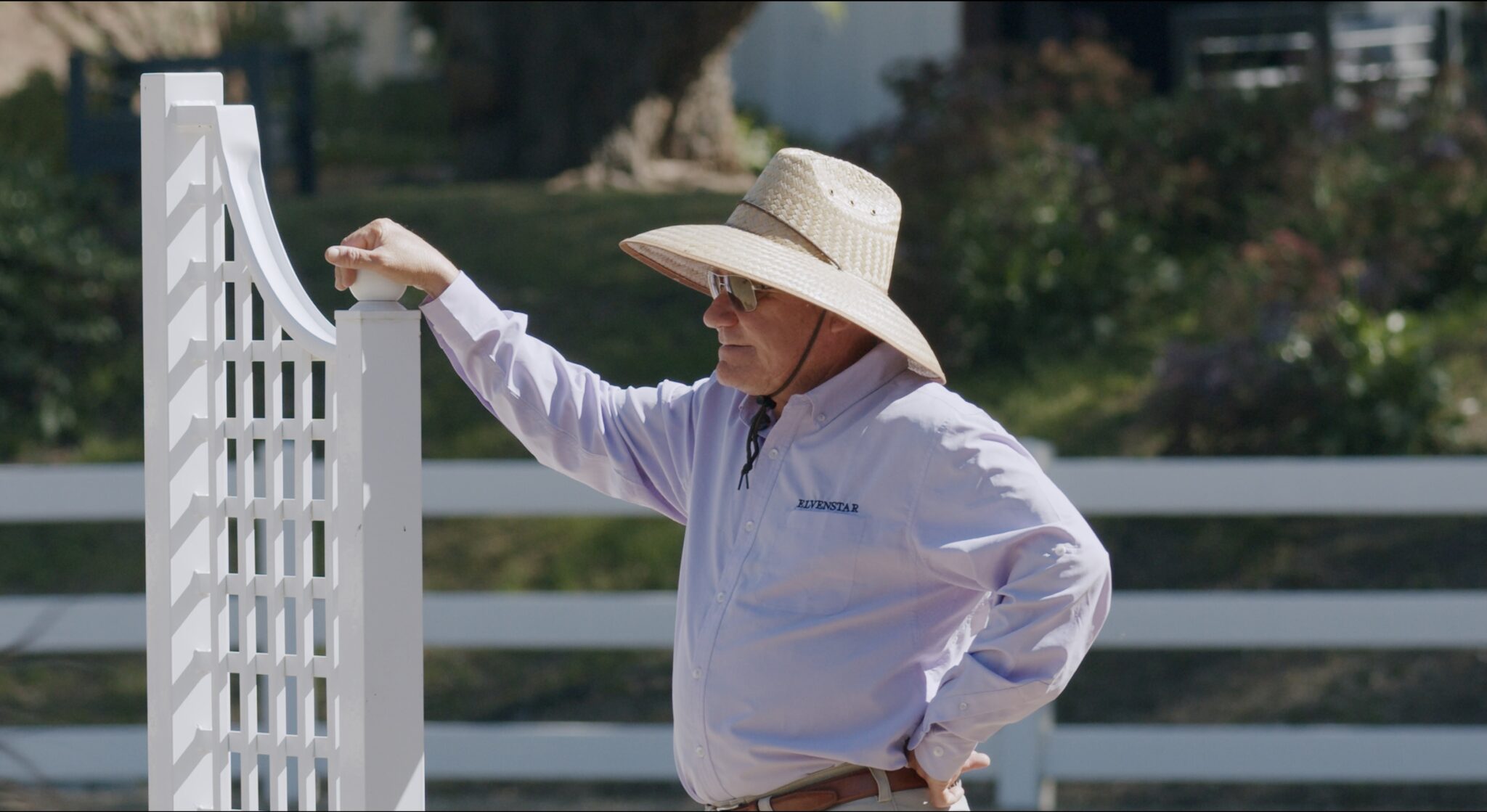
That’s how Elvenstar got its name, and it’s how I’ve tried to run it these 40-some years. We have a riding academy and national and regional show programs here, but the goal is the same for every equestrian we teach: produce confident riders and cultivate respect for the extraordinary rewards of working with horses. And I think we do that.
I don’t know that I ever thought I was good at teaching. I think the gift is that I enjoy it. If you don’t enjoy an art, you can’t instruct it.
If I’m an example of anything, it’s what people can do if they decide to really embrace their gifts and stick with it. Take your gifts. Expand your gifts. If you really love this sport and industry—in that order—you can make yourself in your own way special, and do so much.
My father taught me to know my North Star. But he also taught me that you don’t just stare at it—you move toward it, step by step. At 62, I’m still learning as I go, but I try to follow a handful of rules.
If you’re a teacher, you’re teaching. You’re not criticizing.
To be a teacher really means that you’re getting out of your own ego. You’re going to their place. Their insecurities, their securities. Their natural abilities, the things that are hard for people.
Louise Serio made me really think about that. One year at Madison Square Garden, we were talking about her mom, who had recently passed, and the wisdom she had passed to Louise. She said her mom taught her that, “You have to understand what your student needs. Not what you want of them, but what they need. What’s their journey? They all think they’re supposed to come out being the same as a rider, as a competitor. And it’s not that. They’re each different.”
And I thought, wow. That was profound.
Jeff Hazeltine, one of the founding partners in Elvenstar, was really into martial arts. He said to me, “Jim, don’t say don’t.”
In martial arts, they taught him that saying “don’t” forces the student to correct it in their own mind—first imagining the wrong thing, then correcting it. So only tell them what they need to do.
So, for example, I’ll want to say ‘don’t look down’ but what I need to say is ‘look ahead.’ Or you can say, “Okay, this is what you’re doing. This is what I want you to focus on doing.”
Vanessa Barsch, the Stanford head coach, is a very good friend. Way back, I started to teach two or three sessions a year there. She said, “You’re a Socratic teacher. You know what that means?”
I did not.
She said, “You ask questions. And they love that. It creates a dialogue. Then they’ll ask you, and it goes back and forth.”
And I thought about it. She’s right. I learned that from my father. Even the youngest children—you can still ask them a question. And as they start to answer for themselves, they have agency. Because when they go in the ring, they’re on their own. They have to think for themselves.
So I try to let them be in their own head. Unless something’s going wrong that’s unsafe, it’s okay if they make errors. That’s how they’ll learn.
We’re Nebraska Cornhuskers fans. They had an iconic football program for decades. The head coach through their glory years, Tom Osborne, is from Nebraska. So there’s just a sort of genteel, polite, calm way of being that he embodies.
My father would say, “Be like Tom Osborne.”
When the adrenaline’s going crazy, the last thing they need is a screaming coach. Nobody learns well when being yelled at.
Let’s be nice to each other. At minimum, we can be polite, right?
We ask a lot of the kids. I think in many cases, we ask too much.
Most of the kids who really shine at this sport are type As. They have very high standards for themselves. That’s why it’s so important not to put any extra pressure on them.
They don’t need it. They’re putting it on themselves.
Your job as a coach is to help them find that balance—especially when they’re competing. The economics of it, the exhaustion of it, the early mornings—they’re giving other things up to do this. So keep them focused on the beauty of it and on their gifts.
All their gifts, not just the riding gifts. That’s the hard work of coaching, and the most important work.
My nephew had a friend, a shorter kid who wanted to become Spud Web. Now there was an NBA superstar. Spud Web is 5’7”. That’s an incredibly unique thing. Over the holidays, I asked him, “Have you noticed that Rick Pitino and a lot of other great coaches are shorter men? Why do you think that is?”
He said, “Because they love it.”
“Yes. They probably were once you. They probably wanted to become a Spud Web. But they probably realized at some point that wasn’t gonna happen. But they loved basketball, so they found another way in. And look at the journey they live.”
Everybody wants their kid to be the next Tom Brady. But that’s the one percent. You have to know who your kid is—and let them know it’s okay. If they really love something, help them find a way to be involved that lets them be successful.
I had students who weren’t genetically the ballerina type, and yet they grew to be fabulous riders.
So the first rule is: let them appreciate their own individual beauty. It’s super important that they don’t feel critiqued because young people are their own biggest critics. And now with social media, it’s a thousand times worse.
As coaches, it’s important to help them embrace who they are.
Because we’re very impactful. The right coach resonates in very positive ways. The wrong coach resonates in very negative ways. And it’s hard to undo that from about 13 to 18, 19 years old. It really sticks. Those developmental years, emotionally, are critical, critical years.
So that’s the main thing: let them feel comfortable with who they are and feel comfortable with having a conversation with you.
I’m very careful when I compare.
I tell them to pick somebody that they’re similar to, that’s really somebody they admire, and copy them. Augusta Iwasaki, for example. She’s petite. You could say: Be Margie Engle. She’s one of America’s great international riders. She’s a feisty, competitive rider like Augusta.
Watch her. Imagine being that person on a horse. I think that’s a good way to give them a positive example.
I think the place where you really have to be aware is when riders get to be very accomplished. And you think they’re okay.
But they’re trying to always stay at that level and that accomplishment. And it’s such a drain.
I try to put some humor into it. Like when Henrik van Eckermann came off King Edward in the Paris Olympics. What a gentleman that guy is. I’ll use him as an example and say, “See? Number one-ranked rider in the world, Olympic Games, the horse going clean, and it all went wrong. Can you imagine how he feels?”
So they know they’re not alone when a high-stakes moment doesn’t go the way they hoped.
Some days will break your heart as a coach.
We had a student, Julia, she was wow—like she’s something else. She came to ride with us when she was 16. She had a horse that we had imported from Europe. Very competitive. We spent those years in Wellington.
We were at the Maclay Finals. She won regionals at the Oaks. The warm-up day before was amazing. And then the day of, her horse had no stride, no power. I’m like, what is going on here? Took his temperature. Normal. We’re thinking, oh my gosh, maybe she should scratch? It’s her last Maclay Finals.
She goes in the ring, and she doesn’t make it over the first jump.
And I’m heartbroken for her. Turns out the horse had a boil on his spine from a clipper nick right where the cantle sits on the saddle. I was embarrassed. I can’t believe that I’ve failed her like this. The horse had this thing we didn’t know. And then all of a sudden, boom. It’s over.
They stayed at the show the entire day. It was as if it never happened. Her mom walked up to me with Julia at the end of the day. They gave me a hug, and they said, “Thank you for the journey.”
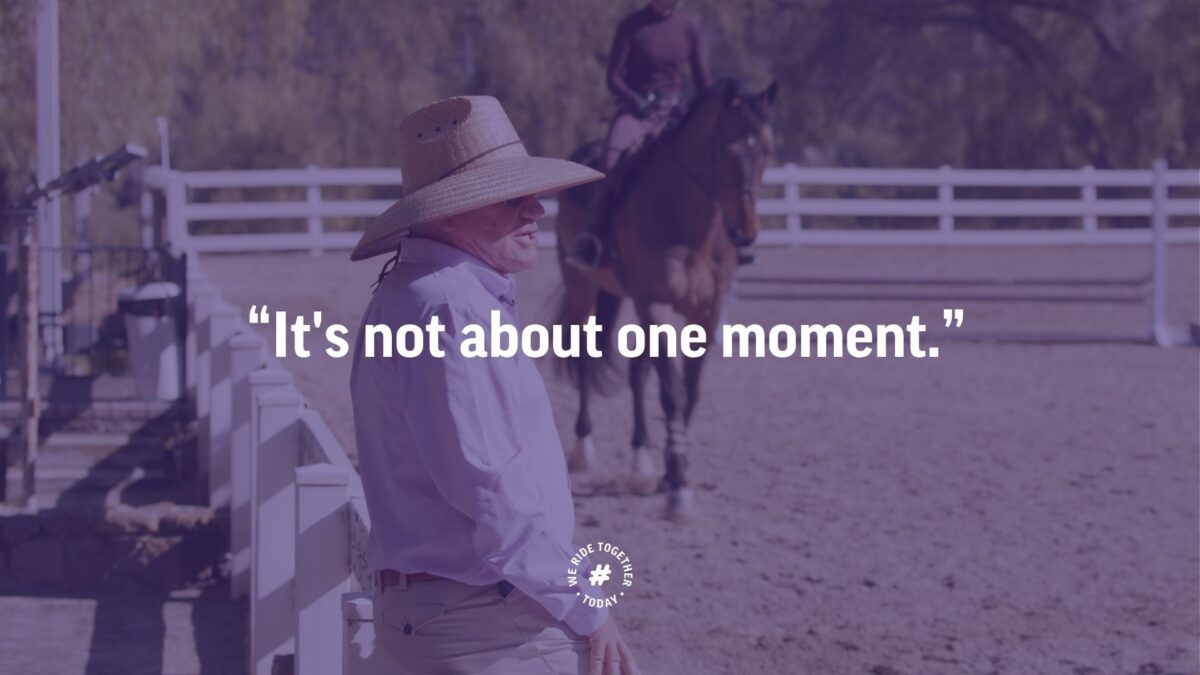
I’m like, “Oh my gosh, after all these years, I didn’t want that end for her.” And she said, “Jim, it’s not about that one moment. Yeah, we wish it hadn’t happened. It’s about all that we’ve done together with Julia.”
That was a gift I’ll never forget.
When you read about the coaches that fall apart—about how they lost track, where they started and where they ended up—it’s an addiction to winning. It really throws you off track.
And the kids feel it. Because if you’re not a winner, then what are you? Am I a loser? Of course not.
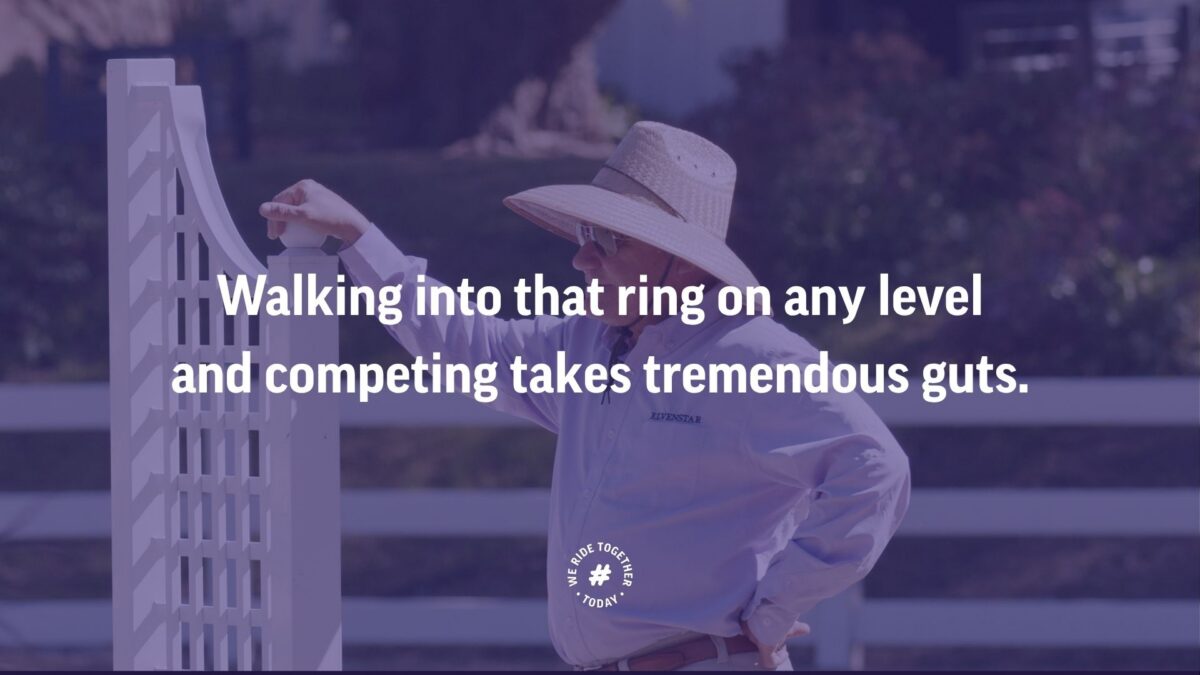
Walking into that ring on any level and competing takes tremendous guts. The courage of that is incredible. And it doesn’t get easier as you become more accomplished. Oh my goodness, is that pressure.
It’s important to educate and spread a positive word of how we manage ourselves, those around us, and those in the greater world. There’s so much more to this than just winning.
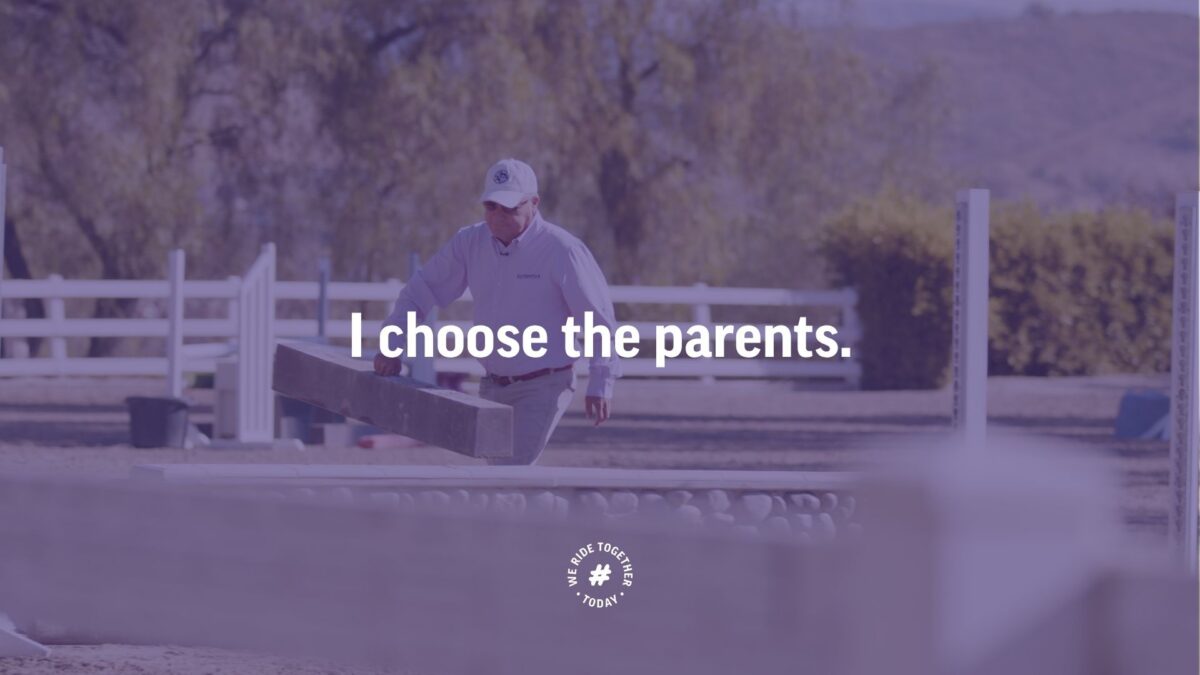
I’ve always said, I choose the parents. Not the other way around.
The parents love their kids. They want their kids to accomplish their goals. But if I don’t feel alignment with the parents, I can’t go there. They need to find a coach who fits them. Because it’s a group activity.
They’re helping us coach an athlete by being the parent of an athlete. That’s a challenge now more than ever.
For me, I look for a parent who knows that they’re not the teacher of the horsemanship. They’re the teacher of how to live—how to listen, be patient, communicate with us, and be open about other challenges that we may not see.
And they allow their youth to learn as they learn.
You know for sure when you see it—when the kids go off to college, and they leave having loved being with the horses in the journey. That’s healthy sport.
It’s focusing on the roots.
As my father would say, “Three things matter to a parent: The safety of their children. Their time. And their money.”
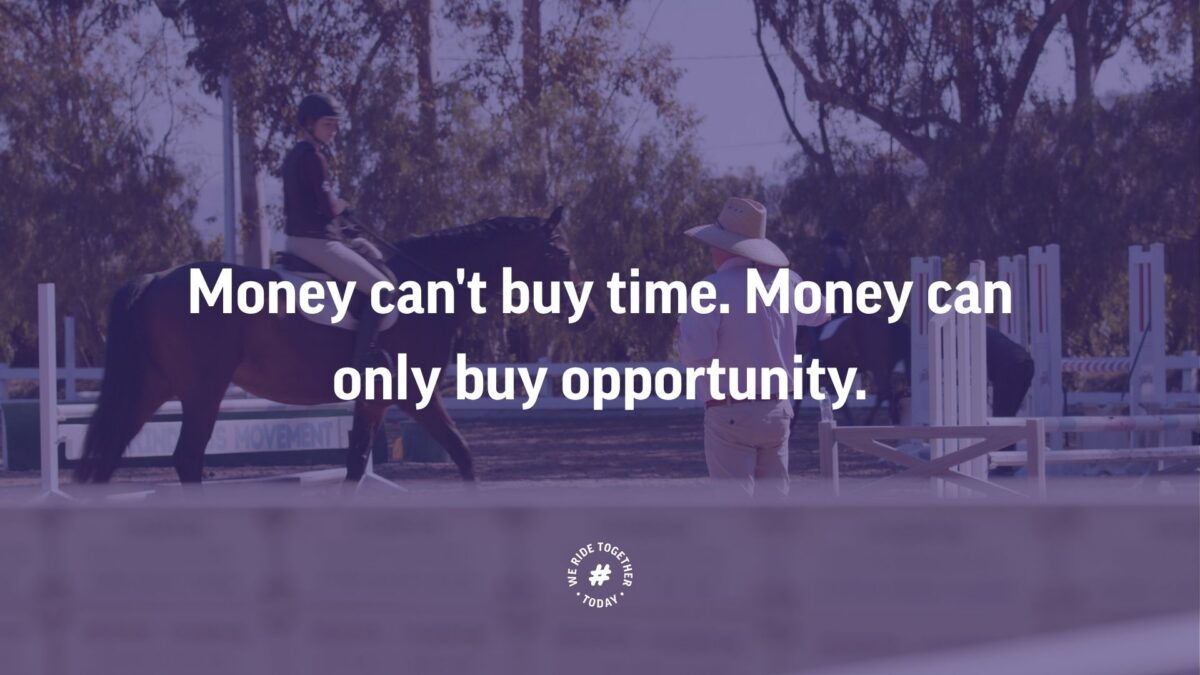
Guard those. Because money can’t buy time. Money can only buy opportunity. That’s it.
Hold those in your hands. Cherish them. Guard them. Watch over them.
For me, that is healthy sport.
#WeRideTogether is proud to promote winning well and healthy sport for all. Learn more at weridetogether.today.