
 August 29, 2026
Walking away with a medal is surely the easiest way to define success on the championship stage. The proof is there around your neck, or glowing on the leaderboard for all to see.
I put in the work. I built the partnership with my horse. I made the right calls on course.
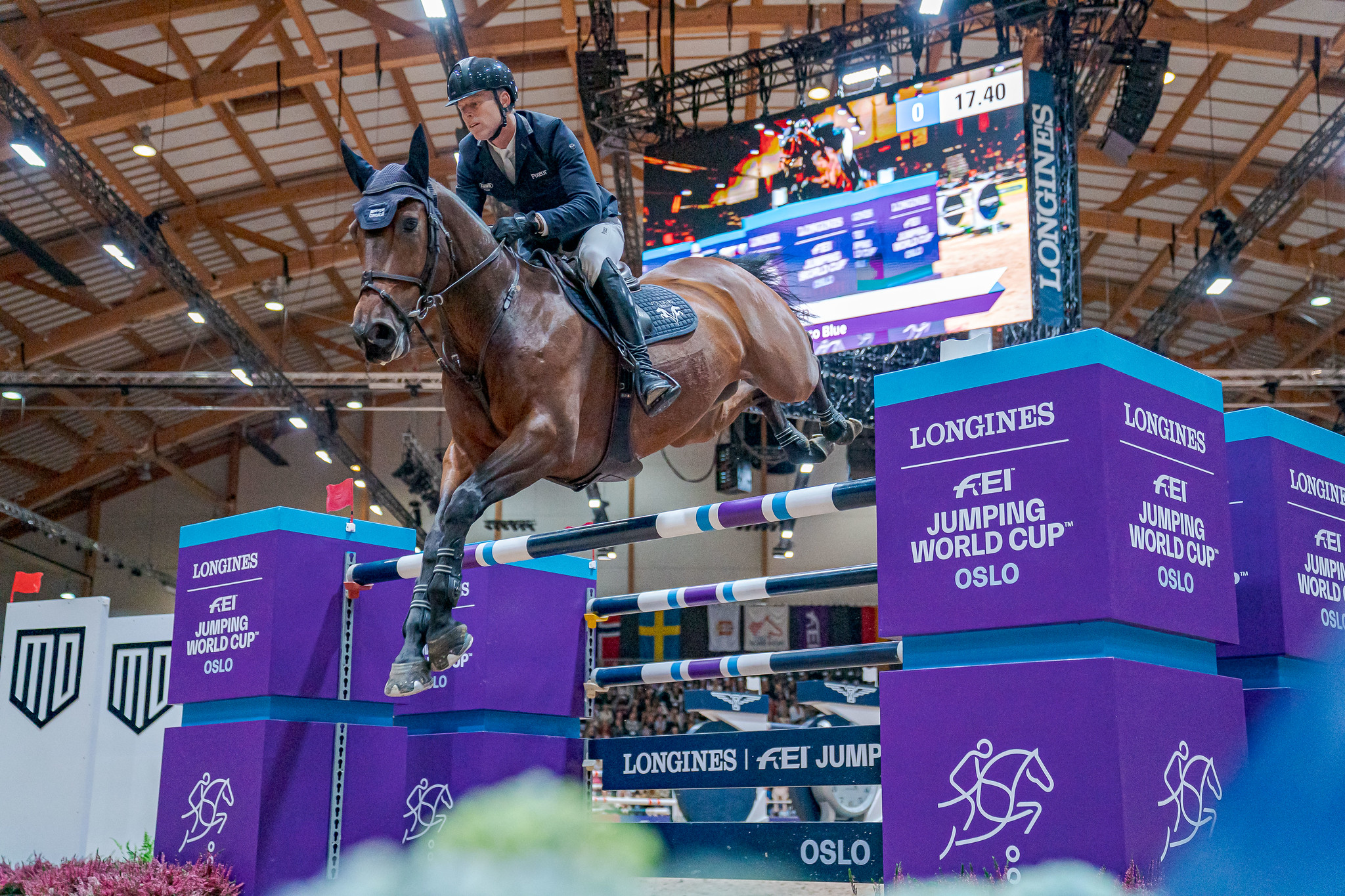
And all of that is true. But, sometimes, a rider’s success isn’t accurately captured by the result next to their name. Peder Fredricson’s performance at the 2026 FEI World Championships is one example.
Fredricson did not have the World Championships he was hoping for—and he’s a man who knows what it feels like to be on top of the podium.
The two-time individual Olympic silver medalist and former European Champion with the legendary H&M All In was part of the gold medal-winning Swedish team that took the World Championships in Herning by storm in 2022.
But this was the first major championship for Fredricson’s mount, the 16-year-old Selle Français gelding Alcapone des Carmille, a ride that Fredricson took over from Sweden’s Angelie Von Essen in 2024.
One-hundredth in the order for the First Team & Individual qualifier, the pair seemed to be off to a cracking start, even if the grass in Aachen had been well-trod up to that point.
Then, on the left turn back to the last combination, Alcapone slipped badly, looking—at least to gasping commentator Lauren Hough—as if he and his rider might be in danger of going down.
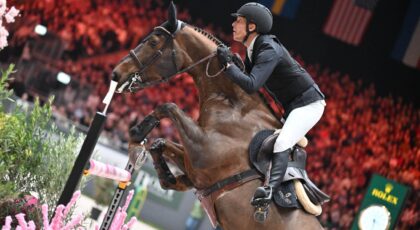
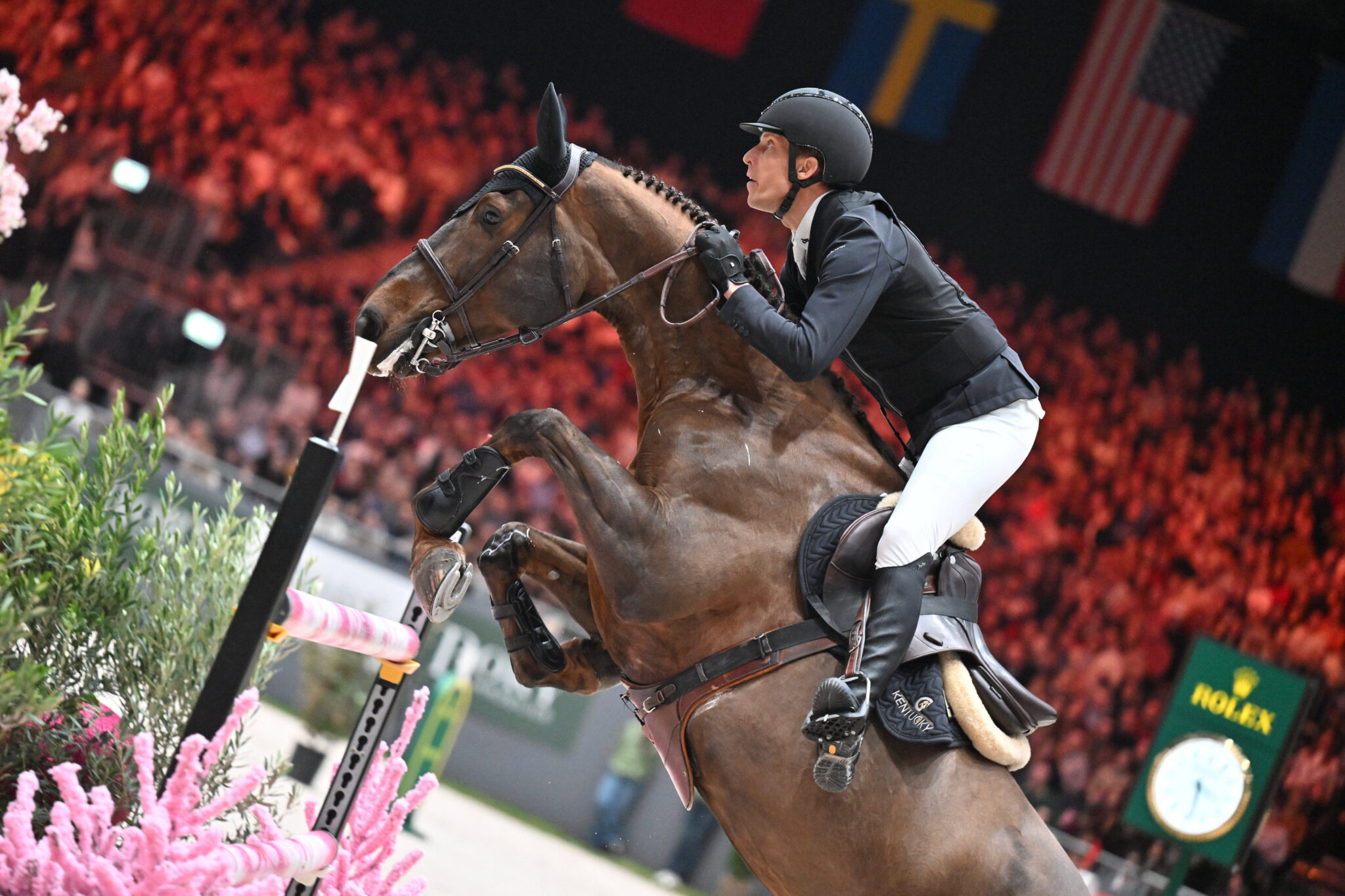
By the time Fredricson righted the ship, so to speak, he was underneath the first part of the double. Alcapone, somehow, just managed to clear ‘A’, but the pair landed with zero impulsion in the middle of the 1.50/1.55m, oxer-oxer two-stride.
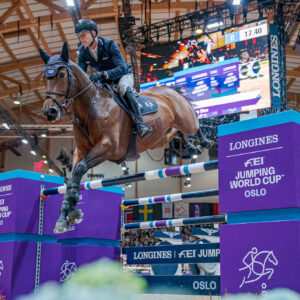
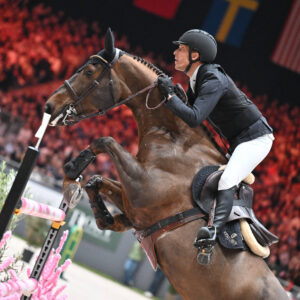
In a heroic bit of riding, Fredricson leaned back and kicked-on, throwing away his reins to give his horse freedom with his head and body in a way that Hough described as harkening “back to his eventing days.” (Fredricson competed in the 1992 Olympic Games in Barcelona in eventing.) The pair finished on just four faults. A single rail.
Audiences would come to learn later that Alcapone had lost not one but both of his front shoes mid-course, a stroke of bad luck that would come to overshadow the rest of their week in Aachen.
On Day 2, the previous day’s misfortune appeared to be lingering for Alcapone, who jumped higher and more carefully as the intensity of the course built, especially during the triple combination. But Fredricson remained a supportive partner—cool, calm, and dedicated to his plan, executing a clear round, and helping Team Sweden to finish the day on a zero score.
“Because we have three clear rounds [for Sweden], he knows he just wants to get this horse home [confidently], because he’s got to jump tomorrow evening,” Hough said.
“He never panicked. He held the horse’s hand, and supported him as much as he could without chasing him, and probably scaring him even more. That was some riding.”
Friday’s Team Final & Second Individual Qualifier was, notoriously, a far more difficult test.
The height was a daunting 1.65m, under the floodlights, with the open water in play—and nature contributing its own two cents with the addition of summer rain showers. Once again, Fredricson jumped late in the order—63rd out of 69 starters—something that couldn’t have assuaged any lingering concerns he might have had about wear and tear on the footing.
By the time he took to the Hauptstadion, things had unraveled for the Swedish team. They were on a score of 24. One of their riders had retired, so all scores had to count. As anchor, Fredricson’s job was clear: bring the team home with a score—any score—to keep Sweden in the competition.
After an early miscommunication at the second vertical, Fredricson and Alcapone aced what was arguably the most difficult part of the course: a scope-test-triple-combination followed by a quick five or six strides for most to the open water. After the oxer at Jump 9 came down, however, and a salvageable distance to the massive triple-bar double at 10a-10b was suddenly out of reach, Fredricson circled.
The crowd, as well as the English language commentators, thought the Swedish rider was retiring. The team was out of medal contention, after all.
But he didn’t.
Fredricson circled, regained his composure, and allowed his horse to regain his. Then, the pair completed the rest of the course without issue. In those critical split seconds in the ring, when the plan falls apart and a rider has to choose his course, he chose the hardest path: to finish. To bring Sweden home on a score, even a less-than-ideal one. But only after he gave Alcapone the time he needed to reset.
“He knew he needed to finish with a score, otherwise they would be automatic 10th place, with two retirements,” Hough assessed. “They might still be in tenth place, but good for him to come around and complete.”
Indeed, Sweden did finish in 10th, with Fredricson failing to make the top-25 cut-off for the Individual Final. “Let’s move forward,” he wrote on social media on August 23rd, sharing serene photos of his young horses growing up in Belgium.
For a competitor of Fredricson’s caliber, the wish to move on after a disappointing and, in some ways, unlucky championship is easy to understand. But not, I hope, before one other point is made.
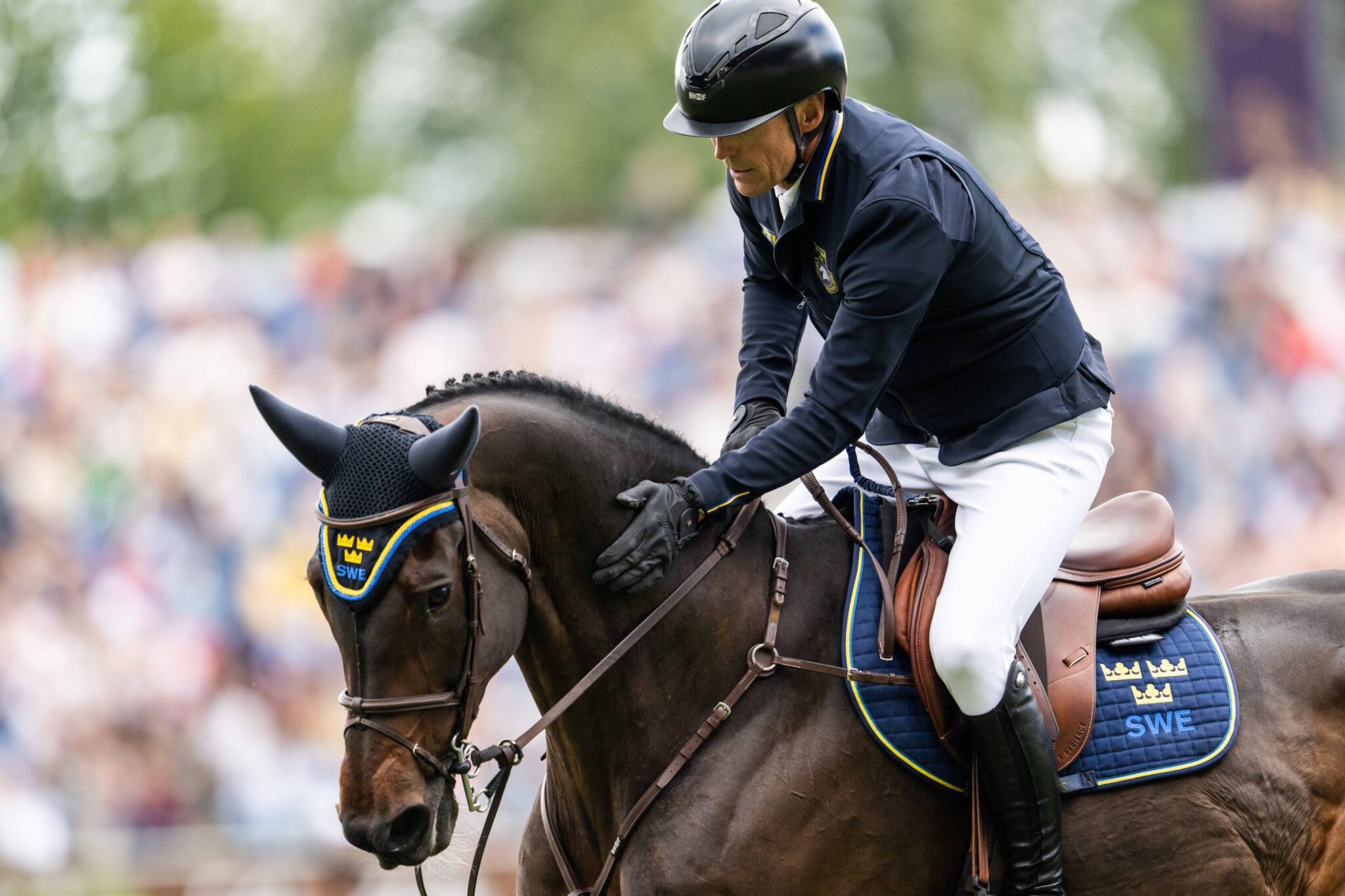
In the heat of battle, with the world watching in real time, Sweden’s anchor kept calm and carried on—for his team and his horse.
At every turn, Fredricson was the partner his gelding could believe in. The kind Alcapone could trust to get him through the challenges of the day, time and time again.
Fredricson acted with quick and impressive skill to salvage a tricky situation and protect both of them in the middle of the double on Day 1.
On Day 2, he was the calm and supportive presence his horse needed at a time when his confidence was shaken, riding to a steady clear.
On Day 3, when the pressure was at its peak, Fredricson made the right call on course to circle out and ensure he and his horse were safe. But when it came time to do the heavy lifting—to come back, to push through, and to put a score up on the board for his team, he stuck his courage to the sticking place and did that, too.
Even though Sweden would not finish on the podium. Even though retiring would have been a far easier option.
Fredricson showed what it means to fight; for your team, for your nation, for your horse. He showed what it means to be a teammate. He showed what it means to dig deep when things go off-track and stay the course.
Not all heroes wear capes—and not all riders come away with a medal, even when they give a championship-worthy performance.
It may not have been a podium this time for Peder Fredricson, but the Swedish rider gave audiences of the FEI World Championships something, in many ways, equally valuable: a master class in partnership, resilience, and doing right by your horse at the pinnacle of the sport.