
 June 9, 2026
It’s been a long while since my horse and I had a truly epic miscommunication. But—as wont to happen in this sport where future kings hit the dirt just as hard as everyone else—we made up for it in truly spectacular style in our jumper classic round on Sunday.
After laying down perhaps our best, first-round trip to date, I took too long giving my horse a breather before my jump-off round, then felt rushed on the way to the first jump. Things snowballed from there, and I failed to give him the competent ride that I should have.
What showed up at Jump 1 was the dreaded “no man’s land”: that distance that only rears its head in nightmares, or, alternatively, in a flukey instance when you’re under pace and mentally distracted on the way to the first jump. My valiant gelding, trying to save us, left too early, causing us both to crash through a big-enough oxer and go down.
Thankfully, my horse stood back up immediately, with only a couple small scrapes on his legs. I hit the ground hard, but rolling, and my safety vest went off without a hitch (shoutout to Helite!). Besides a sore shoulder and a fully bruised ego, I, too, am grateful to have emerged relatively unscathed.
Like most people who’ve been doing this for decades, this is not the first time I’ve fallen off at a horse show, or even on Sunday classic day (those damn white breeches give you away every time). But that morning, as I popped up to collect my horse, assured my trainer, friends, and the EMT guy at the rail that I was fine, I found that my brain was running slower and more methodically than it has in the past.
My immediate, nagging feeling, of course, was having let my horse down. As the best partner in the ring that I’ve ever had, bar none, the fact that I made us crash and likely scared him is something that will stick with me long after the stiffness fades, and this class is (hopefully) far in our rearview.
But while the guilt was expected, my other senses were far more controlled than they have previously been after falls. My adrenaline wasn’t surging, my heart wasn’t racing, and outside of the obvious, initial embarrassment—and the disappoint in blowing what was shaping up to be a super round—I was already thinking of ways to categorize and learn from the experience.
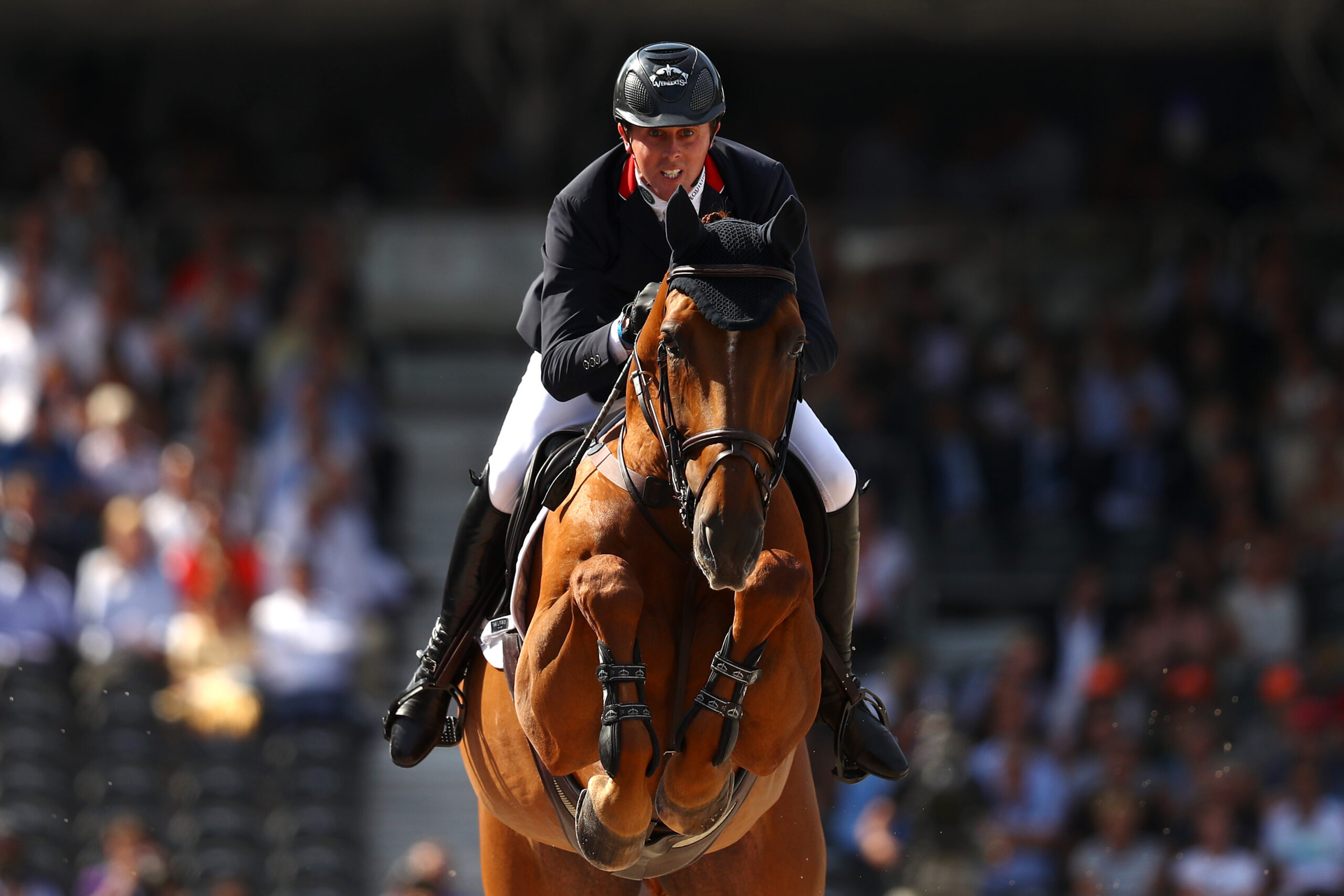
My immediate thought: Channel your inner Ben Maher.
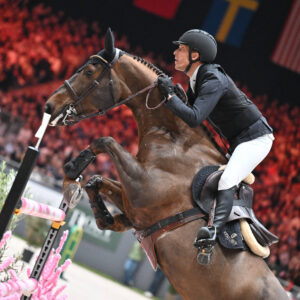
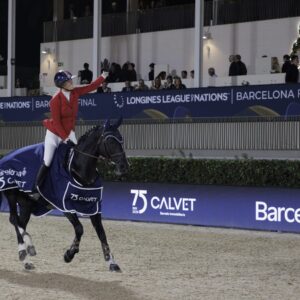
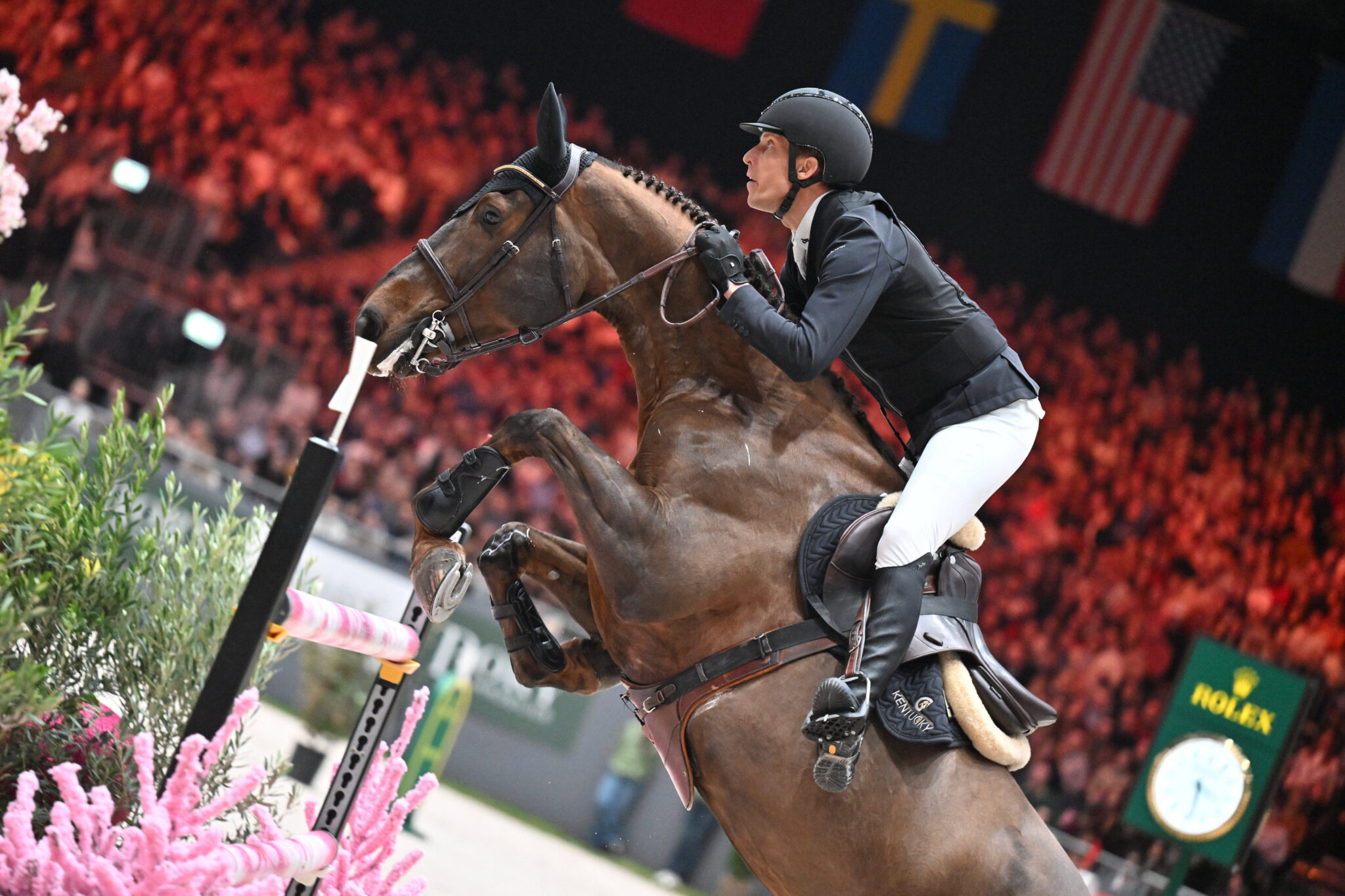
Ben is certainly not the only major rider to fall off in a class in recent months, but his unplanned dismount at the IJRC Top 10 Final at CHI Geneva in December left quite an impression on me.
Going for broke with one rail down in Round 2 of the prestigious class, Maher and Dallas Vegas Batilly had a miscommunication while slicing a tall vertical off a roll-back turn, and parted ways. Both horse and rider were fine, and there wasn’t much in the scenario that’s unusual—save one small but important thing that happened directly after their mishap.

Like all the other riders in the class, Maher was—likely by contractual obligation—required to participate in an immediate ringside interview after his round. And if you were watching live, you probably noticed that some riders handled this little hiccup better than others.
While every participant in the Top 10 Final is well-versed at being in front of the cameras after Grand Prix wins, doing so in front of millions of viewers, so quickly after a major, adrenaline-pumping round—which may or may not have gone well—is a totally unique format.
Some came off less articulately than usual, while others admitted to rare failings in a moment of pure, unadulterated honesty (see: “stupid riding.”) But not Ben.
At a time when eyes all around the world were fixed on the livestream, and every one of them thinking the same thing—Man I’d hate to be this poor b*stard right now—Maher owned the moment in a brave and unexpected way.
Ramrod straight and smiling, he looked into the camera and, in a clear, steady voice, replied to the interviewer’s question about his fall, saying the one thing that all of us in this sport knows in our hearts to be true, even if we lie to ourselves each and every time we sling a leg over:
“It happens,” he said simply.
“She’s a bit sensitive in the mouth this evening, I’m not sure why. But I didn’t have a lot to lose in the jump-off, I was [coming] quick on the angle, and she didn’t quite look with me. Not a good night, but it happens.”
And that was it. Maher told the interviewer about his plans to ride a different horse on Sunday, and off he went. A picture of class and, for this amateur rider, an example of the kind of winning mindset you need to have to be successful in this sport long-term.
We don’t often get a window into a top athlete’s psyche in moments like these, but Maher, at least in the face that he showed the world, is an example of how top show jumpers (and other professionals) continue to do this job, round after round, knowing all the time that falling and/or failing is an ever-present possibility.
No matter how good you are, horses can trip; they can react unexpectedly to jumps, tack, or atmosphere; they can miscommunicate with us in rare and spectacular ways (see: King Edward in the Individual Final at the 2024 Paris Olympic Games). In Maher’s interview, we can observe a clear process for how to deal with these setbacks and, most importantly, how to compartmentalize them and move on.
No, it wasn’t your day today. That sucked. What happened? What can you learn from this experience? What part of this ride can you control and fix the next time around, and what part can you chalk up to bad juju, fairy dust, or pure coincidence; an unfortunate roll of the dice.
For my part, I can fix the way I prepare my horse before the jump-off round. I can pay closer attention to the clock, better plan where I will make my approach to Jump 1, and focus on giving him the ride I normally do to the first fence at a jump-off-appropriate pace.
And the rest of it? It’s time to make like Elsa and let it go.
I wasn’t great about putting these things into perspective in the past. I had a tendency to over-overanalyze; to give too much weight to a specific incident or fall. I thought that if I hyper-focused—even languished—in the things that went wrong, I could somehow ‘do my time’ and prevent them from occurring again. But that’s not how this sport works.
As Maher says, at the end of the day, sometimes it just happens.
It happens whether you have three jumps under your saddle or 30,000. It happens whether your horse costs $5,000 or $5 million (though you’d better hope it’s less often in that case). We all assume the risks, knowing that, at one time or another, it will be our turn to unscrew the air canister, dust off our boots, and make that long, awkward slog back to the in-gate.
Being oh-so grateful, at least in that moment, that there’s no camera there to meet us.