
 April 8, 2026
Two summers ago, I cleaned out the tack room in my parents’ barn.
If anything accurately encapsulates my Vermont childhood, it is this old cow barn, home, over the years, to a parade of castaways and giveaways—sickly kittens, bunnies that bit, a goat of incalculable age (several generations of townsfolk claimed one-time ownership), and of course, horses of all shapes and sizes.
The tack room still held the trophies and ribbons from 4-H shows and summer camp competitions, hardened over with decades of dust and New England weather. It had a few old horsehair brushes with wooden handles burnished not only by my hands, but by those of countless others, as I had always acquired equipment from kindly mentors or the local Pony Club swap. It had photo albums with newspaper clippings listing my weekend placings on Misty, on Katriona, on Asil, on Echo. It had a pyramid of navy leg wraps, just as I had left them when I departed for college, smoothly re-rolled the right way for correct reapplication. Stacked on their shelf, below the thick-paned window, they suddenly represented every time I’d done something for the last time…without knowing it was the last time.
I was heartsick over the act of choosing what could stay and what should go.
It was like throwing away time—tossing aside hours and days and years of grubby, happy alone-ness with my thoughts and my horses. My study materials from Quiz Bowl—folders of faded printouts and hand-typed worksheets and penciled-in equine trivia—hit me as especially difficult to cull. It was in these pages that I could find the most direct line from the half-formed fledgling I was then to the middle-aged parent I am now.
I didn’t know when I re-rolled those leg wraps that I wouldn’t have a horse again for a long time, and I didn’t know when I diligently studied to make the state Equine Quiz Bowl team, and then go on to the national competition in Kentucky, that one day all that knowledge would actually be put to a far more practical use: For 23 years (and counting), I have edited and ghostwritten books about horses and the people who love and care for them.
I have had the honor of working with some of the most talented riders, trainers, health practitioners, and equine experts in the world over the course of my career.
Those folders of faded printouts were literally the blueprint for my entire adult life.
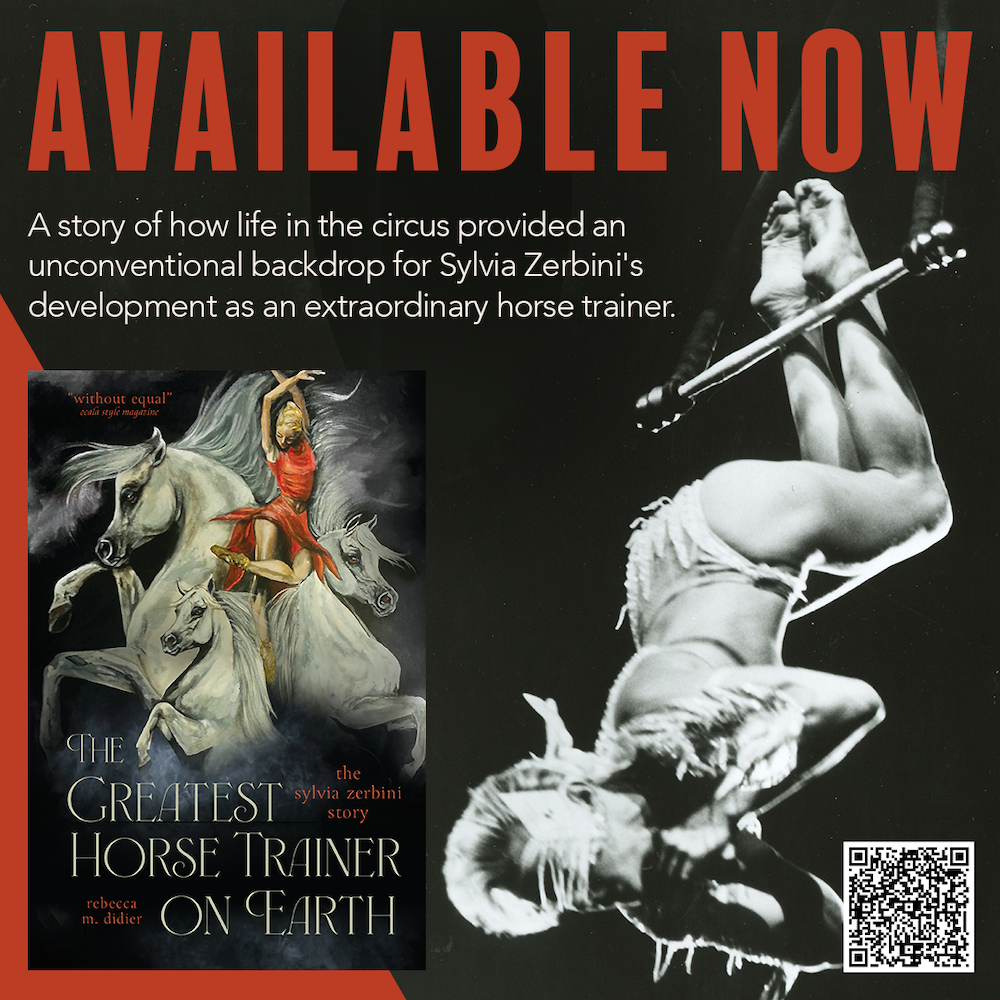
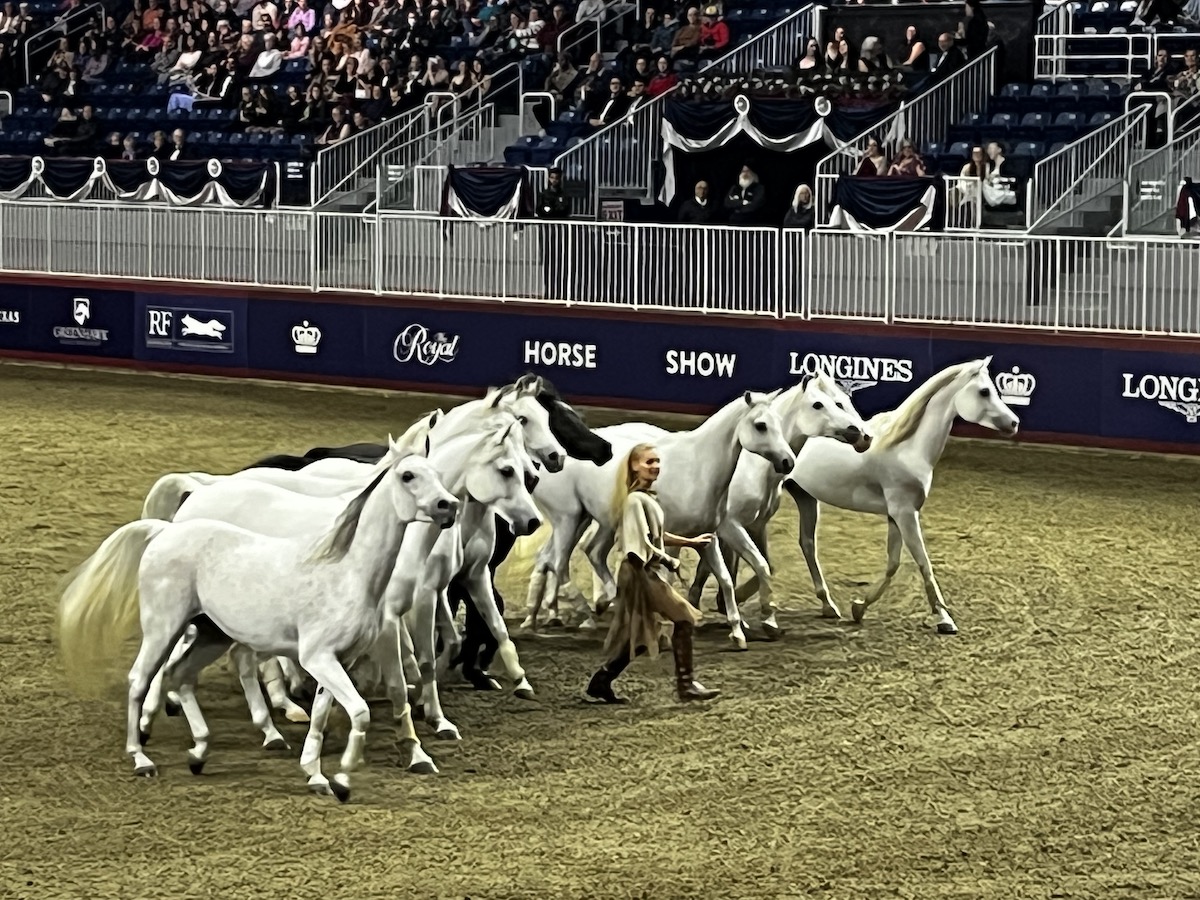
That same summer of the tack room cleanout, I was deep in the research and early writing stages of a book about a particularly enigmatic figure in the equestrian world. Her name was Sylvia Zerbini—a ninth-generation circus performer who had gained immense fame for her unparalleled liberty performances, featuring nine or more horses, most of them stallions, at one time.
Her ability to manage, direct, read, and respond to so many horses at once, without ropes and halters and high fences, was one that all my years of study and decades of personal experience could not come near to explaining.
Horses are complicated, feeling, emotional individuals—stallions often most so. They are prey in a predator’s world. Almost everything we ask of them goes against their churning inner instincts. The fact that horses so often appease us despite these facts is part of what binds us to them.
I, like so many others who have seen Sylvia Zerbini perform over the years, had found her dance with her herd of wild-maned black and gray Arabians one of the most profoundly moving events I’d ever experienced. Not only because it was artistically exquisite, but because I knew, as any horseperson would, the impossibility of her feat.
“Magic” is an overused word in general and certainly in the horse world, but it is a true struggle to find a more appropriate term when describing Sylvia Zerbini with horses.
I have dedicated my career to helping explain to “all the rest of us” what some people can do so well with horses, naturally. I have always tried to help the authors I work with make their flawless communication and connection-based training not about magic, but about understanding—an understanding that is attainable for all of us, humans and horses.
This was why I had initially proposed Sylvia write a book that helped illustrate her methods and from which the world could learn.
Sylvia, knowing better than I how she came to be able to do what she does, instead suggested I write the book, one that describes her unusual life, growing up in a circus family and then spending decades as an aerial performer, 30 feet in the air.
In speaking with Sylvia over many months, in visiting with her at her farm in Florida and watching her interact with her horses in the barn and the pasture as well as in the arena, I took note of certain aspects of how she comports herself. She moves beautifully, even when dealing with practical matters like delivering a flake of hay or lifting a hoof for inspection. There is a control that doesn’t feel contrived, only effortless.
Of course, I now know how much effort has actually gone into achieving her walk, and her gestures, and her posture: Sylvia was born into animal training, as her father had a famous “big cat” act and she learned early to do her part to care for the family’s animals as the circus moved from town to town. But she also was the daughter of a world-renowned trapeze artist. She was taught body control and impenetrable focus by two people whose lives depended on those very skills.
As Sylvia shared the fascinating stories from her past, it became clear to me that the mix of unique ingredients that had composed her life as a circus performer was the recipe for the “magic” with her horses.
The Greatest Horse Trainer on Earth (a title that plays on the famed Ringling Brothers and Barnum & Bailey trademark “The Greatest Show on Earth”) does not tell Sylvia Zerbini’s complete story. It also does not give readers step-by-step instructions for performing at liberty with multiple horses.
What it does do is lift the curtain on some of the life experiences that have enabled Sylvia to cultivate a continuous flow of communication that satisfies not only her, but her horses.
It also reminds of the grand circuses of yesteryear, and their one-time central role in educating and fascinating humankind, by turns. It shows us how, if we aren’t careful, what eventually happened to the circus—the removal of the animals that once were a principal part of every performance when wild animal training lost social license—can also happen to the equestrian world.
And it reminds us how the “greatest horse trainer” is within us all, if we dedicate ourselves to continuing to be better for our horses, and to doing everything possible to educate ourselves to further our understanding of them and their understanding of us.
“I know horses,” says Sylvia, “and if they understand us, they’ll do anything for us.”
The Greatest Horse Trainer on Earth: The Sylvia Zerbini Story by Rebecca M. Didier, releases April 7, 2026, from Trafalgar Square Books, an Imprint of The Stable Book Group, and is available wherever books are sold.