April 2, 2026
Within the first week of my daughter’s time at her new barn, I got a text from the trainer.
“She is talking in the tack room and already made a friend,” the text read.
It was such a simple thing, but it told me everything. In this barn, kids feel comfortable enough to just be kids. And I loved that the trainer saw this relationship blossoming and encouraged it.
There was a time when I thought the most important things in a barn were the obvious ones. Good riding. Opportunities. Progress. Results. Showing. Shiny horses. Winning.
But I’ve come to realize that isn’t always right.
I’m frustrated with myself because it took me longer than I’d like to admit to see it, especially because my kid is the kid who doesn’t say much. She works hard, stays grateful, and doesn’t complain.
But, over time, I noticed small shifts at her last barn. The way she second-guessed herself, the way she carried mistakes longer than she used to, the way the joy was muffled.
For a while, I missed it because from the outside, everything looked like progress. She was riding better, getting opportunities, seeing results that, on paper, looked like exactly what we wanted and what she had dreamed of.
Opportunities to ride and work off expenses made it easy to justify staying longer than we should have. I told myself it was part of the sport; that sometimes, it’s acceptable to be unhappy if you are getting better. If your values clash with the trainer, it’s no big deal.
What I have come to learn is that those red flags are not something to brush aside. We left that barn, and what surprised me most was how quickly I started to understand what my daughter had been missing.
A mentor helped us connect with another trainer who would give my daughter some ride time in a warm environment. And that was exactly what she needed as we figured out her next steps and picked up the shattered pieces of her confidence.
The new trainer saw who my daughter was immediately and she pointed out her strengths. “It’s so nice to see a kid want to work this hard.”
Instead of over-analyzing or picking apart every mistake, she gave her more fun things to do, like an adorable gray project mare to work with. “I have one that needs a job!”
In a good environment, effort is met with opportunity. Passion is rewarded, not taken advantage of.
Almost overnight, something shifted in my kid in this new environment. I watched her find joy in the little things again and focus on the process rather than the outcome, like a good horsewoman should.
A good grooming. A solid transition. Jumping the spooky jump the first time. Cantering away quietly. Getting a lead change without rushing through it.
Not because she was afraid of getting it wrong, but because she wanted to get it right.
She started riding more horses, too; green ones, babies, made ones. “How many can you ride today?” the trainer would ask. No pressure to lease, no pressure to show, just opportunity.
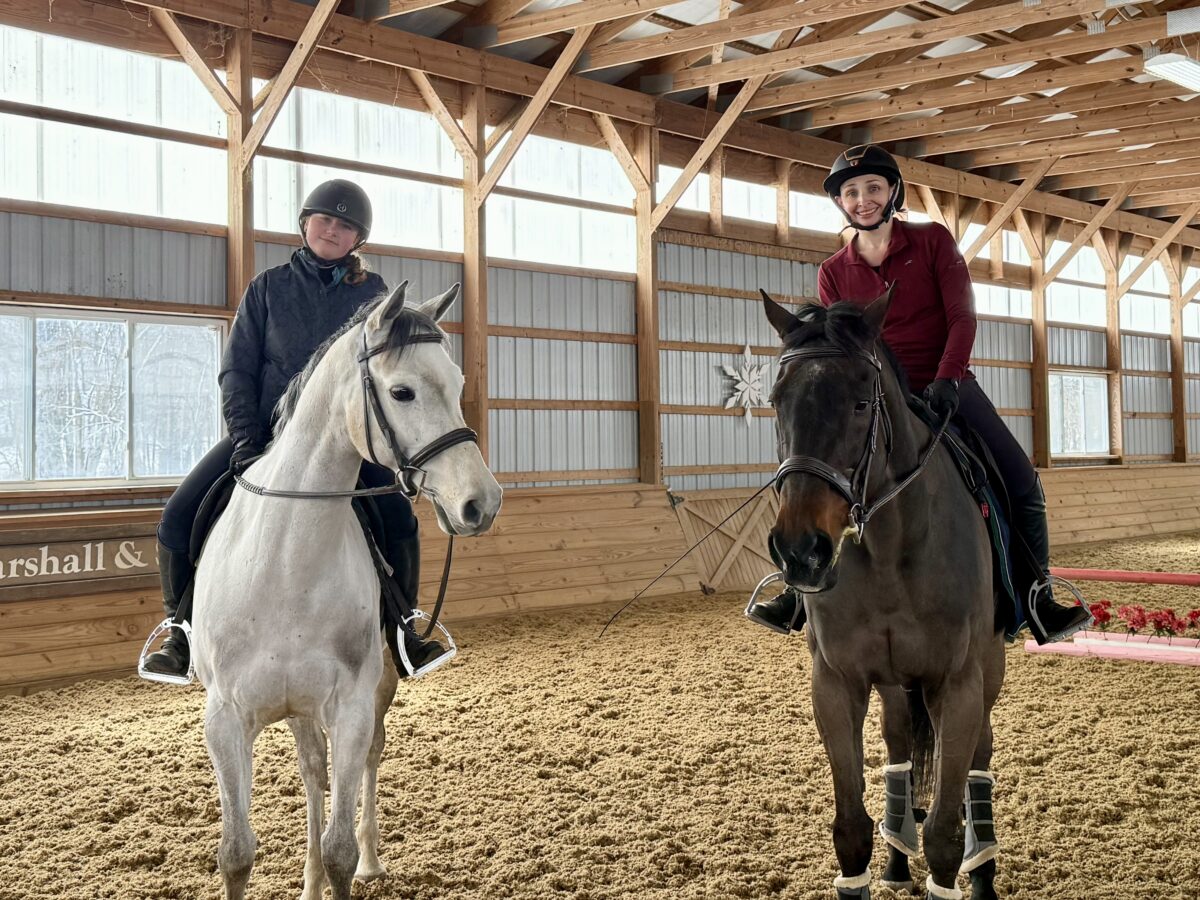
Day by day, ride by ride, my daughter was learning to trust herself again. “I got to jump the new guy today!” my daughter would gush when she got home.
“She’s smiling more,” the trainer told me. “And she’s saying ‘sorry’ less.”
I didn’t even realize how often my daughter had been apologizing until she stopped. That, more than anything, was my wake-up call.
Similarly, I didn’t recognize how tense we had both been until we weren’t anymore. I could finally breathe again. What I now understand is that, for my kid, this is the type of environment she needs to flourish: one where kids don’t feel like they need to apologize for things that aren’t theirs to carry.
They can just do the horses. They can follow their passion. They can just be.
It wasn’t the big moments that told me this was a healthy place for her. It was the small ones, the ones you might miss if you are only paying attention to progress and ribbons, like I had been.
One night after riding, my teen came home with a big grin and said, “We all got Chick-fil-A.” The trainer had brought dinner for everyone, just because. Over the holidays, the she gave my daughter a gift along with her other clients.
These gestures resonated with her, because a good fit isn’t just about good riding, it’s about how people treat each other when no one is keeping score. It’s about community.
And, while a good fit looks different for everyone, there are some non-negotiables.
What I believe is that you deserve to be challenged in a way that builds you, not breaks you. You deserve a trainer who can push you while still protecting your confidence. You deserve to be in a place where kids and ammies support each other instead of quietly competing in ways that make them feel small. You deserve to be a part of a positive community.
It’s not about the fanciest horses or the most competitive program. If you only look at results, you are selling yourself short. You deserve more than results. You deserve to feel valued, and so does your passion.
And here is the part we don’t always realize soon enough. We get to choose our barn families. If something feels off, if the joy starts to fade, it’s worth paying attention. Even if everything looks perfect on social media, even if you are riding better than ever, even if there are ribbons to boost your ego.
Pay attention to the things that may seem minor but matter most. Watch how the horses are handled. Watch how mistakes are handled. Watch how people treat each other when no one is watching. Those things will tell you more than any show record ever will.
Do the values at your barn align with your own? That’s the real gut check.
I knew I was raising a good and kind horsewoman, and I wanted her to be surrounded by people who reflected that; who would challenge her but also support her, who valued kindness as much as results, and who put the horses first.
Because now, my kid is not just riding. She’s somewhere that lets her love it, where her passion is protected.