July 23, 2026
“I could have done better.”
My daughter said it after a local derby where she finished fourth. In fact, I’ve heard that phrase a lot from her lately.
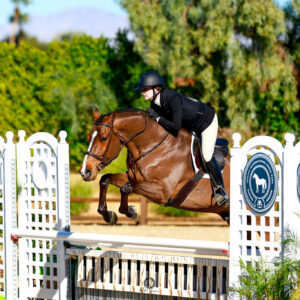
At first, I didn’t understand the disappointment. Overall, she had ridden very well. This was only her second show on a new lease horse. She even won $100—which in the hunters is like winning a million.
“I just want this so badly,” she finally said. “I am going to use this to do better.”
Someone could say it was “just” a local derby. Why did it matter so much to her?
But it mattered. She wanted to be her best at the thing she loves most in this world.
And I think that is something most horse people understand. Whether we are chasing year-end awards or simply trying to nail a lead change we’ve struggled with for months, we all know what it feels like to leave the ring wishing we had just a little more to give.
Rated or unrated wasn’t the point.
She showed up intending to bring her best and give it her all, and she knew she hadn’t quite done that. It didn’t matter to her that it was a new partnership or that the derby asked some difficult questions of the horses and riders. In her mind, she still could have ridden it better.
After her first round, she came out disappointed. She thought she was done and suddenly remembered the outside jump, so her turn was a little wonky. She hid it well, but it did impact her score.
When she exited the ring she said, “I could have done better.”
“You still rode well,” I assured her with a smile.
Then, the next round, the handy was nearly flawless until the trot jump. When she came out, she gave her horse a big pat, but she didn’t wear a smile.
“That was a beautiful round,” I said.
“Yeah, but the trot jump,” she looked at me. “I tried to get him to trot but he didn’t listen in time, so I only trotted right before.”
That one moment, those few extra canter strides, one small mistake cost her a better ribbon.
When she got her white ribbon, she seemed disheartened. At first, I couldn’t understand it—I tried to rationalize with her.
“It was still great.”
“There were a lot of people.”
“This is a new horse for you…”
But none of it seemed to make a difference in how she hung her head and how her mouth didn’t quite form a genuine smile.
On the car ride home, she was quiet. I tried to cheer her up with her favorite hip hop music, but still, she was contemplative instead of talkative. At the time, I thought she was being too hard on herself. It didn’t quite sink in—though I am a rider myself.
Then, it happened again this week when she attended a clinic with Carleton Brooks.
It’s interesting because I wasn’t able to be there. When I asked her via text how the clinic went, she said, “Good!” So I assumed it had gone perfectly.
When I asked her in person—I mean really how it went—she said, “Neutral.” At first, my heart dropped.
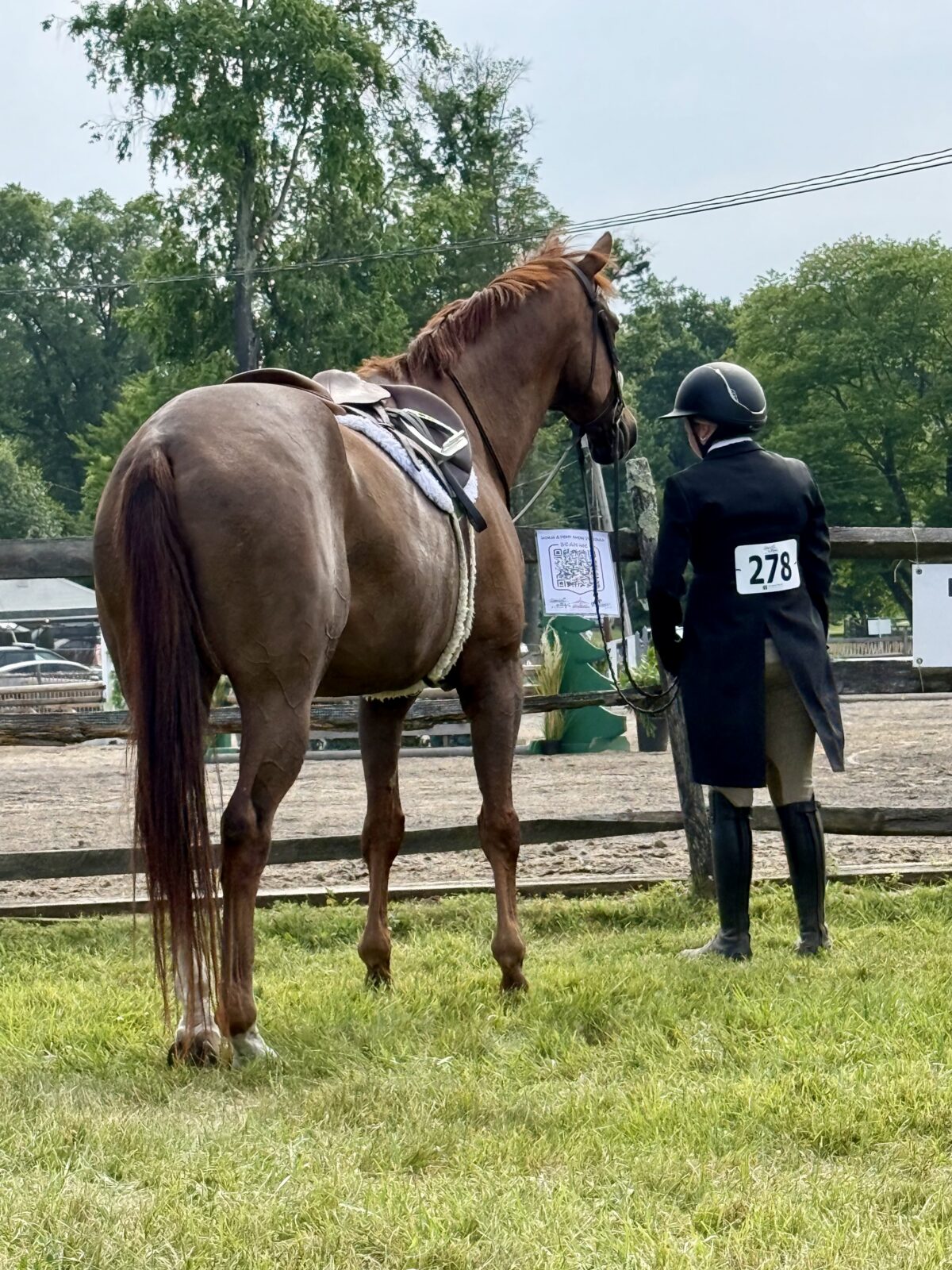
The clinic hadn’t gone perfectly. In fact, there were a few moments when she wondered if she belonged in the ring.
At one point, when Carleton asked her a question and she thought she had gotten it wrong, she teared up with embarrassment. But instead of giving up, she took a breath, pulled herself together, and continued.
She told me that even though she felt overwhelmed and unsure at times, she rode through those feelings. Carleton even gave her some extra time at the end so she could do the exercise one last time—a show of kindness and patience that left her feeling encouraged rather than discouraged.
“I could have done better,” she went on. “I didn’t ride my best, but I want to ride with him again. I learned so much. And I want to show him what I learned.”
This time, I didn’t rush to reassure her. Because that response was incredible, really. She’s only 16, and instead of feeling shame that some of the clinic was a struggle, she saw it as a stepping stone—a way to better herself as a horsewoman.
That’s when it clicked for me. A week apart, two very different experiences had produced the same response. Not embarrassment. Not excuses. Not blaming the horse, the course, or bad luck.
Just one simple question: How do I do better next time?
How many of us have walked out of a lesson, a clinic, or a show replaying the mistakes instead of the successes? How many of us have looked back on a ride and thought about the distance we missed or the opportunity we let slip away?
The details may change, but the feeling is the same. We care deeply about the horses. We love this with our whole hearts.
When we fall short of the standard we set for ourselves, it’s up to us to decide what comes next. The horse world teaches us many things, but one of the most important may be learning how to fail, regroup, and come back better the next time.
And what I realized was that trying to make my daughter feel better about her rides wasn’t the point here. The point was giving her room to feel disappointment, learn from it, and move forward.
At first, I heard those words, “I could have done better,” and wanted to jump into fix-it mode. But she wasn’t asking for excuses. She was focusing on improving.
Of course, that doesn’t mean the wins shouldn’t be celebrated. The horse world can be hard enough without constantly moving the goalposts. Fourth place on a new horse is still an accomplishment. Riding through a difficult clinic is still a success.
But I think there is a difference between celebrating the good and pretending there is nothing left to learn. The best riders seem to find room for both.
I think back to friends who have come out of the ring disappointed and how I rushed to console them with a hearty: “You still did great.” But maybe that is not what they needed or wanted in the moment. Maybe they just wanted someone to listen.
I’m going to try harder to do just that: to listen instead of fix. To be there, and to remind myself that it is okay for my kid to be down. She doesn’t need to be the big winner every time. In fact, that’s not what life is all about.
The older she gets, the less she needs me to explain away every disappointment. She already knows the good in those experiences. What she needs is room to reflect, room to learn, and room to figure out what she’ll do differently next time.
Maybe that is true for all of us.
We don’t need someone to tell us our mistakes didn’t matter. We need trainers, parents, friends, and barn-mates who believe we can learn from our mistakes. That doesn’t mean we stop celebrating the wins. It simply means we leave room for both pride and progress.