
 December 16, 2025
You never see the face of “Emma,” the focus of #WeRideTogether’s short-form Out of Bounds PSA “It’s Not Just a Ride Home”—and that’s the point.
While following Emma through the various facets of her day—at basketball practice and biology with a friend, moving through the hallways between classes—the camera doesn’t cut away.
As we soon learn, Emma is being groomed by her abusive basketball coach. But the reason we don’t see her face is deliberate: Emma could be your best friend, your sibling, or your co-worker.
Some elements might even feel familiar to you.
Through its thoughtful narrative focus, “It’s Not Just a Ride Home” allows viewers to envision themselves as the subject of Emma’s storyline. The PSA provides insight into the short-term aftermath of experiencing trauma, and encourages learning about the signs and stages of grooming. The final take-away is hopeful: providing an example of safe, active bystander intervention from Emma’s friend.
“It’s Not Just a Ride Home” is one in a series of four, award-winning PSAs created by the nonprofit #WeRideTogether to shine a light on key issues surrounding the experiences of survivors of abuse. The series, which has been organically translated into six different languages, has garnered more than 37 million views and numerous accolades.
And that’s just the tip of the iceberg.
The Out of Bounds series consists of four short-form PSAs, each of which explores facets of the victim experience, inside and outside the world of sports, and provides insight, language, and metaphor into “what it’s like” to be a victim of sexual abuse or misconduct.
All of the PSAs are accompanied by informative, long-form roundtable discussions, led by a panel of subject matter experts, which serve to expand on the topics within each and offer nuanced insights and interventions with the ultimate goal of ending sexual misconduct.
The roundtables focus on the various journeys of survivors in educational and athletic arenas, as well as outside of them: their struggles with reporting processes and judicial systems, for instance. Or the difficulty that comes with interacting with family, friends, teachers, and peers after abuse has occurred.
“Stop Asking,” the next PSA in the series, tackles the common questions survivors of all identities face after experiencing sexual abuse. Abuse is hard to talk about, and even harder to endure, and the video encourages audiences to pivot away from common responses centered on victim shaming and blaming (think: “what was she wearing?”), to offering compassion and support for survivors.
The subsequent roundtable discussion for “Stop Asking” focuses on aspects related to disclosure and response, and best practices for supporting survivors. It also offers some basic steps for creating a cultural shift towards believing survivors and holding perpetrators accountable.
By highlighting the experience, emotions, and nuanced difficulties faced by survivors, the Out of Bounds series allows viewers to walk in someone else’s shoes as they navigate a survivor’s journey, from interpersonal struggles to societal views at large.
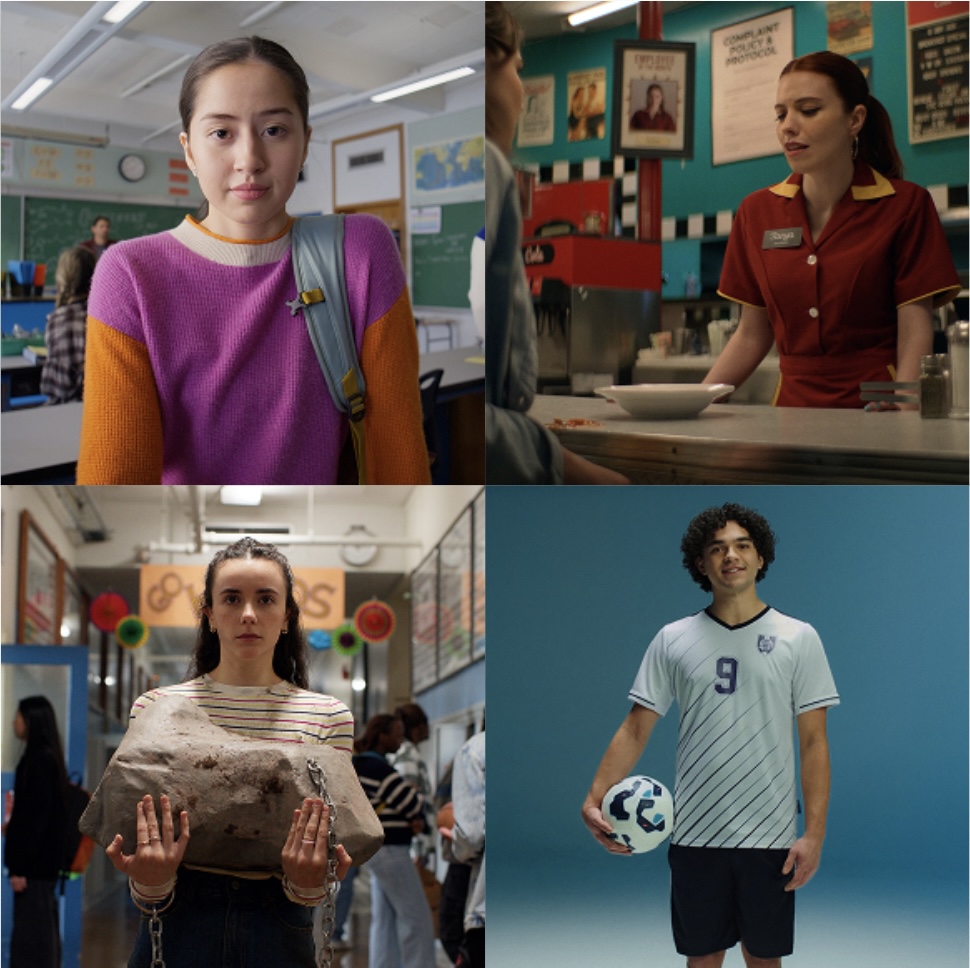
In “W.T.F. – Wait, That’s Fair?,” for example, the audience encounters the realities of common societal responses toward abuse, putting them in the driver’s seat of a justice-seeking survivor. The PSA uses the clever analogy of a patron sitting down at the counter of a dystopian diner.
The storyline begins with a shocking transgression—the patron is doused with a plate of brown food she didn’t order—and the affronts continue from there. But the metaphor is hard to misinterpret.
The wildly inappropriate conduct of the diner’s management is representative of the poor institutional responses sexual abuse survivors often experience within the halls of “justice.” From the civil to the criminal, these broken systems are further unpacked in the “W.T.F. – Wait, That’s Fair?” roundtable, including how they could be more survivor-centered and trauma-informed.
Finally, the most acclaimed PSA in #WeRideTogether’s Out of Bounds series is its third installment, “Life Sentence.” The video uses the symbol of a large rock attached to a survivor’s wrist —the proverbial ‘ball and chain’—which she’s forced to carry throughout the course of her day in high school, resting it on the table next to her while she studies, or hefting it in her arms while she runs a race.
“Life Sentence,” provides a striking, visceral representation of the invisible burden survivors are forced to carry after experiencing sexual abuse. The accompanying round table discussion centers on the long-term impact of abuse on survivors, with suggestions for their parents, ideas for creating safe spaces, and tangible anecdotes and frameworks for empowering and supporting them.
By highlighting the long-lasting experiences, emotions, and nuanced difficulties faced by survivors, #WeRideTogether’s Out of Bounds series asks the audience to consider the often-unseen ramifications of trauma. The hope? That we can all do a better job taking action to prevent abuse before it starts, while also supporting those survivors who are left in its wake. For more information and free resources, check out #WeRideTogether’s Out of Bounds series. You can also find abbreviated versions of the roundtable discussions on Spotify and Apple Podcasts.