
 September 8, 2025
“Why’s he going so slow?” says the person next to me. It comes out almost like a groan.
“He knows he needs to get a clear,” I reply, and something blooms inside my brain, a revelation.
Strategy. Brilliant, and shining like a diamond. Imagine, a rider on a thousand-pound-plus animal, adrenalized, exhausted after two rounds of harrowing competition, and yet—
Such precise execution is possible.
Fast, but not too fast. Just fast enough so the next one will have to chase you. But not so fast that you can’t get the careful clear. Play it perfectly.
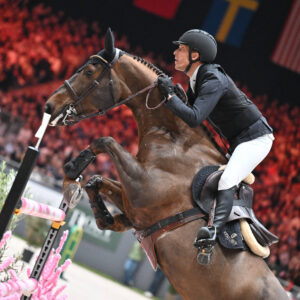
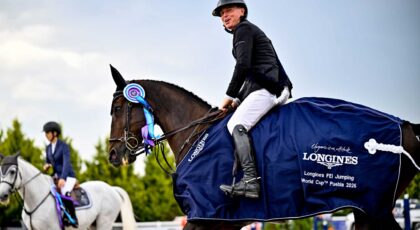
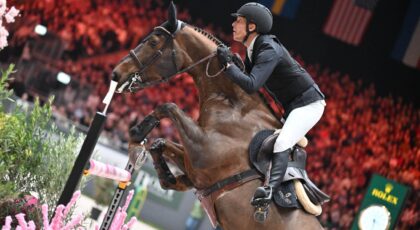
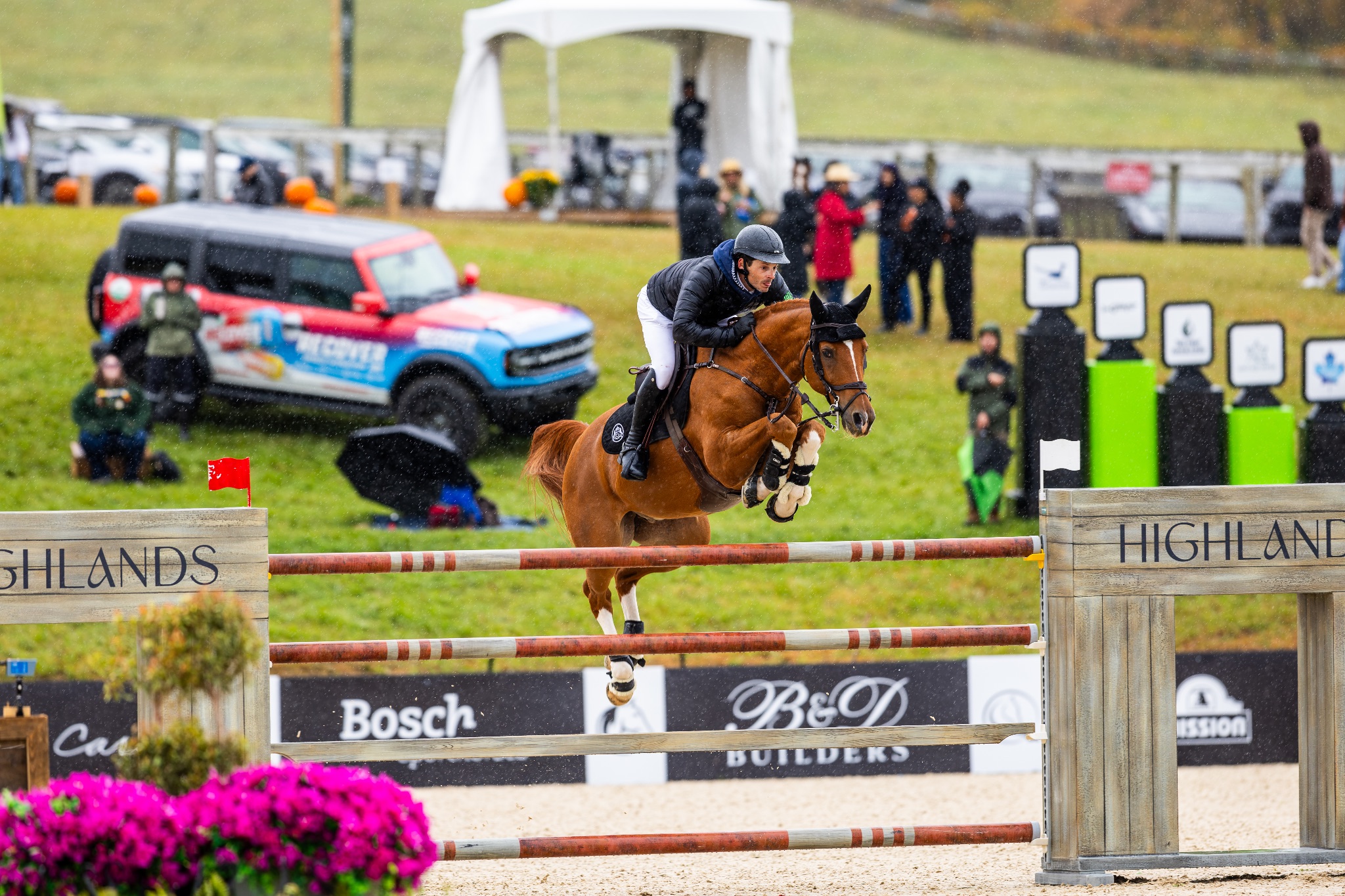
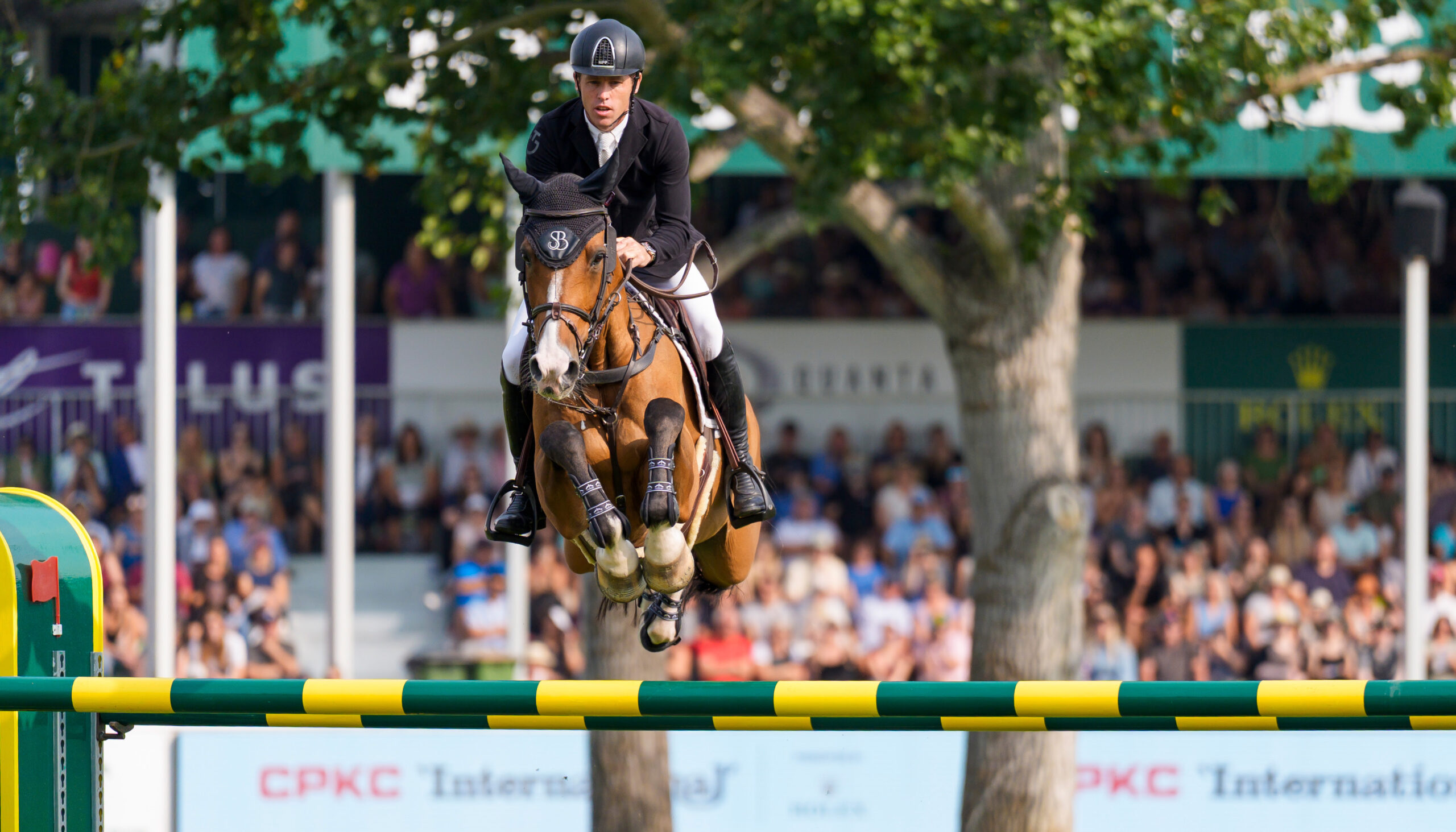
We are watching Scott Brash and Hello Jefferson in the jump off for the 5-million-dollar CPKC International Grand Prix, the biggest Grand Prix of the year, the biggest prize money pot in Spruce Meadows’ history, celebrating the 50 years of its existence. And part of the Rolex Grand Slam.
Scott Brash, the only Grand Slam winner in history. To become a Grand Slam winner, you must win three victories in three of the Grand Slam Grands Prix in succession, which take place at CHI Geneva, the Dutch Masters, CHIO Aachen, and, of course, the Spruce Meadows Masters.
Whoever has won the latest of these becomes the Grand Slam live contender.
There are two vying for this spot on Sunday, Scott Brash and his sole remaining rival of the day, Kyle King. They are also vying for a crazy amount of prize money. Five million Canadian, which translates to 3.6 million USD, 3 million Euro. And no one was going to make it easy.
Spruce Meadows, known as the breaker of hearts.
We started the day with 36 contenders. Some called the first round course “diabolical,” others used the term “unjumpable,” but as soon as it was over, with 11 clears and three earning only time faults, everyone complained it was “too easy.”
But when you have some of the best in world at hand and hefty horse-sport-sustaining funds for the getting, you’re going to see masterly execution. The riders—all—came to win.
Anyone who had doubts about the difficulty of the first round course had their mouth promptly closed and sewn shut at the introduction of round two. Someone called it a messy, nasty little course.
Set up a triple in the shadows, under the four large trees that grace the Spruce Meadows International arena. Add a dry ditch under the second jump of a double, something we show jumpers never see. Then give us a last line no one managed to jump without a fault, a last line consisting of those enormous set of double liverpools built into the south end of the arena jumping toward the in-gate. And once you have your horse stretching long over them, put up the famous spindly bicycle jump vertical right after. And don’t forget to top everything on this last line with invisible-to-horses red poles.
Twelve horses in this second round.
We had the current Grand Slam live contender, Martin Fuchs with Leoni Jei. A brilliant first round sent him into the second round with the hearts of his fans pounding and full of hope. Shattered when he misjudged the distance to the first (the first!) and horse and rider landed on top (on top!) of the oxer and fell to the ground.
“At least no one is hurt, both are ok,” says someone who knows nothing. The camera follows Fuchs as he and his inflated safety vest stalk off the field. It catches him later alone, leaning against a fence, staring away from the crowd, looking at nothing.
Another moment when hearts filled with hope came with the last rider of the second round, Sophie Hinners with Iron Dames My Prins.
Eleven horse-and-rider combinations had tried the course and no one had gone clear. Scott Brash and Kyle King exited the test with four faults each, so the question became: Could Hinners, a young upstart at 27, get a clear and win the whole thing, denying a jump off and besting the boys?
We couldn’t decide what we wanted, a Hinners win, or to see another round of competition. We couldn’t decide—
Then the last jump of the triple under those shadowy trees and fate decides for us: we will have a jump off. Will Hinners join? The last line says no.
So here we are: Scott Brash and Kyle King. Hello Jefferson, 16 years old and Brash’s partner of 8 years versus Kayenne Z, a young 10 and working on a partnership with King of only 7 months.
But King has an advantage, having turned in a faster round two performance: he goes second. He’ll know what he has to do.
The jump off course is built much prettier than the second round. We have long gallops, looping rollbacks, individual jumps and the tricky triple under the arching, shadowy trees has become a double. Fast and smooth.
But that’s the question: How fast? First to go, Brash needs to play it perfectly. Go too fast, get a rail, and King has an easy job: a slow clear. A meander around the course. He could win it even with a couple time faults. Go too slow and King still can grab the trophy easily, just up the speed a notch and win it. A Goldilocks dilemma.
Execute just right, fast, but not too fast, careful and clean, and you have him right where you want him.
Which is right where King ended up. Down came the top plank of the wavy Canada fence and he ended on four faults, second place. No disappointment there for the newly minted partnership—an incredible performance over three rounds.
And there’s Scott Brash, former world number 1, current world number 5, Olympic team gold medalist, master strategist, the only Grand Slam winner in history—he has won the day and earned himself the spot of current Grand Slam live contender.
Not to mention a whole lot of moolah.
Be social! Follow Erica Hatfield & Eye Candy Jumpers: