August 25, 2025
There are a million ways to procrastinate your weekly to-do list. But chances are you, like us, probably spend at least a little of that time looking at horse-for-sale videos.
Maybe you’re doom-scrolling top farms and trainers on Instagram or clicking through the Facebook classified groups. Maybe you’re falling down the European auction video rabbit-hole. Whatever your preferred poison, it’s an easy way to kill time, whether you’re seriously shopping any time soon or not.
And—shotty quality and questionable Europop music choices aside—sales videos can actually tell you a lot about a potential prospect. After all, for every Greya, Checker 47, Leone Jei, or Hello Chadora Lady, there was probably a grainy, indoor free-jumping video of that very same youngster, forecasting tales of its future greatness.
That is, if you know what you’re looking for.
We caught up with Dr. Tim Worden, a sports scientist who has worked with numerous FEI-level show jumping riders, to unlock some of the hidden signs of show jumping potential.
“Scouting horses is about elimination—when you have a clear set of standards and requirements, it becomes easier to focus on the horses that will fit in your system,” he says.
“Having criteria related to body morphology, competition progression, breeding, upbringing, training foundation, and so on, is critical for effectively narrowing your search for the next superstar. Once you have eliminated those horses who fall outside of your criteria, it is then time to study [the] film.”
Body Awareness
According to Worden, young sport horses are not unlike young human athletes, in that having movement literacy (the ability to perform a wide range of movements under varying constraints) is a telling first indicator.
“When you watch young horses, you want to see that they are deliberate in their movements with excellent bodily awareness. If a horse is approaching a jump and methodically building force (i.e. progressively driving the hooves more and more into the ground), you want to see an outcome that is congruent with the strategy the horse applied. In other words, a powerful jump,” Worden says.
“Today’s courses are so technical. A horse needs a diverse set of skills to consistently jump clear.”
Mechanics
Whether clearing the towering tracks of sprawling grass Grand Prix fields such as Spruce Meadows or acing the delicate materials, tricky lines, and ‘scope tests’ of smaller rings at venues such as the Longines Global Champions Tour, the questions for today’s sport horses are diverse, complicated, and unrelenting.
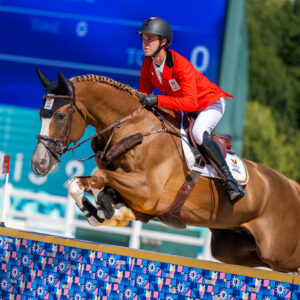
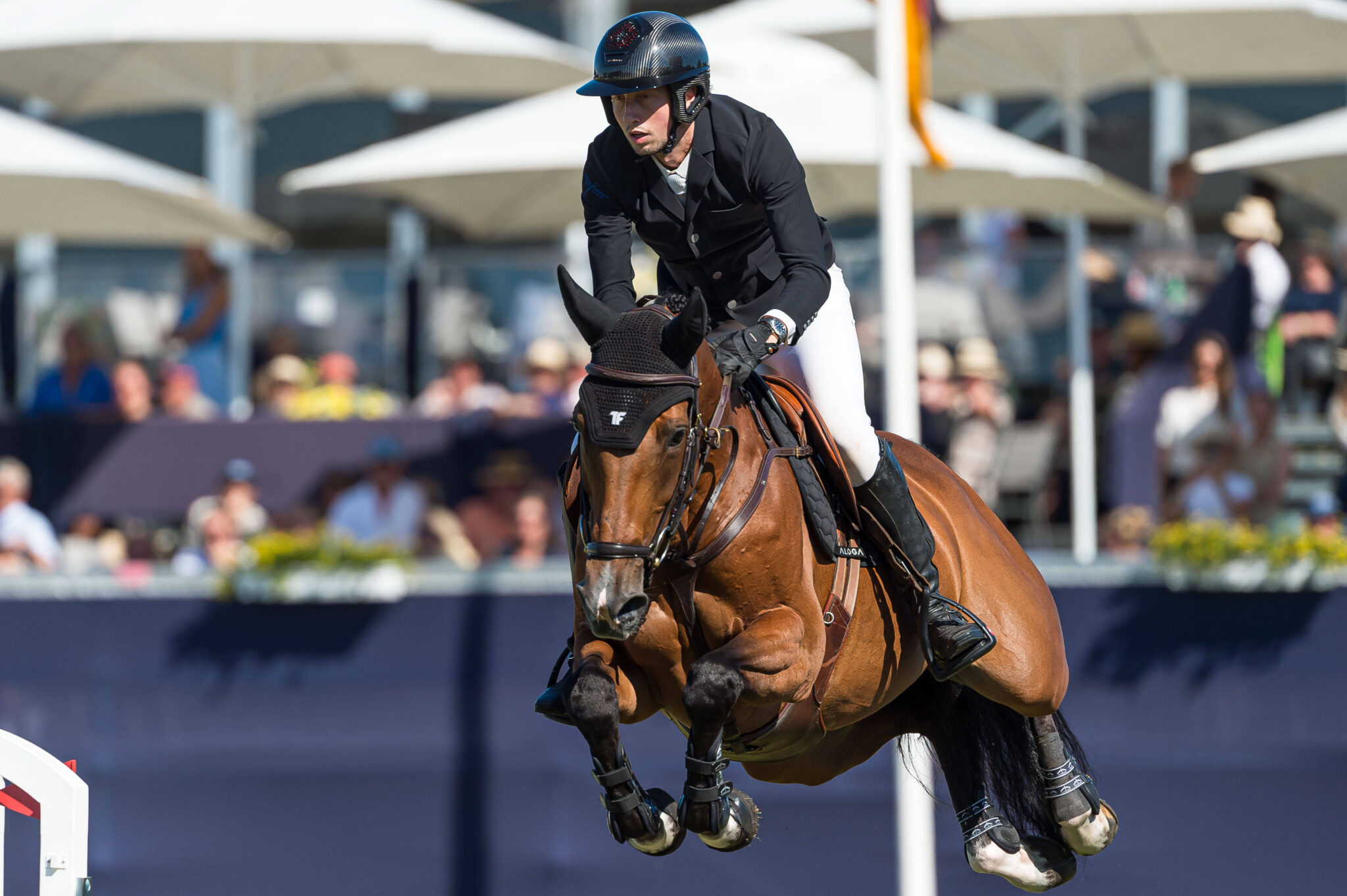
One trait that’s consistently needed to answer all these questions, according to Worden? Proper mechanics. “You [want] to see horses that carry themselves well [and] have good mechanics through the whole canter/gallop stride,” he says.
More specifically, Worden continues, this means a horse who knows to push off from the ground at the right times during the stride cycle, has a strong core that ensures the proper transfer of energy, and maintains a relatively even push from both its left and right sides. These skills sets can be improved to an extent through proper training, he says. But, generally speaking, “special horses are born with these skills.”
Speed
Another thing to look for when you’re hunting for a future podium-topper, according to Worden is, of course, speed. “Ultimately, when you are talking about superstar jumping horses, speed is at the top of the pyramid for criteria.”
By that, Worden means you want to look for horses that cover the ground well, have good movement mechanics at speed (they need to maintain a strong, balanced posture and a stride that does not become too open), be able to create abridged strides at the base of jumps, and be able to accelerate/decelerate quickly.
For the sports scientist, watching film and seeing horses that display these qualities is one of the most exciting indicators of a future star.
“When you break down a 5* Grand Prix, jumping will account for approximately 10% or 13% of the strides on course,” he explains. “The rest will be turning (somewhere in the range of 60%), accelerating, decelerating, some constant velocity strides, etc.
“A horse that can execute each stride 2% or 3% faster than its competitors will be at a huge advantage when it reaches the finish timers—whether making the time allowed, or trying to win a jump-off.”
Power
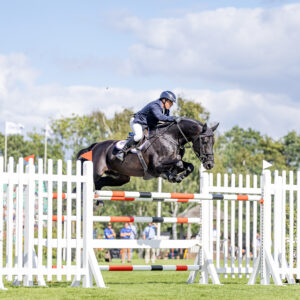
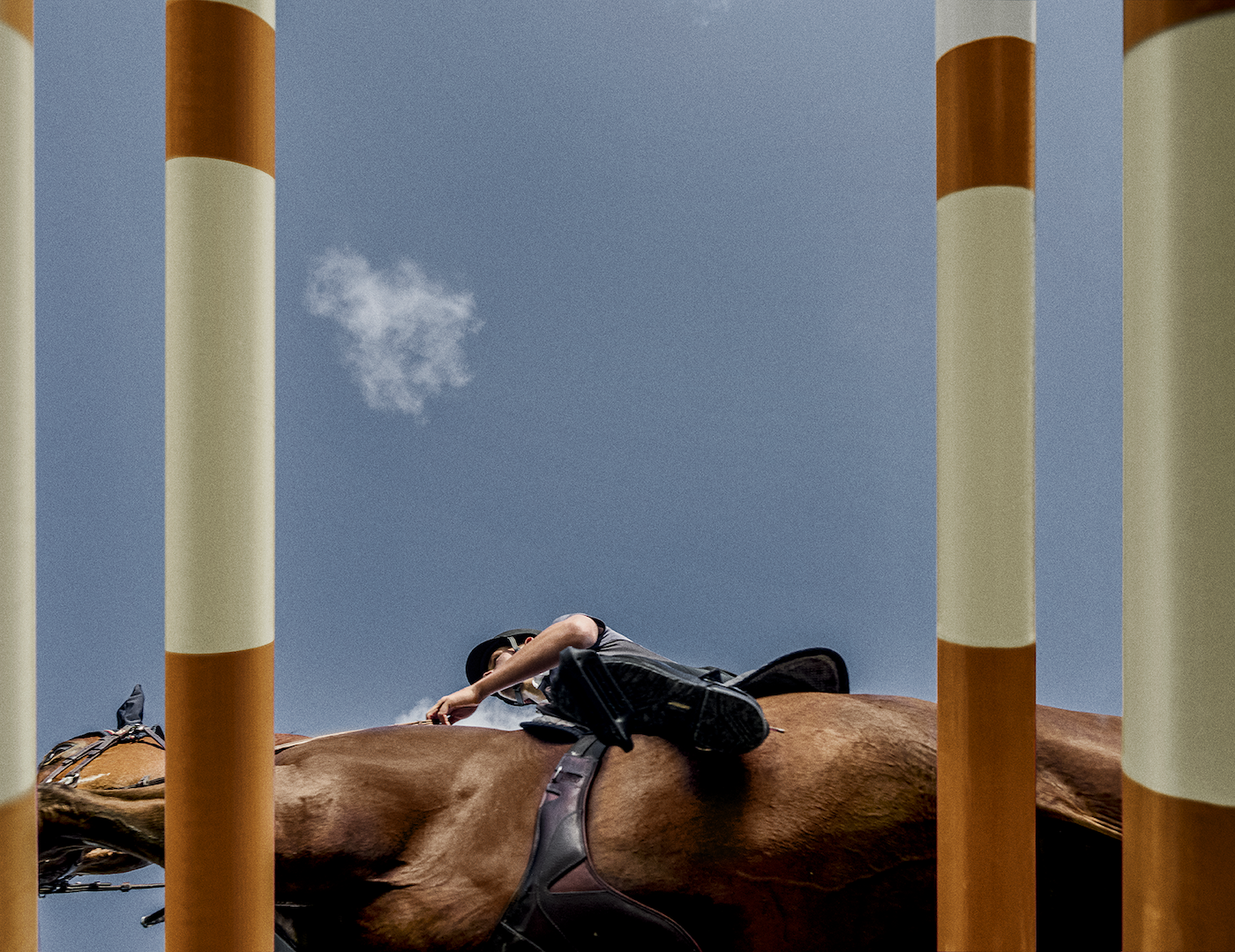
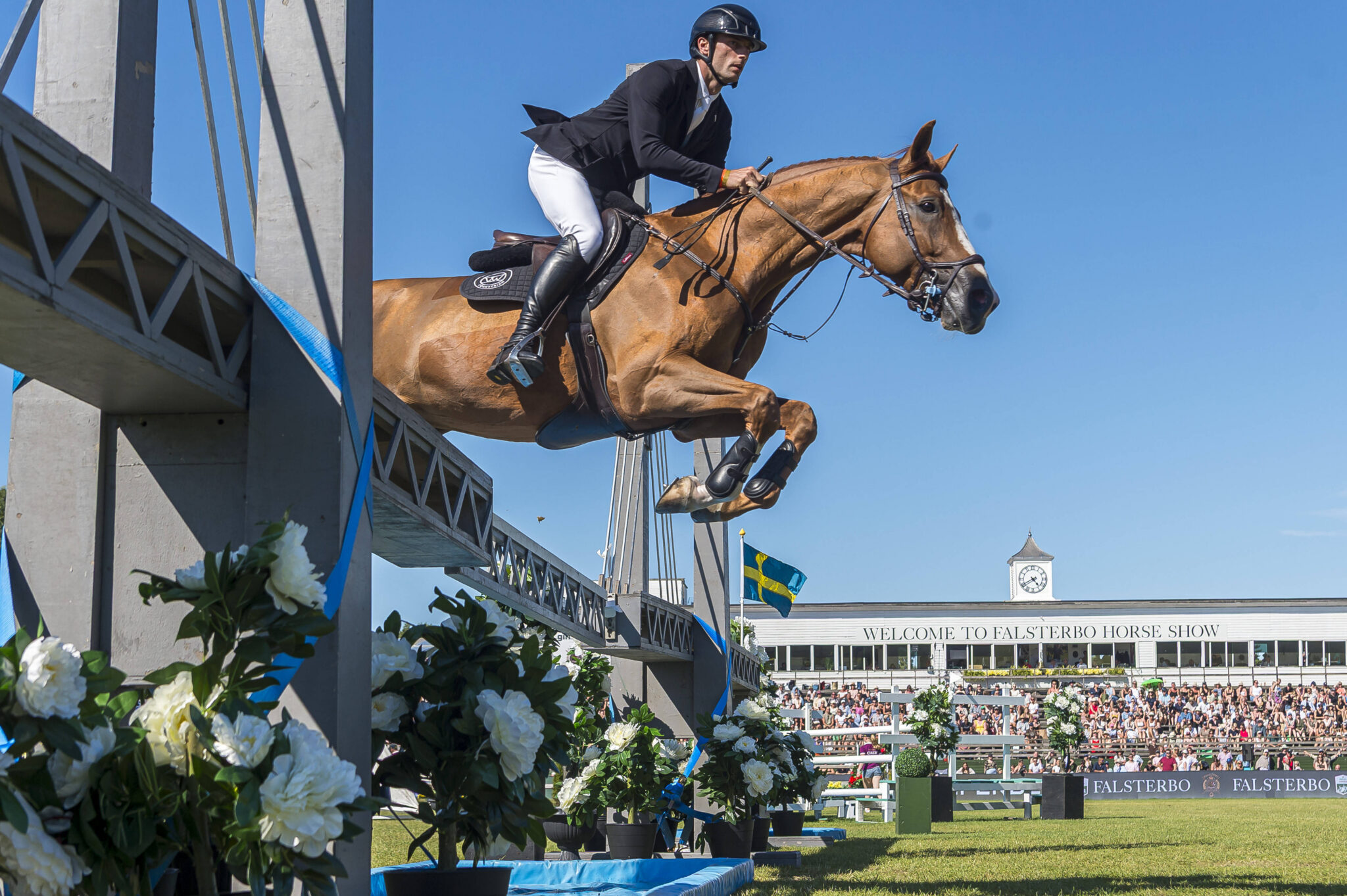
While a degree of natural ability is always part of the package with future five-star horses, elite talent isn’t always readily apparent. While many of us have seen those extreme, over-jumping photos of horses soaring above the free-jump standards, Worden stresses that each horse is different, as is the way they approach jumps as a young horse.
“It’s difficult to forecast the ceiling for young horses. The mechanics, strength, speed, coordination, work capacity, and flexibility needed to jump 1.30m or 1.40m successfully are very different from what is required to jump a 1.60m track,” Worden explains.
“You never truly know how a horse will respond until you do it. That is why people tend to be attracted to horses that show massive power and over-jump when young. To an extent, this displays that the horse’s body can already tolerate bigger jumps. However, horses with the strategy to clear lower heights by huge margins can ‘mask’ their ability to accurately read jump dimensions, since they need to be less precise if they are playing with a 30 cm margin of error.
“Once you reach the 5* level, it is not physically possible to clear every jump by a foot; course designers build very technical lines and combinations that will need more nuanced strategies to solve.
“Conversely, the harder ‘special’ horses to spot are those that jump very efficiently as young horses. It takes longer to identify these ones, because they will not show you their power consistently until later in their development.”
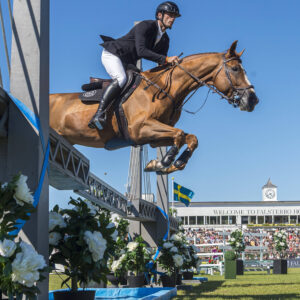
What’s more, Worden says it is important to consider how jump technique is evolving in the sport. “With higher velocities around the course, especially in jump-offs, you need to identify horses that are comfortable taking off farther away from the jump,” he explains.
“Flight paths over jumps and the horse’s rotation are flatter today than they were 20 or 30 years ago, because a steeper flight path and more rotation kill horizontal velocity on course. Thus, a horse needs to be more precise with perceiving jump dimensions to ensure they do not have a rail.”
Technique
There’s yet one more variable that can make predicting future ability challenging: Accounting for differences in technique. While quality in a textbook-style jumper like, say, Clooney 51 or United Touch S is easy to spot, a one-off talent like Emanuele Gaudino’s 1.60m stallion, Chalou, with his famous “superman” technique, can feel like a far bigger question mark.
“I am always hesitant to say technique is good or bad,” Worden says. “Technique is individual and depends on anatomy, strengths/weaknesses, training, past experiences, etc.
“There is a spectrum, and different athletes will employ different strategies based on the tools available to them. There have been many special horses with peculiarities in their style, and these unique strategies can make an athlete better suited for certain events than their competitors.”
Dr. Tim Worden is a scientist specializing in applying high performance sports training concepts to horses. He completed his MSc (Biomechanics and Neuroscience) and PhD (Biomechanics) at the University of Guelph, Canada, and he has worked with a number of FEI jumping riders over the years. Instagram: @twordentraining