April 24, 2026
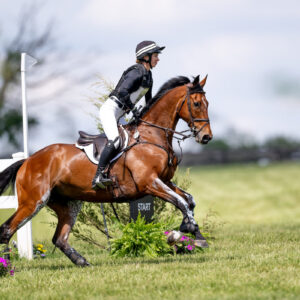
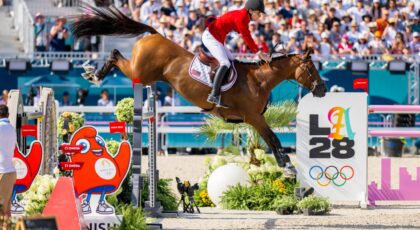
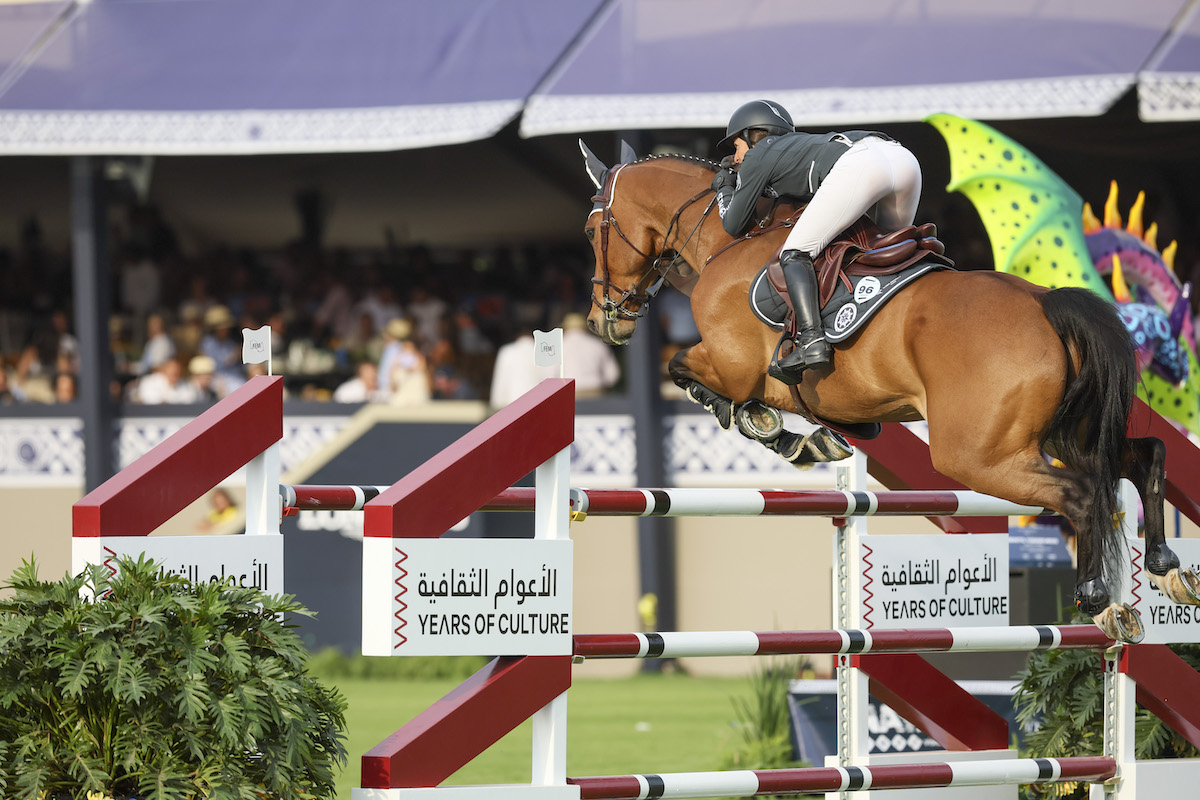
Caracole de la Roque. Donatello d’Auge. United Touch S.
King Edward along with, at one point, two-thirds of the Swedish Olympic team. All of these championship horses have one thing in common: They’ve all competed, barefoot, at the highest level of the sport.
Going barefoot in the show jumping ring has proved to be more than a passing trend, with some of the winningest horses of the last five years adopting it as their standard. And while there are many fervent opinions on both sides of the shoes vs. barefoot divide, there’s a fair bit of misinformation complicating the situation as well.
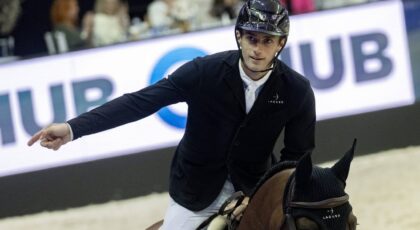
“I think people correlate. They say, ‘Look at these top horses and how many of them are now barefoot.’ And then they say, ‘Oh, well, if it’s the same ratio for every horse, then it will help all of them,’” U.S. Olympic silver medalist Karl Cook told Dani G. Waldman in a 2024 episode of Horse Bytes the Podcast.
But, Cook cautions, correlation is not causation, and the barefoot life isn’t for everyone.
“Even if it’s successful and a good idea,” he said, “it will always be a process.”
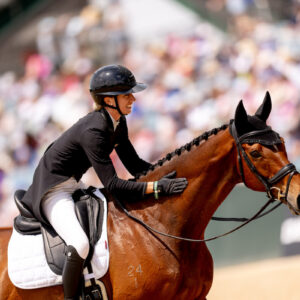
Cook would know. The American rider took over the reins of one of the world’s most talented barefoot horses—Caracole de la Roque—back in 2023 and has spared no expense making sure she has the tools to continue being successful in her routine.
We have a circle around our barn that’s gravel over asphalt, and we put in rubber mats for [Caracole]. She has travel boots when she goes into the trailer. She has boots that go over her feet when she goes to the ring and back from the ring.
“She gets trimmed—major trimming every two weeks—but also minor adjustments along the way. That’s a logistical challenge,” Cook explained.
“With her, I look at all of her feet, every single day. I almost think I go cross-eyed, because I’m trying to look at the balance, I’m trying to look at [whether] the heel or toe are [the right length].”
And, when it comes to deciding whether or not to pull the shoes on show jumper that’s currently competing, there are several things to consider. According to top international farrier Pascal Ebell—who also spoke with Horse Bytes—the main reason we have been putting shoes on horses since Roman times breaks down into three categories.
We shoe horses to prevent excessive wear, extending the length of time between when a horse’s foot would naturally need to be trimmed. Shoes offer the option for traction, since horses being ridden on grass can add studs to metal shoes to prevent slipping. Finally, shoes can balance the angles of the foot and provide correction for a horse with conformational defects or lameness—or one that requires additional support.

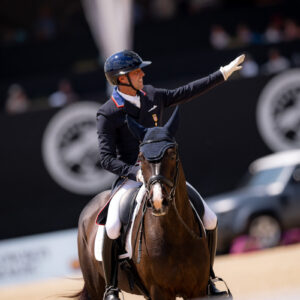
For a sport horse who has worn shoes previously, there is anecdotal evidence to suggest that removing its shoes will impact its scope and/or the length of its stride. In fact, according to Waldman, Richard Vogel of Germany intentionally removed his European individual gold medal-winning horse United Touch S’s shoes in order to shorten his unconventionally long stride. (First world problems, for sure.)
For Cook, the idea that a horse’s scope may decrease after removing its shoes isn’t true of every mount he’s seen; however, stride length is another matter. “I think the shortening of the stride is significantly more common,” he explained.
For Ebell, some horses excel in the shoeless lifestyle, while others will eventually need to revert to their pre-barefoot ways. “What I see is that, for every 10 horses [whose] shoes you [pull], two are really happy, and eight go back on shoes.
“It is a lot of work to have them without shoes. Is it better? Yes,” Ebell continues.
“Every book of horse shoeing starts [with the idea] that the horse shoe is a necessary evil. If you don’t need it for excessive wear, traction, or correction, it’s better to live without shoes.”
But, Ebell stressed, there is always a tradeoff when it comes to going barefoot. “For the average horse owner, it’s difficult unless you have great quality feet.”
Cook agrees. “[When your horse is barefoot] you need everyone on your team to be aware of it, to prepare for it before you [pull the shoes], and to prepare for the ramifications. To understand how to see, as soon as possible, if it’s working or if it’s not working,” he said, noting that the margin for error with a barefoot horse is slim.
“Any detail that you miss has more consequences.
“I would love to have every horse barefoot, but it’s impossible. They’re not all candidates,” Cook continued. “You’ll make more horses lame insisting on everyone being barefoot then you’ll make them better.”