
 February 13, 2026
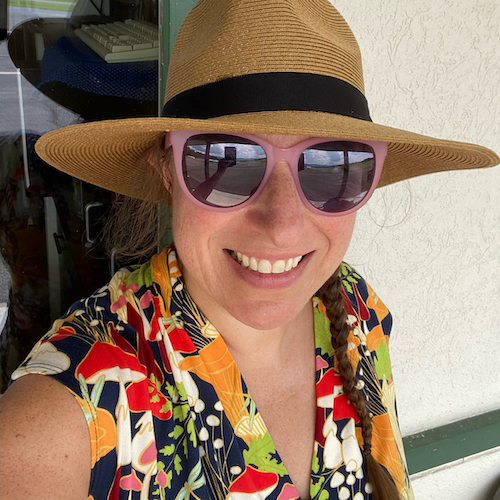
For four years, Lindsay Archer was on cloud nine. From 2018 to 2022, she had a string of competitive top jumpers, including Jarpur, with whom she won several three-star and four-star FEI classes.
Then at the end of 2022, that all changed.
“I went from having those three or four horses to having no horses over a period of about 30 days,” recalls Archer who runs Shady Lane Farm in Alamo, California, with her husband Matt Archer.
“And unfortunately, that stuck for about eight months, and by June of 2023, mentally I was in a pretty bad spot. I really had taken it on as my own fault that I couldn’t get any of these horses back in the sport, and I had not realized that I really was attaching my own self-worth to my ability to get results in the ring. When I couldn’t even get in the ring, let alone get results, it really was hard for me.”
Six months later, when her world felt really dark, an equestrian clinic that included a group therapy session changed everything.
While Lindsay had participated in one-on-one therapy (and even earned a Bachelors of Science in psychology at St. Mary’s College of California) getting support from her peers in the sport who really understood what she was going through opened her eyes to how equestrians could help other equestrians in a way family members, close friends or even a therapist couldn’t.
That pivotal meeting set the wheels in motion and Archer got to work putting together Equestrians For Mental Health Awareness as a way to facilitate group workshops for equestrians from all backgrounds. The first EMHA meeting took place in April of 2024, and they’ve continued monthly at California horse shows since then. EMHA meetings are facilitated by a licensed therapist who chimes in occasionally to support discussion, but they don’t lead the conversation.
“The goal is that participants create feedback and create support for each other, because hopefully when you leave that group you then have those people outside of the group as a support net to help you at the horse show,” says Archer.
The meetings typically last about two hours and start with a conversation about confidentiality and also a reminder participants about SafeSport policies. Then participants introduce themselves and if the conversation hasn’t started already the therapist will ask a question, and from there, Archer says, “it basically runs itself.”
Attendees discuss a variety of topics that affect them in the horse world. For example, some have brought up the struggles of being a professional trainer, including recovering from injuries, both human and equine, and the mental stress that accompanies that; setting boundaries around being available around the clock to clients; and managing expectations, whether those are personal expectations about your own results, or the expectations of parents for their kids competing.
And it’s not just for trainers. Horse people in a variety of roles come to EMHA workshops, including riders, body workers, braiders, course designers, office staff and show management.
Archer says it can be affirming to get advice, strategies or just empathy from someone who’s been in your shoes, and eye-opening to hear about someone’s struggles who’s coming from a very different place within the horse world.
That’s not to say it’s been easy.
The biggest challenge? Convincing her peers that it’s OK to get support. While sports psychology is widely accepted for gaining a competitive edge, getting help with mental or emotional concerns is seen by some as showing weakness.
“It is definitely still difficult to break into the average person, to get them, one, to acknowledge mental health as health, and two, to be brave enough to acknowledge that maybe they specifically need to support their own mental health,” says Archer. “I think there’s so much stigma still, regardless of education, wealth, race. So it’s still difficult to get big groups of people to participate, but the people that have been brave enough to do it are like diehards, and they love it, and they come every time that they can and really support it.”
Another challenge is logistical: finding a time that works during a busy show week. These days the workshops take place monthly on Tuesdays at 4:30 p.m.
“Obviously a Tuesday afternoon works great for professionals, but the handful of times when we have gotten juniors in particular to come the most wise, incredible things always come from [them],” she says.
Archer would love to expand the program beyond the California circuit, and that’s one of her long-term goals.
“My hope is that people understand that seeking professional growth, whether it be personally, on your mental health or in the ring riding that none of that means you are less,” says Archer. “In fact, maybe it even means you are more, because you’re willing to see that you can still become better.”
Click the link to learn more about Equestrians for Mental Health Awareness, RSVP for a workshop or donate to the nonprofit. The next workshop takes place on February 17 at 4:30 at the Desert International Horse Park at Barn 18. The following event is scheduled for March 10.