
 November 25, 2026

Brought to you by Three Mares.
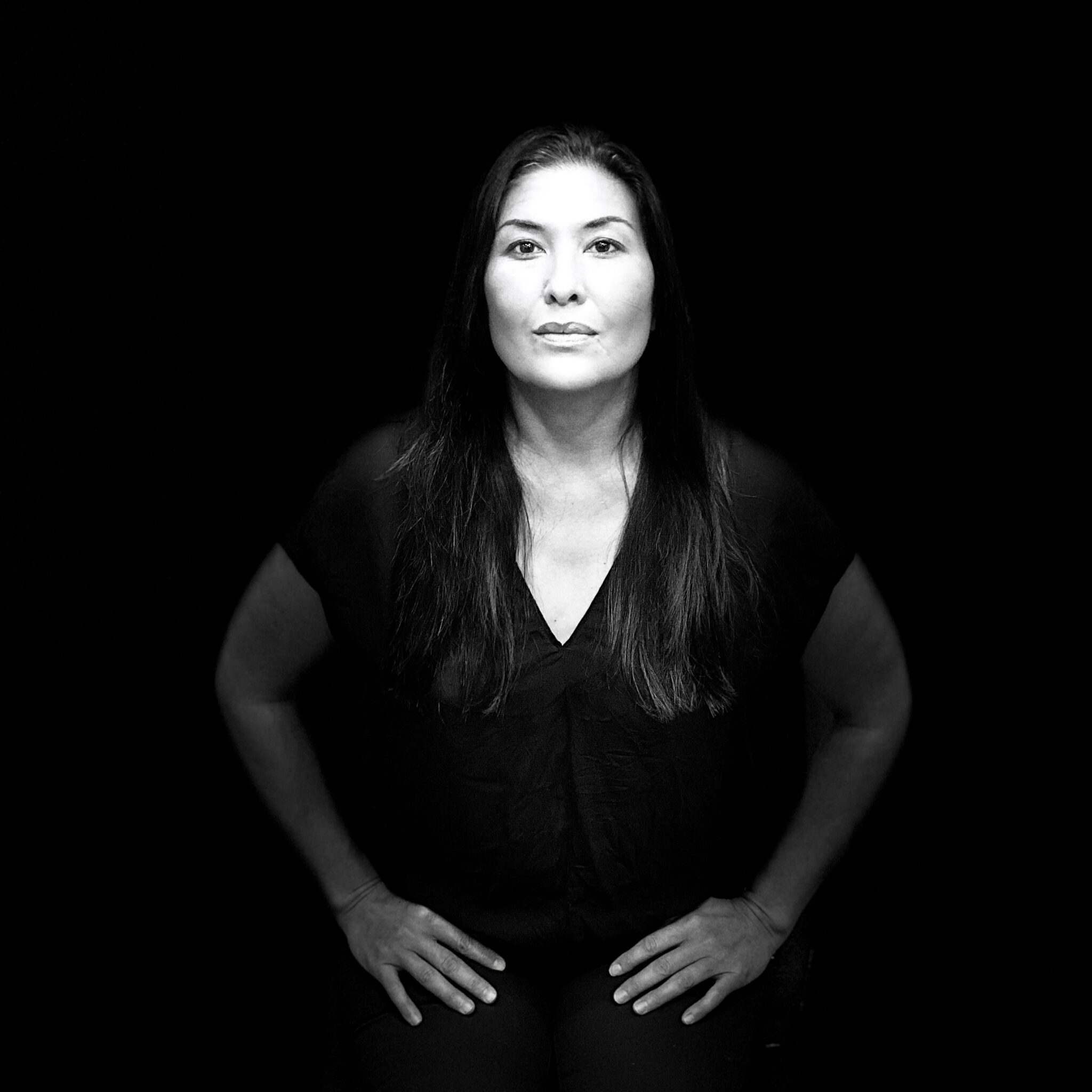
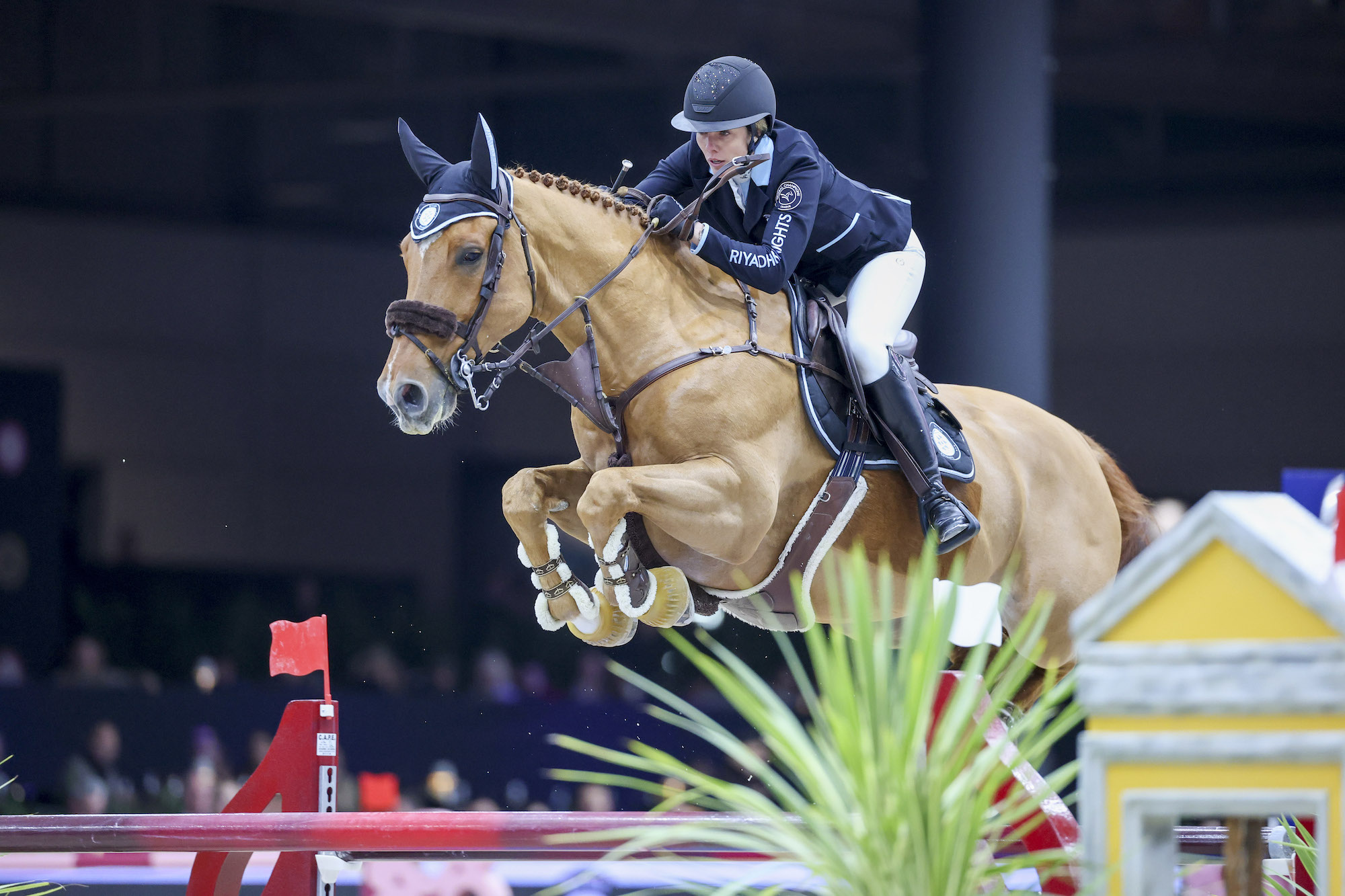
We were on our way home from the barn—as always. I was waiting in the grocery store parking lot near our house while my daughter Rayas ran in to grab chocolate.
Sometimes it feels like we lived in that car—coming and going from the barn, heading off before daybreak to shows, driving from New York to visit family in Vermont. I’d give anything to relive those moments now: just sitting next to each other in the front seat, holding hands.
But that evening, Rayas hopped in and said, with some real urgency, “We should go.”
I peeled out, no questions asked. “Is everything OK? What’s up?”
Rayas said there had been a man hitting on one of the teenage girls who worked at the grocery store. “It was terrible. She’s trapped! She can’t leave because she works there. So I told him that I really thought he needed to check himself. They opened lane two to check me out really fast, but I don’t think we should stick around…”
I think about that evening a lot now. Not because of what happened, but because of who Rayas was in that moment: someone who saw something wrong and refused to look away.
She was like that her whole life.
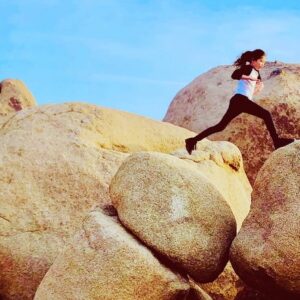
When she was five, we would take the ferry from Brooklyn to Long Island City to this amazing rope jungle gym—it was so high. She would run from the ferry, climb to the very top, and look across the East River. Then she’d climb halfway down and start helping other kids up.
Whenever her eyes found mine, I knew my role.
Don’t flinch.
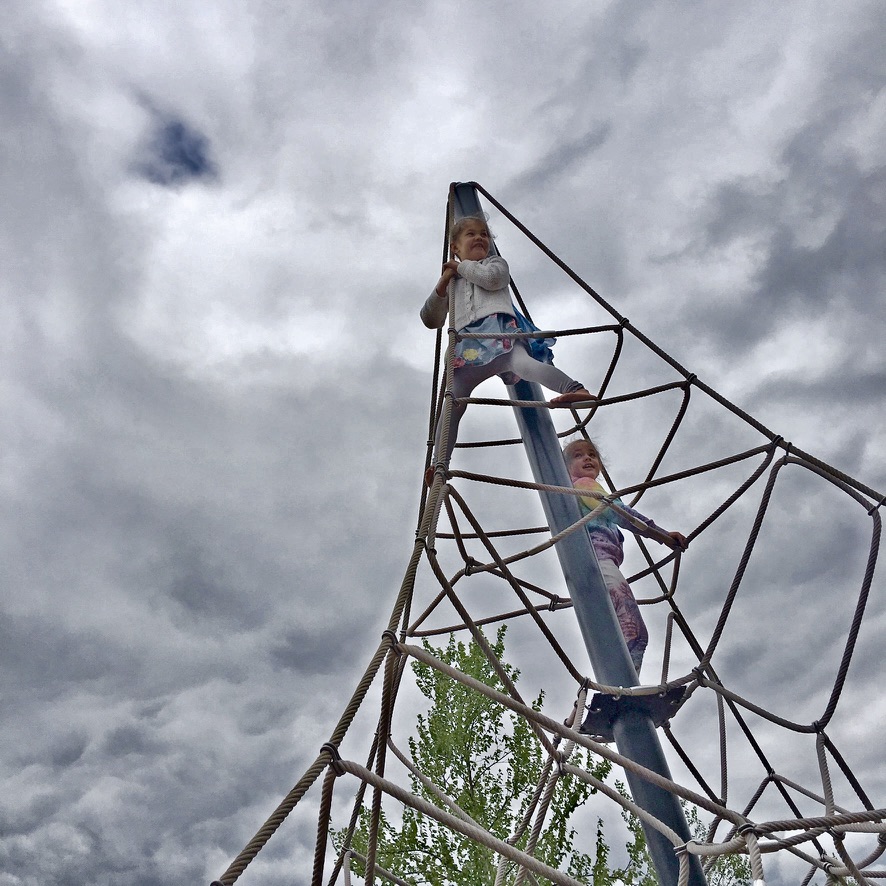
Rayas always had complete confidence in herself. My job was to validate that confidence, never to question it. Because if I did, then she would.
So it was always, Don’t flinch.
****
Rayas grew up in Brooklyn until she was nine. Then COVID hit, and I didn’t like what I was seeing.
Grocery shelves were barren. People were behaving strangely—and treating me strangely, I think, because I’m Asian. So I packed Rayas and her older brother into a rental car and drove north to my godmother’s farm in Vermont.
For the next year and half, I watched my New York City girl turn feral.
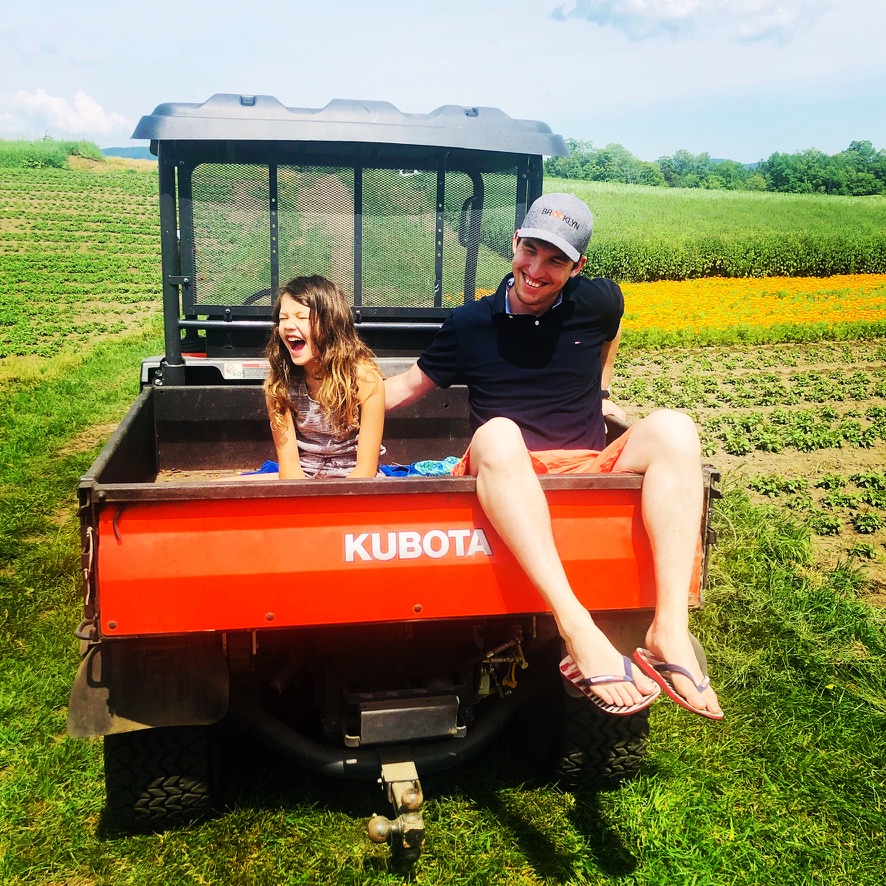
Rayas loved Vermont. It was her favorite place in the world.
She had cousins down the road and acres of space to run around in, no need for shoes. I delighted in seeing the way Rayas loved her older brother—fiercely, effortlessly and unconditionally. Some people go their entire lives without ever loving like that, but it came naturally to Rayas.
And Vermont meant unprecedented access to horses—multiple times a week and all hours of the day. Rayas’s interest in horses had started when she was a toddler; by five, I was driving her out to Long Island to ride at different barns. But during COVID she started training with Jeanette Hogan and Sarah Cleland at East Hill Farm, a dressage barn.
Jeanette brought excellence and a deep respect for both the rider and for the horse to every lesson. She was a Jedi of positive reinforcement, and Rayas brought that to her own relationships with animals. She was always asking: how can I motivate them in a positive way? What is the thread I can pull to get them where I want them to be? I think the women at East Hill laid the foundation of the horse whisperer Rayas became.
Rayas had always been a shiny kid—academically sharp, a talented and creative artist, tall and naturally athletic. Riding gave all of those parts of her somewhere to go. Most importantly, it gave her the power to just be in her body, with a quiet mind. She once told me, “I really love riding because when I’m riding I can’t think about anything else.” Even as a young kid, she was able to recognize and put that into words.
We eventually returned to New York. Much to her dismay, Rayas had to start wearing shoes again.
****
Transitioning back to city life was rough. The saving grace was finding Riverdale Stables in the Bronx and the Interscholastic Equestrian Association (IEA). Riverdale connected the nature-filled life Rayas had lived in Vermont with the diversity and accessibility of New York.
And with Riverdale came a new social circle for Rayas, much-needed after the isolation of COVID.
Almost instantly, a core group of girls came together. Some of them had known each other since they were little, while others were meeting for the first time as the pandemic was ending, but I never saw Rayas struggle to find her place among them. Once this crew found one another, the bonds were immediate and indelible.
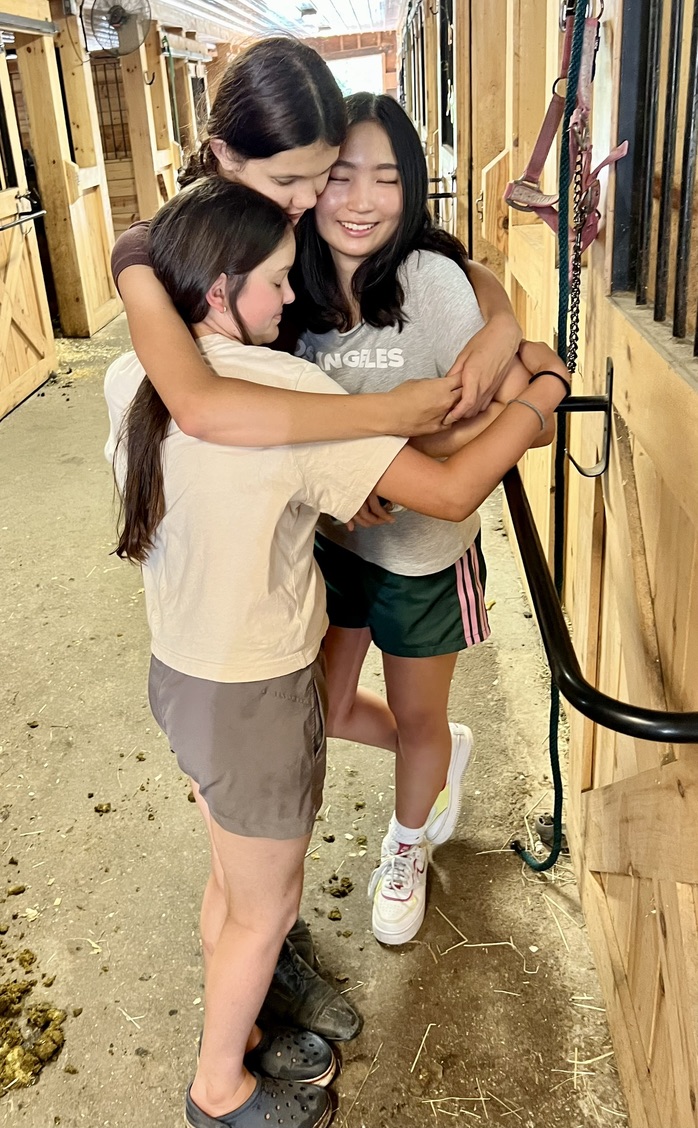
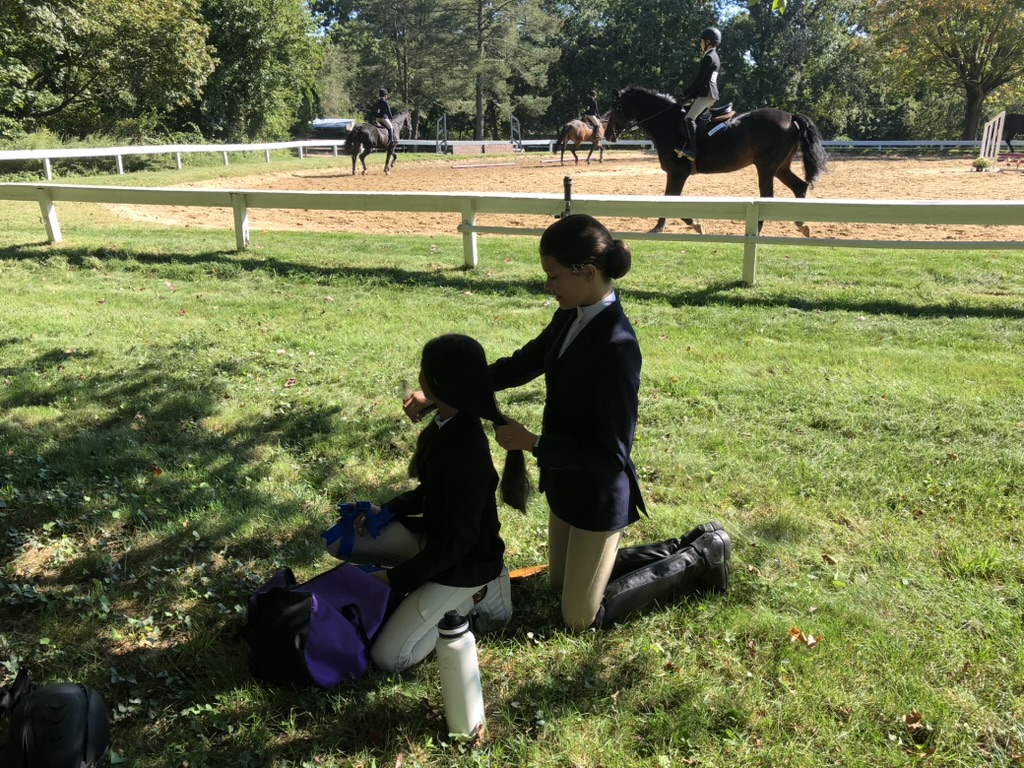
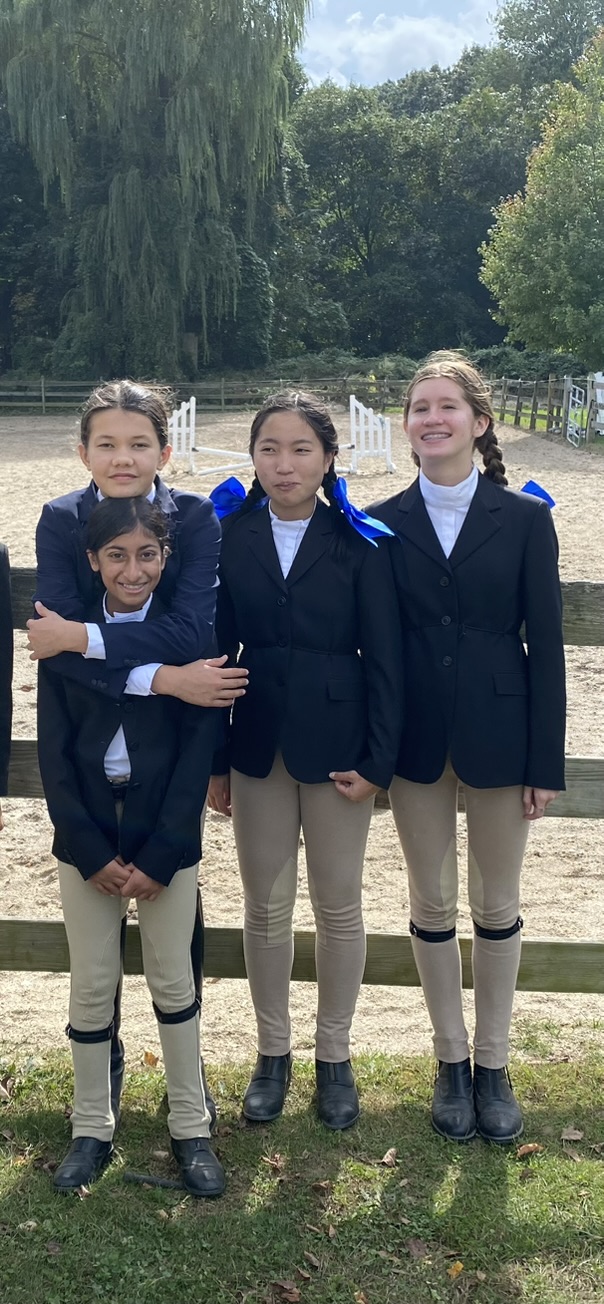
The girls spent hours together at the barn—riding, watching one another ride, sharing snacks and inside jokes and horse lore. They groomed for one another at shows, shined one other’s boots, shared their fears and anxieties and excitement about competitions, and celebrated one another’s victories.
In the hours they weren’t together, they turned to their now-legendary group chat—hundreds of messages, jokes, and emoji pinging back and forth between them late into the night.
I couldn’t have known then how important those friendships would become. The girls stayed close through new horses, new barns, new adventures—and later, through unimaginable hardship.
****
People talk a lot about the bond between fathers and sons, but my God—mothers and daughters. That’s something special.
Rayas spent hours at the barn, which meant I did too. I became a fixture ringside and her videographer-in-chief, constantly capturing her lessons and shows for her to watch back or post on TikTok.
Now those riding videos are some of the things I’m most grateful for; I spend hours watching and re-watching them. She was so, so good at it—and so herself.
It became abundantly clear that Rayas was a country mouse, not a city mouse, so the next year we moved to Croton-on-Hudson, NY.
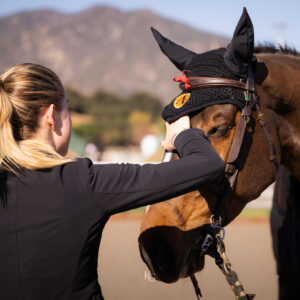
Living in the Hudson Valley meant more space, more time around horses, and a different kind of barn life. Rayas was no longer just showing up for lessons—she was becoming a horsewoman, learning everything she could about caring for and working with horses.
And it was in the Hudson Valley that she met Clever.
Clever was a big, dark bay off-the-track Thoroughbred, and a handful. He was also the first horse Rayas leased, the first she could really call her own.
He tested her constantly. We called her Spider Monkey because she was like Velcro in the saddle, impossible to throw. And believe me, Clever tried.
My role, still: Don’t flinch.
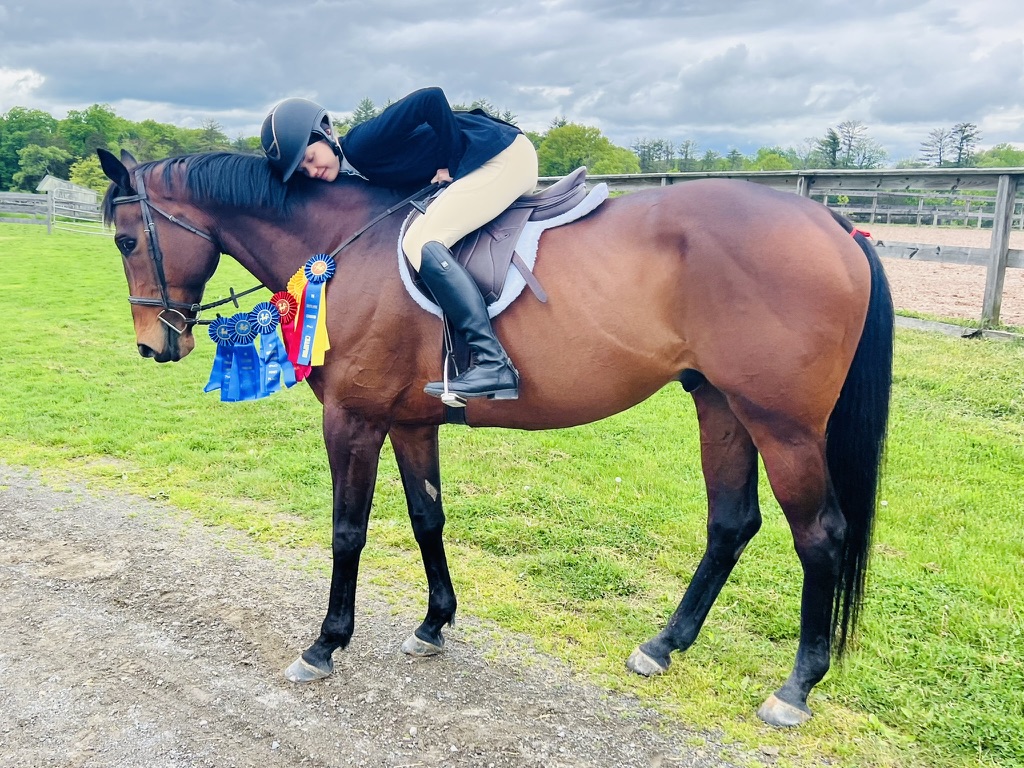
But Rayas saw something in Clever. She put in the work, taking him to local shows, getting him comfortable traveling and competing away from home. Eventually, they went from simply seeing whether he would behave off farm to really succeeding together in the show ring.
There were things Clever would do for Rayas that he wouldn’t do for anyone else. That was incredibly empowering—she could see that her patience, skill, and the relationship she’d built with this horse had changed what he was capable of.
And then Clever’s owner decided to sell him, so we started looking for her next love. I had no idea what shopping for a horse entailed, so we drove what felt like all over the world looking for The One.
We looked at horses in Massachusetts, New York, and all over New Jersey. I’d text Rayas at school that I was pulling her out after sixth period. Meet me on the corner. We’re going to Atlantic City. Or Pennsylvania. Or Vermont. There was so much excitement on the way to see each one, and so much to talk about on the drive home.
After all those miles, we found Nikko just forty-five minutes away.
Nikko was a big, handsome, goof who loved bananas, playing in the water, and sticking out his tongue. He was sweet and funny and a beautiful ride.
For Rayas’s fourteenth birthday, I arranged for a little surprise—two of them, actually.
She was still heartbroken about saying goodbye to Clever, who hadn’t yet moved, and I thought having both of her great loves together for a few days might make the separation easier.
So I hatched a plan. Now, I’m a terrible liar—truly terrible—but the barn owner’s husband was much better at deception. He told everyone he needed to take the horse trailer out for a licensing inspection. Meanwhile, I parked down the road so I could jump into his truck where nobody would see. The two of us went to pick up Nikko, a few days earlier than planned, and snuck him into his new home.
The morning of Rayas’s birthday, she arrived at the barn to two surprises. The first: a table, set with chocolate-covered strawberries (her favorite), cupcakes with multicolored sprinkles—and all of her friends. I was touched to see that a bunch of kids she wasn’t even that close to had showed up because they’d heard it was her birthday.
On her trunk, there was a pile of brightly colored presents, and a couple of bunches of bananas.
I saw those bananas land—and the grin spread over her face—even before she’d rounded the corner to find her new horse in the stall I’d enlisted the girls to decorate with balloons and streamers.
Horses, cake, and her friends: the perfect birthday.
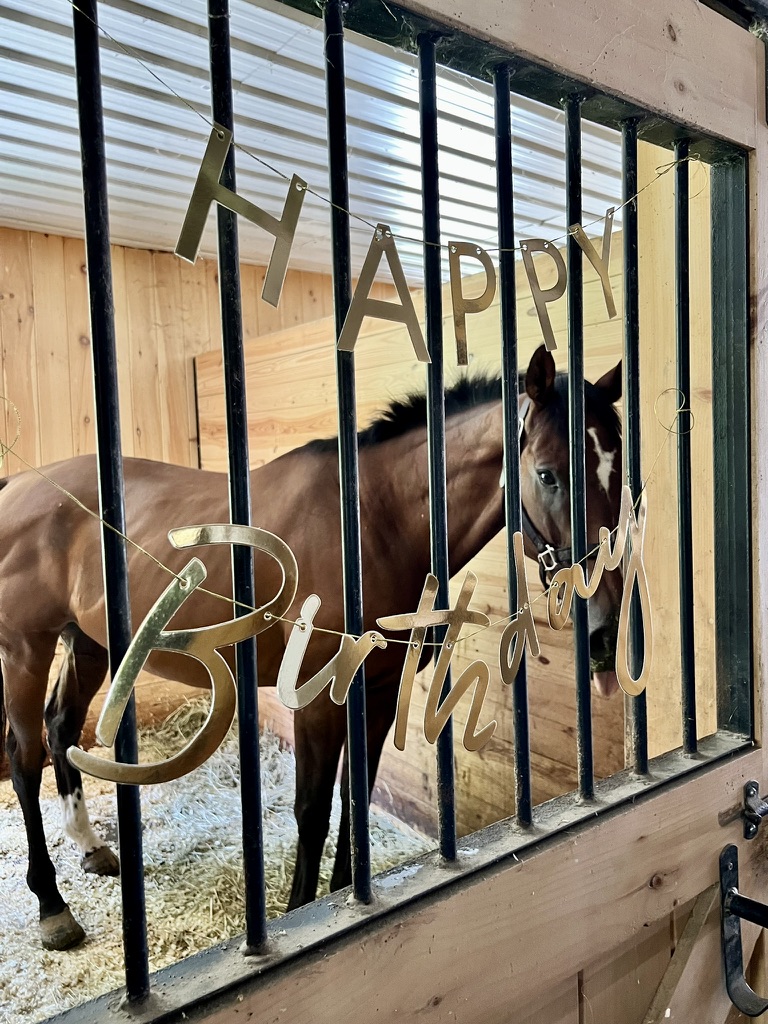
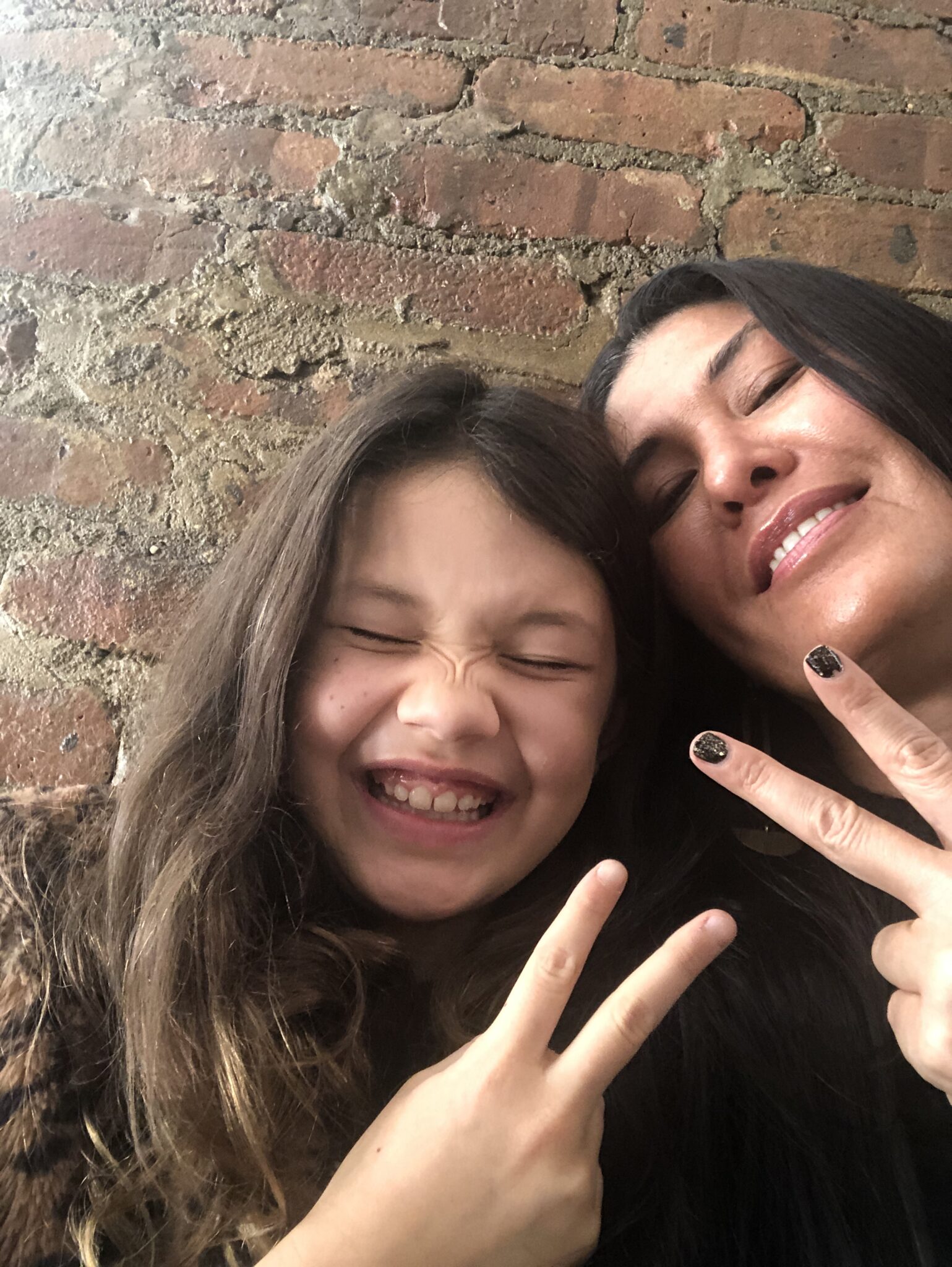
For a few days, Rayas had both of her boys: Clever, the horse who had taught her so much, and Nikko, the one she was just beginning to know. We sent Clever off to his new home with a big batch of the homemade cookies we loved to make for him—beets, carrots, oats, flax, and molasses—and a card with the recipe so his new owner could continue the tradition.
It’s hard to imagine that was only a few months before the headaches started.
****
In November of that year, Rayas started getting migraines. Within weeks, the pain was debilitating. By January she was hospitalized.
It took more than four months to get a diagnosis: Rayas had an extraordinarily rare form of cancer called atypical teratoid/rhabdoid tumor, or AT/RT.
My shiny kid—tall, beautiful, and strong—was suddenly bound to a hospital bed.
But everything Rayas had built in her life followed her there.
Our community surrounded us. Rayas had always had remarkably good judgment about people. She knew who she wanted in her life, and she had chosen well. Now those people were there.
The girls didn’t stop treating her like Rayas just because she was sick. They brought their lives into her room—new horses they were trying out, the homework and teachers driving them nuts, upcoming shows they were worried or excited about. (The quarterly LeMieux color drop was still a big deal.) And I got to see the unique relationships she’d had with them as individuals, all the special ways she had to support and love each one of them.
Rayas’s opinion still mattered to them; they’d call to ask what she thought about trying a different bit, and sent endless videos for feedback from “the equitation queen.”
The treatment took a lot from Rayas. She had to learn to sit up again, and to walk again. Things that had once been second nature to this strong, athletic girl suddenly required extraordinary effort. The idea of her climbing the steps of a mounting block or lifting her leg over a horse seemed impossible.
Still, the minute she was out of the hospital, Rayas knew exactly where she wanted to be.
Back in the saddle.
And after all those years of watching Rayas push boundaries, climb higher, go faster and test her own limits, I knew what to do.
Don’t flinch.
I wasn’t going to be the person who told her no. I was going to be the person who figured out how to help her do what she wanted to do—and what Rayas wanted was to ride Nikko again.
I got her an air vest. I made sure someone I trusted was holding Nikko, and that the strongest person at the barn was helping Rayas on, with me on the other side. If Nikko needed to be lunged beforehand, I’d do it. If he needed magnesium in his mash two hours before she got on, I got that too.
Whatever it took to make it as safe as possible.
Rayas had been posting on TikTok from the hospital, promising that she would ride again. As always, she followed through. When she finally mounted, you could see the muscle memory and wisdom embedded in her body. She belonged there.
****
Rayas’ s disease was extraordinarily rare. The cancer had infiltrated the membranes surrounding her brain and spinal cord. Radiation could attack the cancer cells, but it couldn’t stop the underlying process. The progress of the disease was relentless.
Eventually, Rayas was offered a wish through Make-A-Wish.
Rayas was initially overwhelmed by the very idea of her wish; that only lifted when it became clear that she could use it to help others. No surprise there: a proud member of the NAACP Peekskill branch youth chapter, she had always had an activist streak.
We’d talked so many times on those long drives home about how expensive the sport was, and how not everyone felt welcome in that world. She wanted that to be different.
Horses had given her more than ribbons: they’d given her independence, friendship, and belonging, and she wanted other kids to have that too. So in the final weeks of her life, Rayas began creating a program that would allow other young riders to experience what horses had given her.
Working with Make-A-Wish and the IEA, we built a grant to help young riders with the cost of lessons, coaching, travel, equipment—all the expenses that can keep kids out.
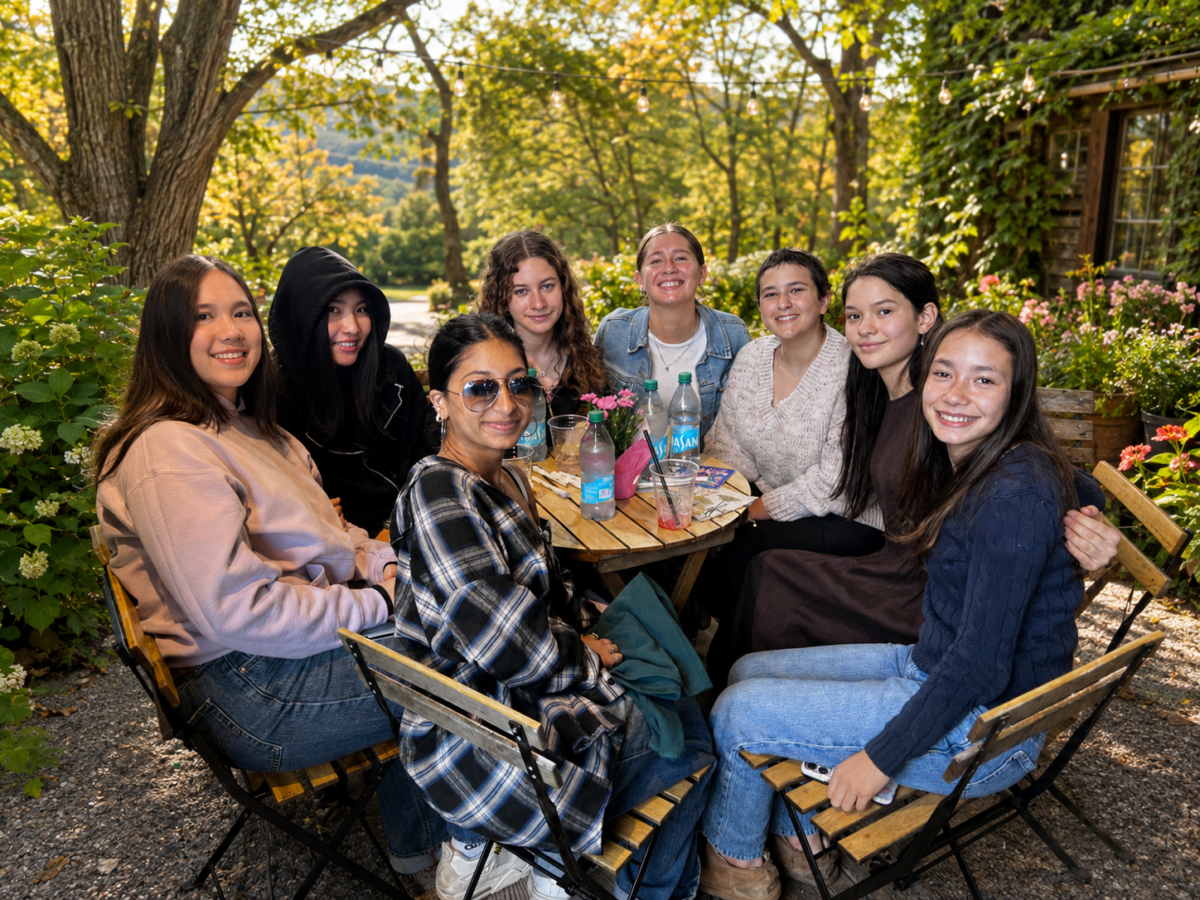
Rayas passed in February 2026. She was fifteen.
When she got sick, her friends and I made hoodies that read “Ride for Rayas,” and her medical team started wearing them. That became the name of the program.
It would have made Rayas incredibly happy to know that five young riders received grants this year, and that next year there will be more. A cohort is joining from California, where she was born, and from Nevada, and from Hawaii where her brother was born.
Her friends were there when she launched the grant, and they are the ones fundraising, making decisions, and carrying on what she began—which continues to grow. It’s been incredibly healing to bring this work to life. I think it is testament to Rayas’s wisdom that her generosity outlives her—and that her light shines as brightly as ever, now in others, too.
These Dreamers & Schemers socks support Ride for Rayas.
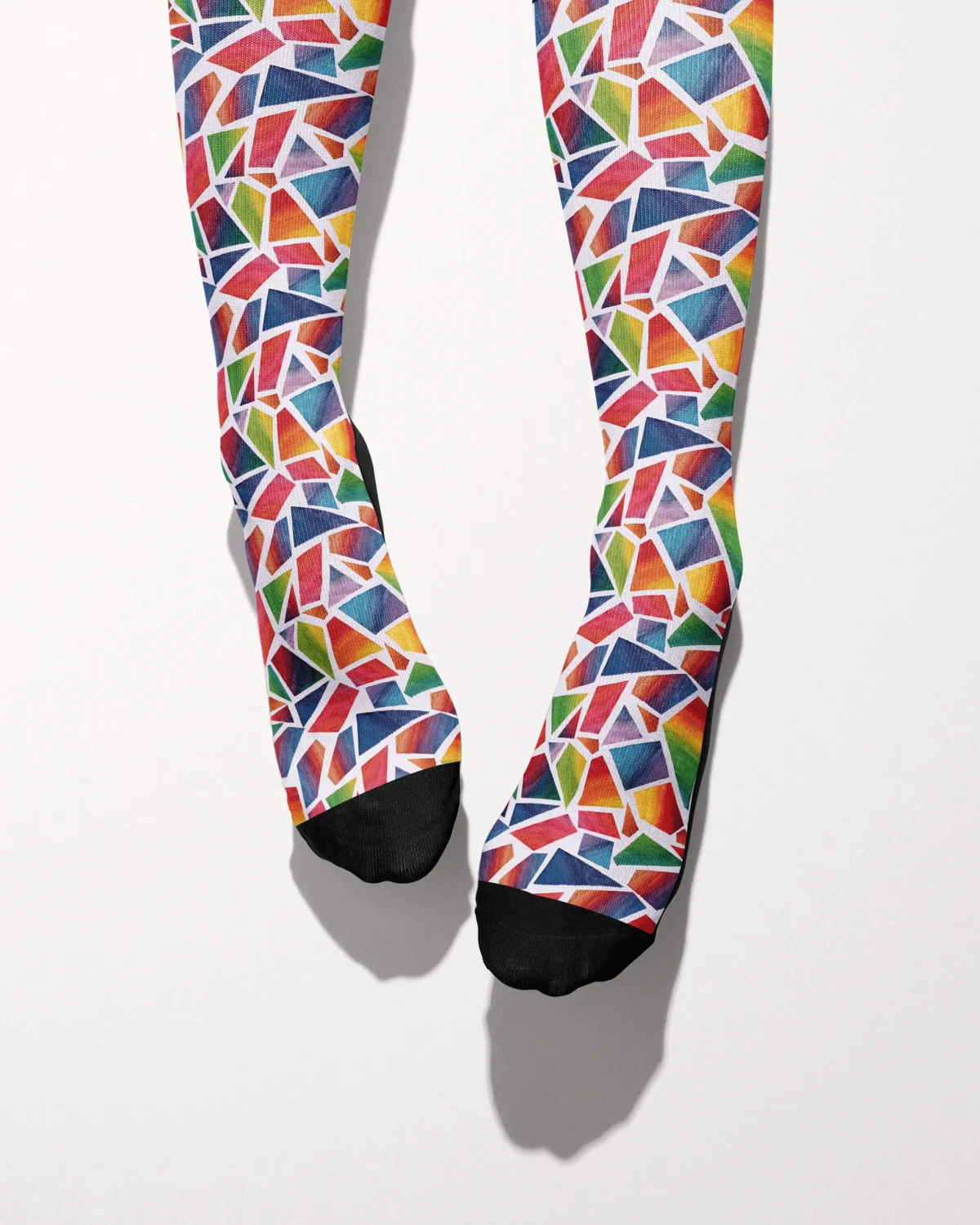
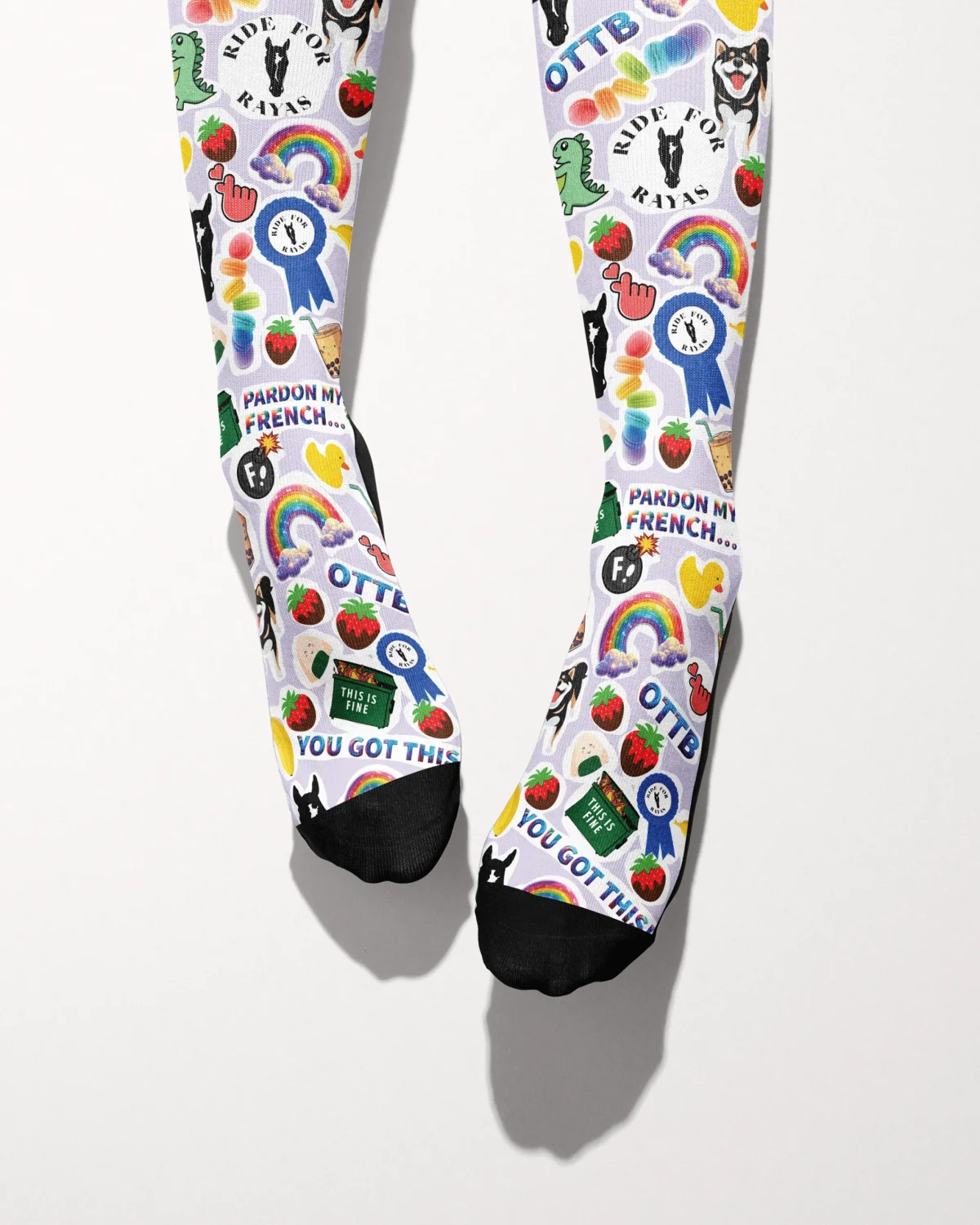
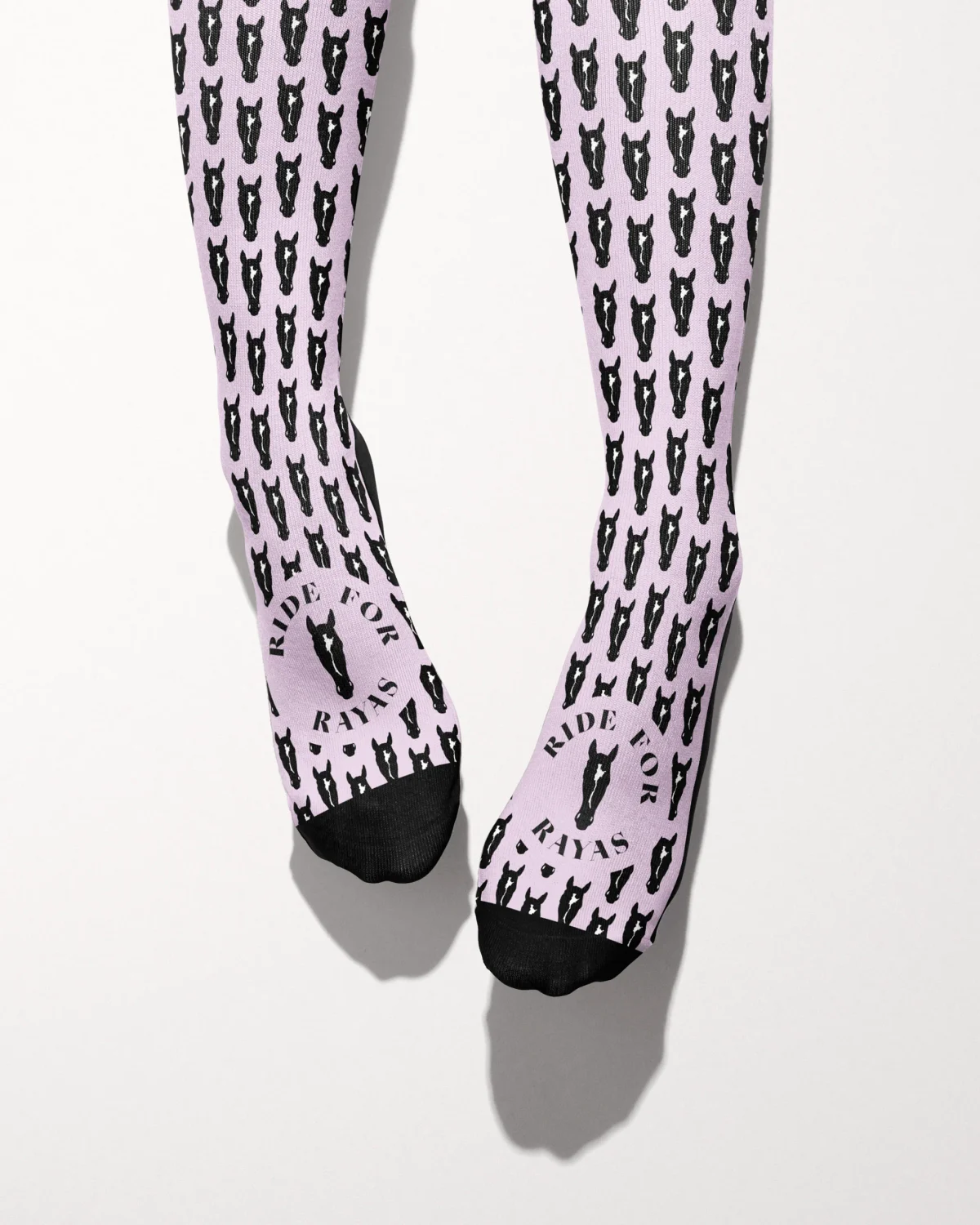
This story is brought to you by Three Mares, a collective of equestrian brands—Dreamers & Schemers and ManeJane—that donates 100 percent of its profits to organizations working to make equestrian sport more accessible, safe, and inclusive for all athletes. Like Ride for Rayas. Like you. Learn more at thethreemares.com.
.