
 September 23, 2026

Author’s note: Author, activist, poet, and farmer Wendell Berry passed away on August 31, 2026. I found the first draft of this essay in an old notebook and thought this was the perfect time to revisit it.
I was farm sitting at a friend’s place in Kentucky a few years ago when I decided to re-listen to my audiobook of Wendell Berry’s The World Ending Fire: The Essential Berry—a collection of essays on farming, rural America, and the natural world.
Wendell Berry and I had not parted on good terms the first time I listened to this book.
Berry was both a prolific writer and a dedicated farmer—an author with dirt under his fingernails. After completing his essay collection, I was felt certain he wouldn’t like me much. I am round and opinionated. My choices contradict much of what he wrote about, including my refusal to have kids of my own and my lack of connection to family and the place I grew up in.
Yes, I wrote the first draft of this essay longhand in a notebook. Unlike Berry though, I own a computer and typed this up myself.
The second time around, I was in his bluegrass state. And standing among the hollers and the trees, I had a sneaking suspicion I would get something different out of his essay collection on a second pass. I listened as I threw hay into stallion pens and Regumated pregnant mares. As I checked water troughs and did head counts, sure enough, I changed my mind.
On this second go-round, his insights into our relationship with the land resonated more brightly than before. I found profound beauty in his love for, and quiet care of, his farm, just a short drive from where I labored. I mean, it also helped that he liked horses and drove his own plow team of Belgians.
There are many writers and thinkers ready to take up his mantle. But perhaps if we are looking for someone to carry on Berry’s legacy, we need look no further than the local stable.
Berry passed away on August 31, 2026. He was 92. In this time of upheaval, a world without his wisdom seems a little bleaker. His insistence that we go slowly and think deliberately seems more subversive with every passing iPhone update. Berry argues that more and faster usually isn’t worth it, especially when it comes at the cost of both the natural world and human well-being.
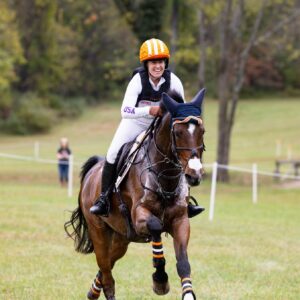
It dawned on me, as I listened to Berry while sweating among the hay bales, that many of the horsewomen in my life are living his ethos—often without having read a word he wrote.
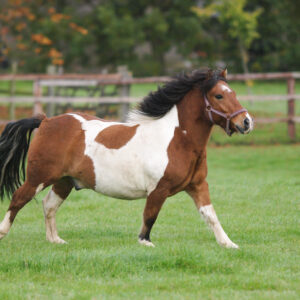
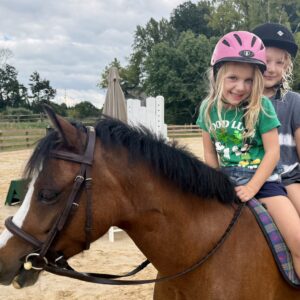
And they are more diverse than you might imagine. Some own 50 head; others, a couple of Breyers. Some ride every day, while others haven’t been on a horse in a decade. And yet, their principles match Berry’s so closely that it was downright eerie.
For instance, horsewomen often exemplify Berry’s concept of “the sticker.”
A sticker is someone who devotes themselves to a piece of land through good times and bad. Just like with horses, they often stick around out of a potent combination of stubbornness and love. I’ve watched horsewomen reseed pastures, fix fence lines, and cut their own hay. They set out jelly for the orioles, rescue deer caught in barbed wire, and take feral cats to get fixed. They fight for the wild places where we are allowed to ride.
Almost all of them either garden or are obsessed with local food. I have passed many hours, while grooming our steeds or mucking stalls, in deep discussion with horsewomen about the best time to harvest tomatoes or store meat so it lasts longer.
Wendell Berry would admire their devotion to the gospel of thrift, too.
They wait for sales. They buy in bulk. They fix things that break, then use them until they can’t be fixed anymore. They stash money for a rainy day and treat credit as a cardinal sin. Yes, horses are expensive, and their cost contributes to our frugality. That frugality, though, seeps into the rest of our lives.
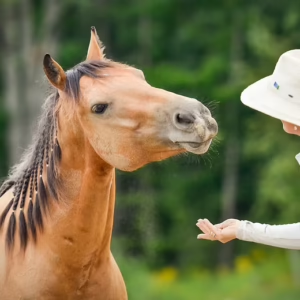
Perhaps it is because of horses, or maybe it is simply the people who are drawn to them, but horsewomen are also good at finding meaning in silence. They understand the pleasure of their own company. They find awe both in the boom of thunder from a growing supercell and the munching of a gelding enjoying his evening feed.
And they are expanded by it. As Wendell Berry wrote in his poem “Peace of Wild Things,” “For a time I rest in the grace of the world, and am free.” In the grace of horses, we horsewomen find freedom too.