
 August 11, 2026
Some people collect rare bottles of wine, others have garages full of expensive cars. American show jumper Karl Cook keeps a stable of exquisitely talented French show jumping mares.
And, really, who can blame him?
Sport-of-kings problems, to be sure, but there’s no question that purchasing two of the best horses to come out of the sport in five years—Caracole de La Roque and Foxy de La Roque—comes with equal parts cachet and pressure.
Both horses were bred at Normandy’s famed Haras de La Roque and were campaigned to great success by French and Luxembourgish riders Julien Epaillard and Victor Bettendorf, respectively. But world-class Selle Français mares don’t come with instruction manuals, and while Cook and Caracole quickly forged a successful partnership—one that took them all the way to a silver medal in the 2024 Paris Olympic Games—Foxy de La Roque has remained a bit of an open question.
Until, perhaps, now.
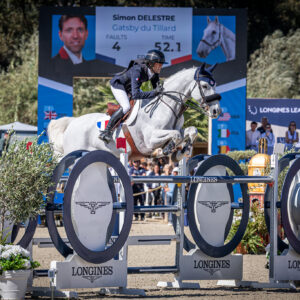
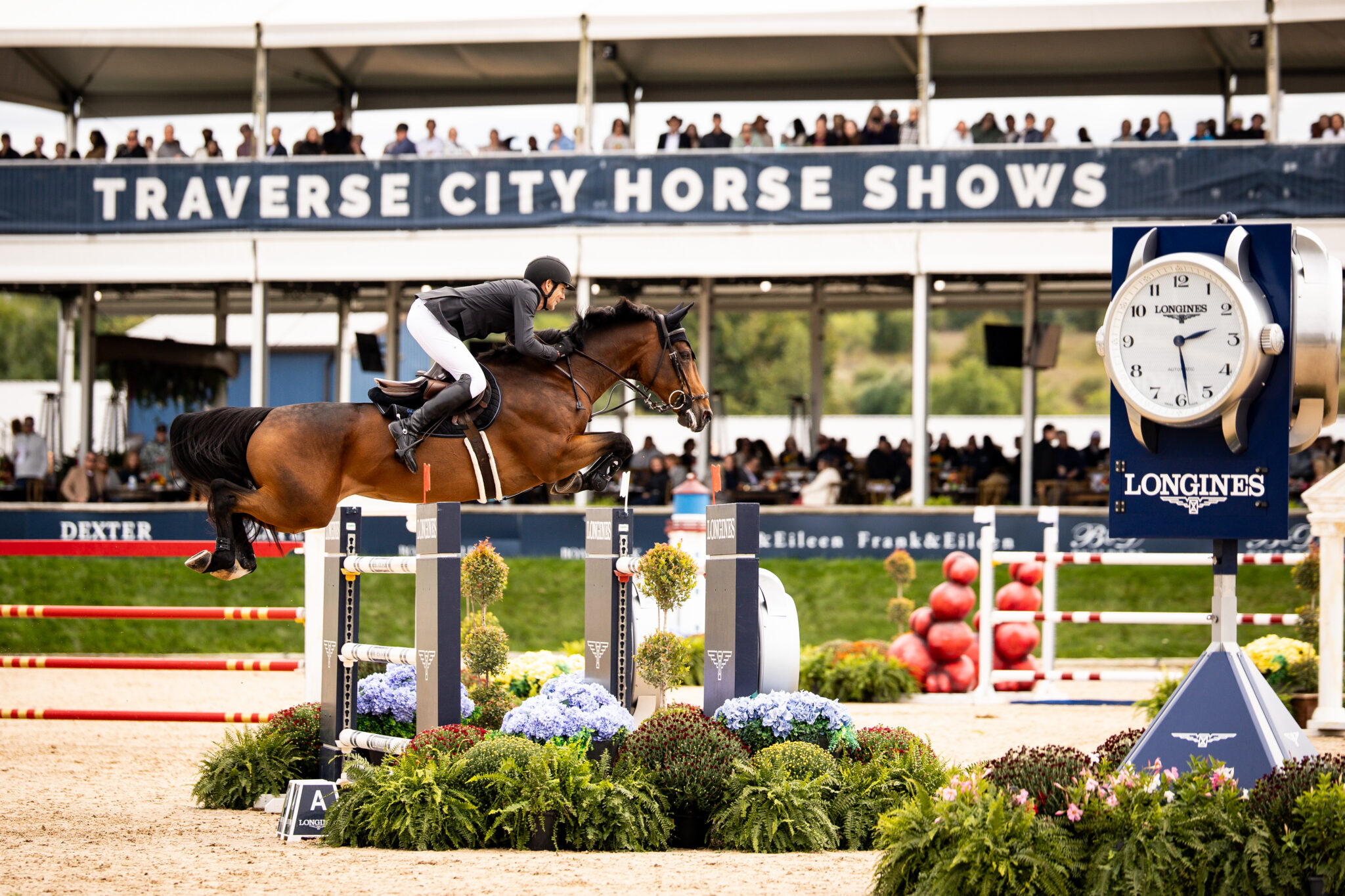
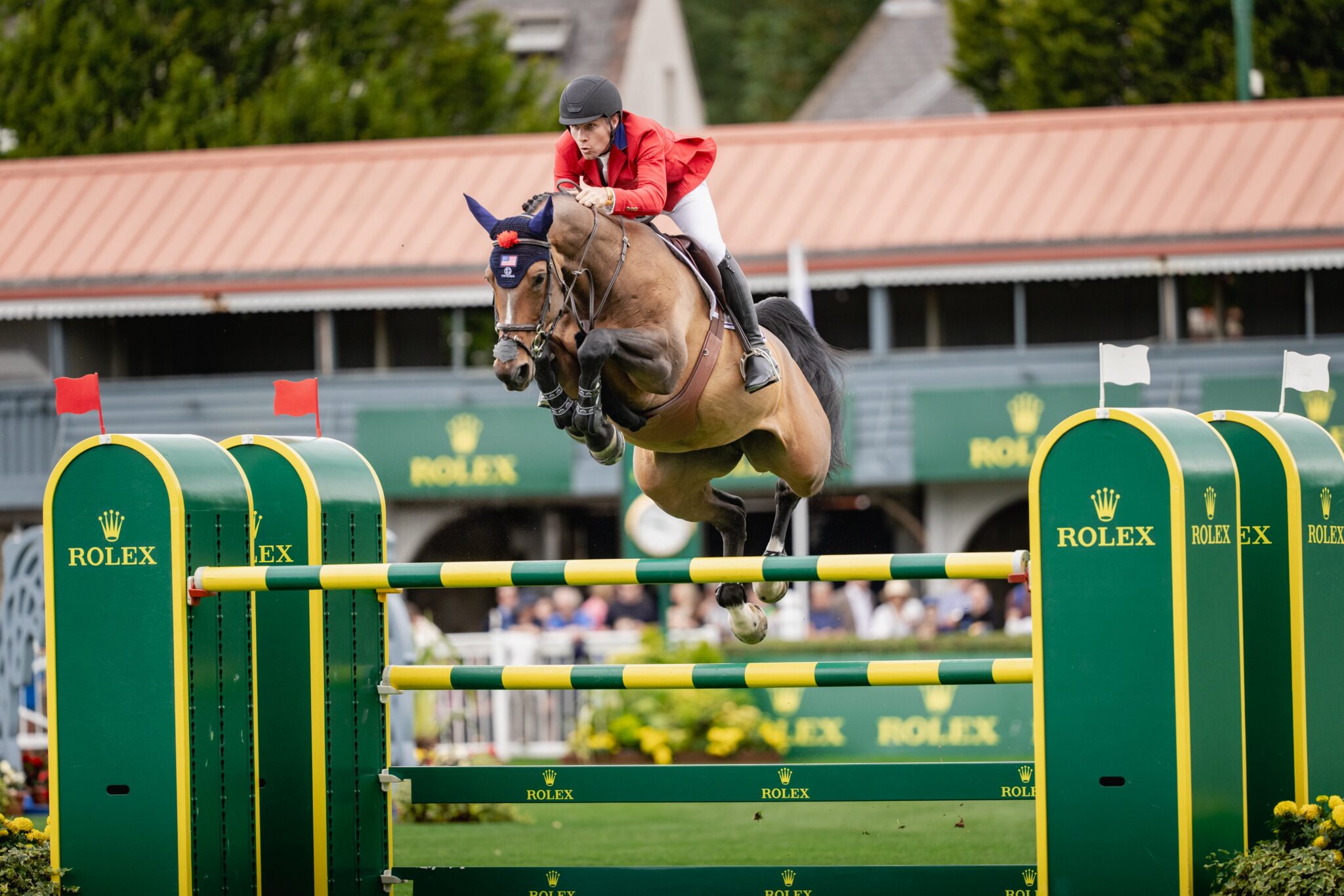
Last weekend, the pair won their first 5*, 1.60m class in the Cashel Palace Hotel Stakes at the Dublin Horse Show, a major milestone at one of the world’s most iconic show jumping events. “[Foxy] was very, very good yesterday, and we’re really happy with the way she jumped,” Cook reflected after the class, which included a competitive start list of 38.
Foxy de La Roque continues to be the most successful 9-year-old horse of all time, winning a total of four, 5* Grands Prix during the 2024 season, even more than her more-experienced contemporaries at the time (think: Checker 47, United Touch S, and Leone Jei). Perhaps unsurprisingly, therefore, when it came to getting to know Foxy, Cook took his time.
He and coach Eric Navet (FRA) chose a slow-and-steady approach with the now-11-year-old mare, who didn’t show internationally under Cook for the first eight months after she moved to his stable in late 2024.
In an unguarded Walking and Talking video in February, the American Olympian hinted at the expectations that come with taking over the reins of one of the most admired horses in the world. “It’s been a little bit hard for me to figure out the right way to ride her,” Cook admitted.
“Foxy is so amazing, that it’s been really hard when it hasn’t been working the way that I want it to. I know that it’s me, and my not figuring it out.”
Ever the analytical Renaissance man, however, Cook put in the work. He studied the pair’s stats and realized that 90% of his rails with Foxy took place in the second half of their course, when the mare was losing the quality of her canter and becoming slightly inverted in her shape, then rushing in the last stride before take-off.
In response, Cook decided to do something he “[doesn’t] like doing” in early February—changing up his program in a big way.
He tweaked everything from the boots and jumping mask the mare wore, to her bit, feeding schedule, and morning routine. For his part, Cook also adjusted how he walked his course for Foxy, the way he did his crest release, and even and especially how he picked a distance the jumps—opting to leave her with a bigger gap at the fence than he otherwise might.
The results have paid dividends.
The pair jumped double-clear in their next big outing, finishing second in the FEI Jumping World Cup qualifier in Thermal in January. They won their first 3* 1.50m Grand Prix at Thermal in February, following it up with a 3rd place finish in the 1.55m 4* Grand Prix at the same venue in March.
And while Cook said he planned to drop some of the more superficial alterations he made to Foxy’s program, changing the way he made his turns and leaving Foxy a bit more room at the jumps are two adjustments he planned to keep.
In a total of 35 starts together across all heights, Cook and Foxy are clear 47% of the time, finishing on the podium in 50% of the jump-offs they compete, according to Jumpr. Not a bad place to start, given how deliberate Cook has been about taking his time with the “high-RPM” mare who seems to bunny-hop 1.60m fences with ease.
And now, after their latest win in Dublin, it seems clear that Cook is bringing Foxy de La Roque right back to the arenas where she belongs. “We’ve been putting a lot of work in,” Cook said. “It was great to feel that come together.”