
 August 16, 2026
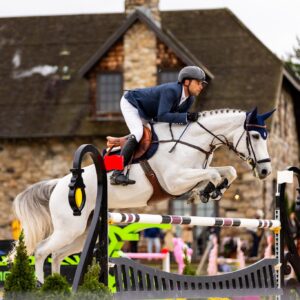
The Aachen Main Stadium held its breath. Thirty thousand spectators, their collective gasp echoing through the cathedral-like arena as each rider approached the final two lines—massive oxers to delicate verticals on bending lines, a siren’s call of alternating distances that tempted riders to either hold and earn time penalties or go for speed and tip the rails.
The final phase of the Eventing World Championships saw three nail-biting storylines unfold in the ring. But the drama began even earlier in the day at the second horse inspection.
With the loss of their third rider and no fourth reserve, Japan withdrew the whole team. Brazil lost team results with the withdrawal of their third rider Carlos Parro. France, the oft overlooked but deadly team, withdrew their third rider after losing their reserve fourth on cross country and so missed out on defending their sixth-place position.
And so the numbers dwindled from 88 starters and 27 nations at the start of the week to 59 riders of 22 nations in the show jumping phase. Pressure to deliver rested on every shoulder.
The Weight of a Nation
For Great Britain, the gold medal favorites, every stride carried not just the hope of Olympic qualification, but the crushing weight of expectation. They had arrived as the team to beat—Paris 2024 gold still gleaming, Laura Collett’s European individual championship crown still fresh from 2025. The pressure wasn’t just external; it was written in the quiet glances between teammates.
“We came here with a lot of weight of expectation on our shoulders,” Richard Waygood, the British chef d’equipe, admitted in the press conference. “But that’s the beauty of this group. We know when someone might be a little bit hyped—it just takes one glance.”
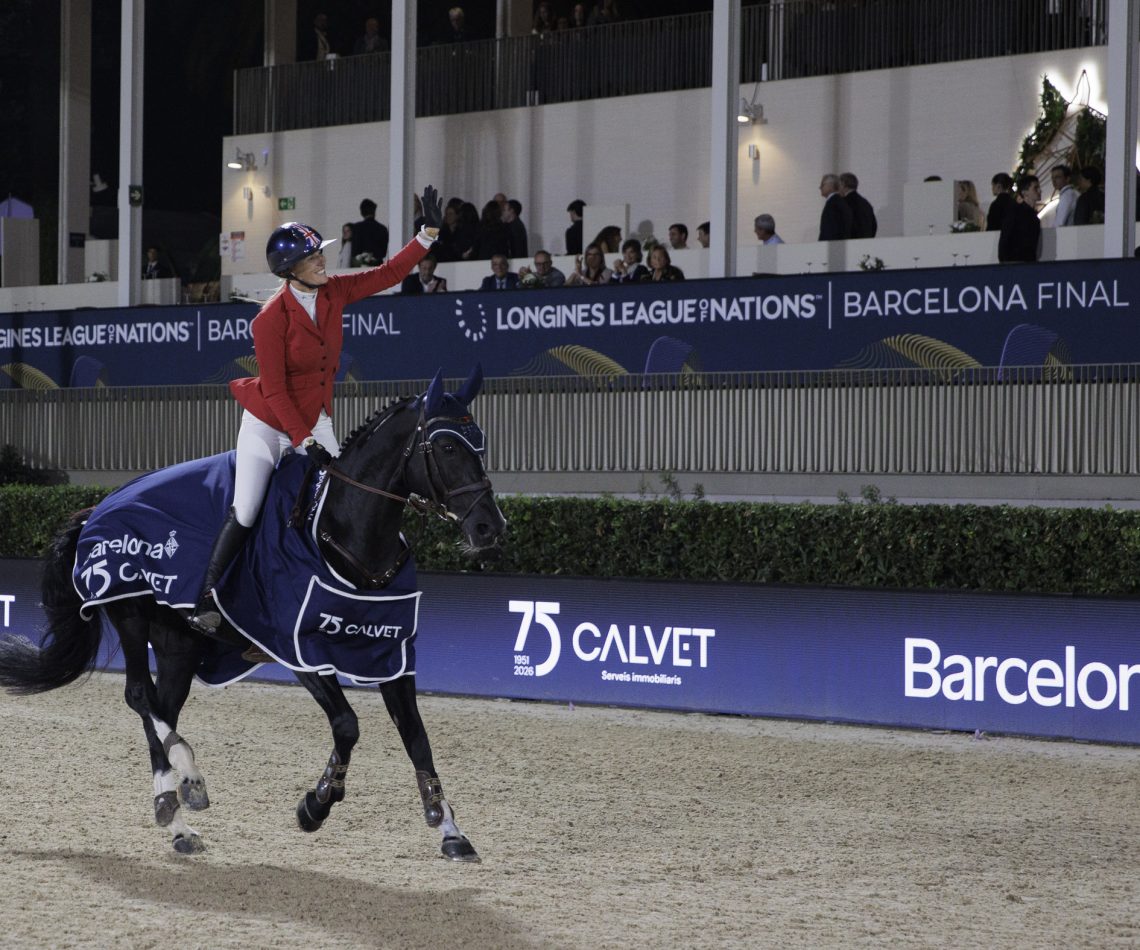
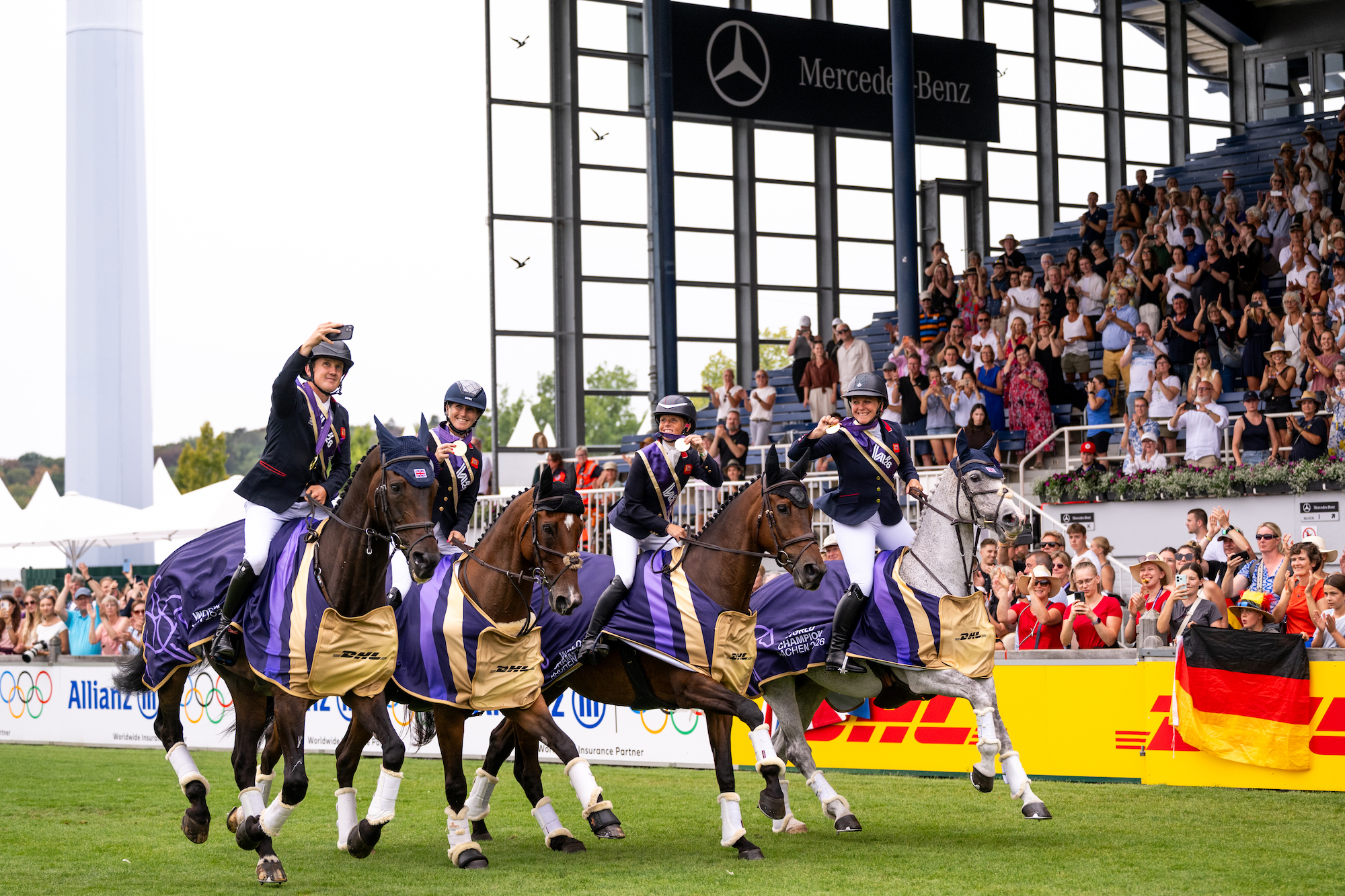
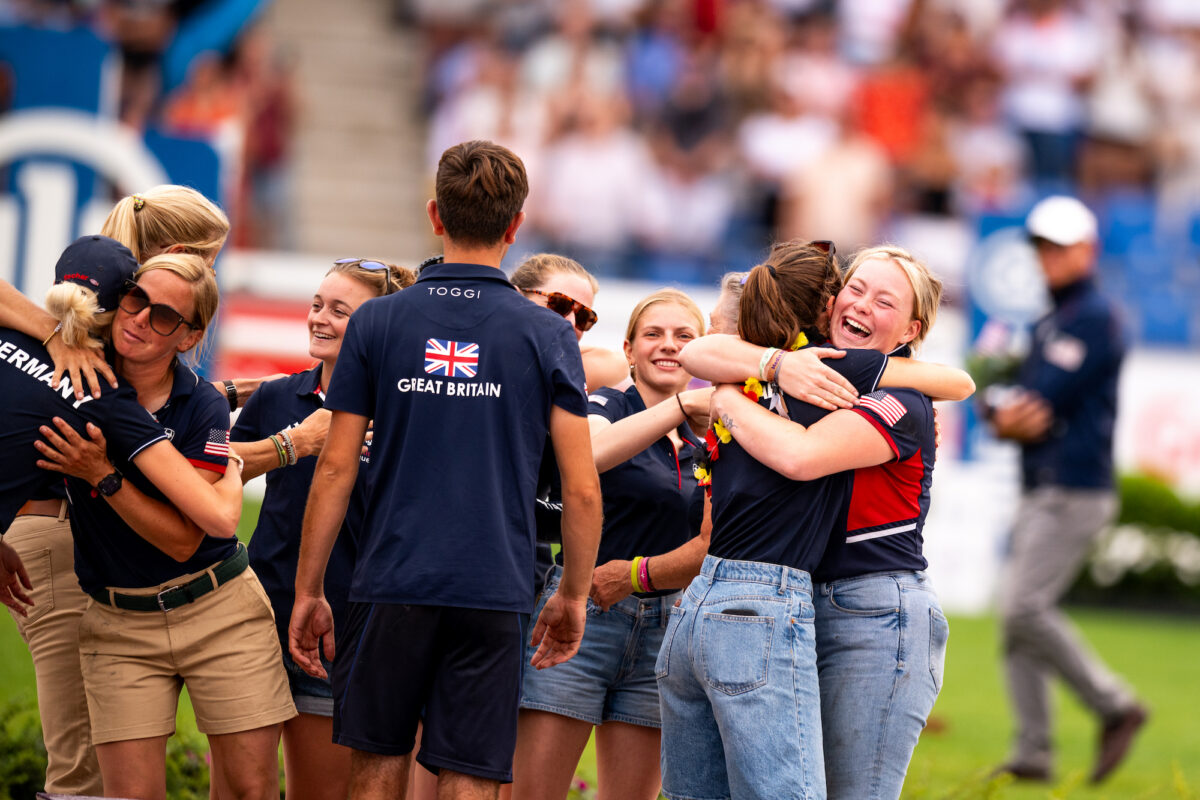
From dressage leaderboard to the final show jumping phase, Britain never relinquished their grip on gold. Transforming scrutiny into fuel, they added just 8.4 penalties to their team total.
Their consistency proved once again unbeatable. Another chapter written in British eventing’s golden era.
“They’re all really good friends and good muckers,” Waygood said of his team. “They all hold each other’s backs.”
For Peter
Across the warm-up ring, the German team moved with a purpose that transcended mere competition. The rode not just for themselves, not just for their nation, but for a man who couldn’t be there to witness it.
Peter Thomsen, the German national eventing coach, had been building toward these championships since Paris. Then came a riding accident on June 14 that forced him to the sidelined and left his team to carry forward without him.
“Aachen is so special, and then having the World Championship at home is something everyone can be part of,” Julia Krajewski reflected. “It was Peter who has been working towards it more or less since Paris. Now that he can’t be a part of it anymore, somehow that put us all even closer together.”
The Germans sat in silver position with a comfortable 16.1-penalty buffer over third place. But the desire to go double clear and put pressure on the Brits for gold was intense and felt no where greater than Michael Jung’s heart stopping rattle at the last.
“I was a little bit closer than I wished and, yeah, that was a scary moment!” he exclaimed.
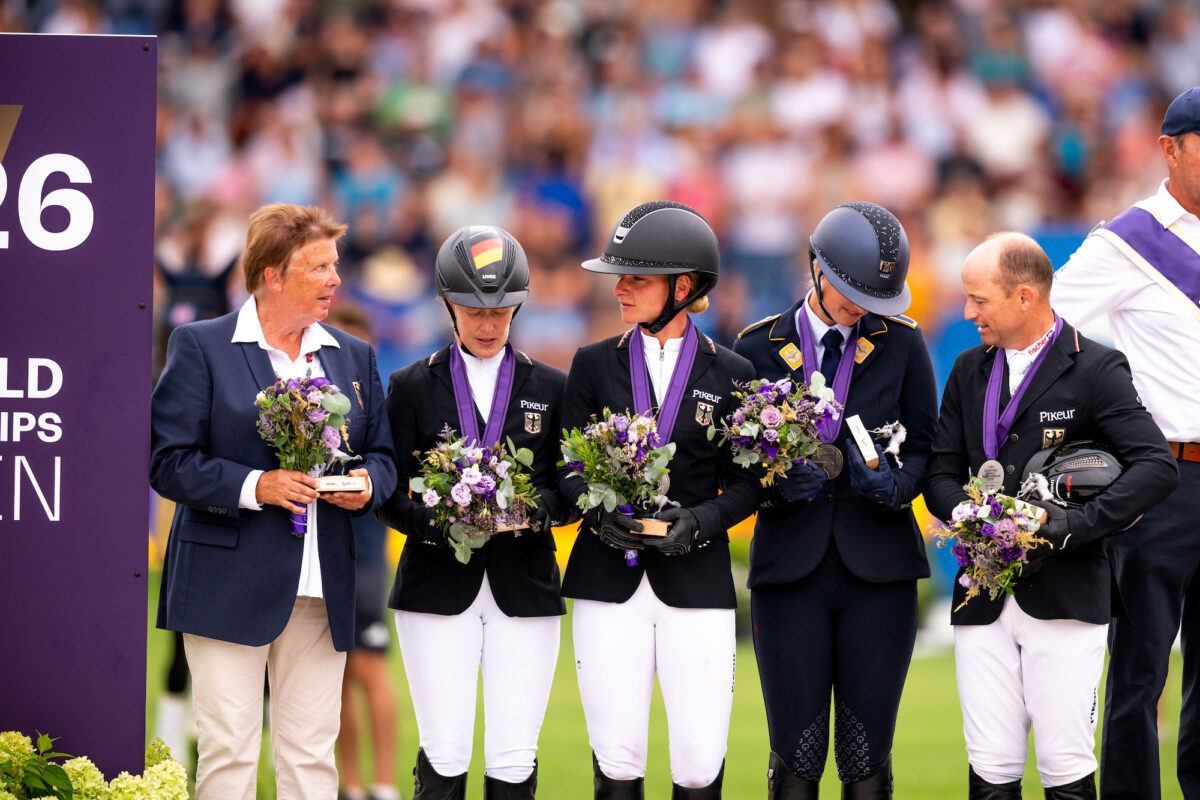
Malin Hasen-Hotopp added just 1.2 time penalties to the team total. Julia Krajewski, a single rail. It was enough to secure the silver.
“We had to make it happen for him,” Krajewski said of Thomsen. “So much work, thought, and effort—the planning all came from him. I personally thought a lot of him and the words he would say. We have some phone calls with him, and I’m happy to share that he’s on the up.
“It’s as much his medal as everyone on our team,” she continued. “Everybody, the farrier, the vet, the physio, the grooms—everybody put so much effort into it so you can then bring home a team medal. It’s very emotional. I’ve been crying a lot today.”
From the Shadows to the Podium
The Americans began this championship in sixth place. Out of qualification position. Out of medal contention. Out of the conversation entirely.
Then came cross-country. Fifth place. A whisper of hope.
Then came show jumping—and a statement rise from the ashes.
Three Americans. Three clears. Three rides that defied expectation and redefined possibility.
Phillip Dutton, who had competed at Aachen 20 years prior in 2006, addressed the challenge. “We don’t get to practice big open courses,” he admitted. “It’s certainly a little bit out of my comfort zone! Galloping to jumps like that, usually you’re trying to help them off that front rail. Here, you start doing that, you’re going to be 10 seconds over the time.”
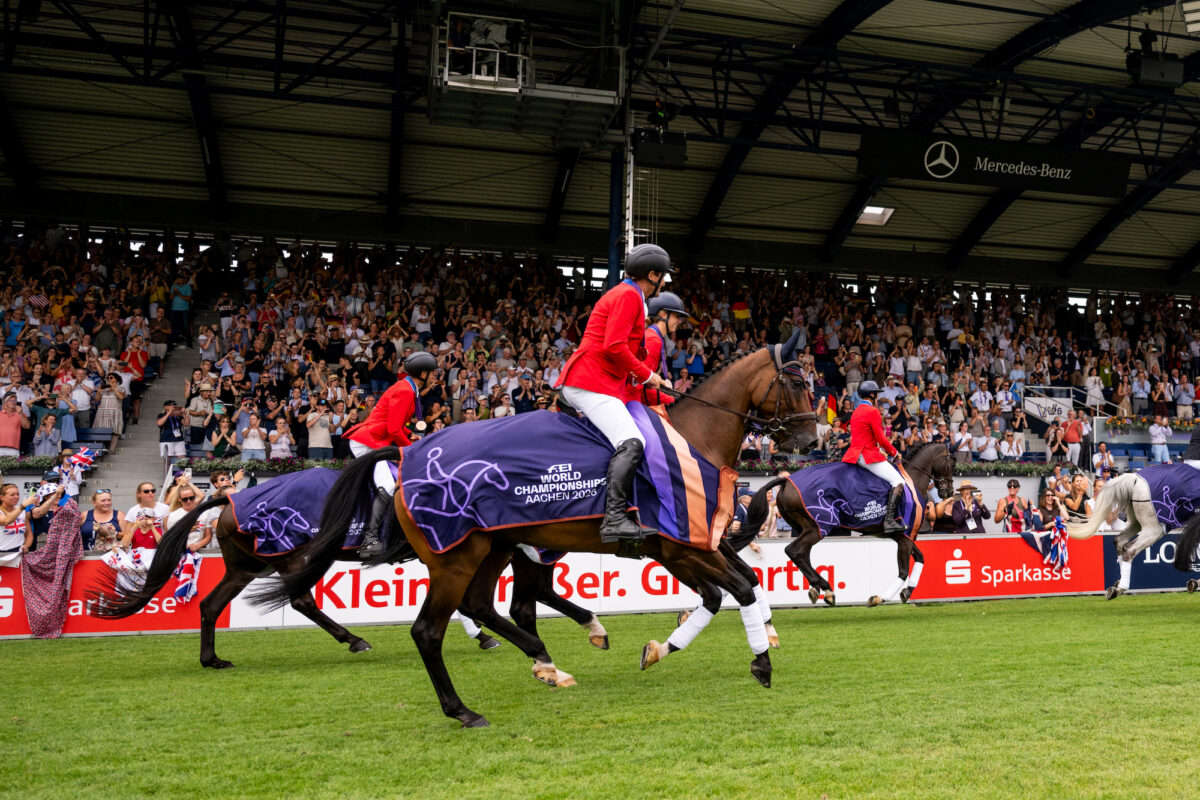
But Dutton, Boyd Martin, and Will Coleman didn’t just survive the Aachen arena—they conquered it. With Denim, Cooley Nutcracker, and Diabolo respectively, they added only 1.2 time penalties to their cumulative score. From sixth to fifth to bronze, it was an improbable ascent.
“We didn’t get off to the greatest start,” Will Coleman reflected, the smile evident even through his measured words. “But everybody kept a really cool head and we just kept chipping away throughout the course of the week…That’s all you can really control. I thought all four of us did a good job of that, and we were fortunate and very blessed to be sitting here today because of it.”
For Boyd Martin, the bronze medal came with a personal victory beyond the podium. His wife Silva is from Germany, and her family lives nearby Aachen. “Her mother and I embraced at the end of the ceremony,” Martin quipped, “and for the first time I felt part of the family.”
Beyond the Medals
There was more riding on team competition at the FEI Eventing World Championships Aachen 2026 than medals. The top seven nations earn qualification for the LA Olympics.
Great Britain joined the USA (already qualified as the host nation), Germany, Ireland, Switzerland, New Zealand, Sweden, and Belgium among those ranks.
As every championship does, Aachen 2026 delivered more than just a leaderboard. It delivered stories—the kind that transcend sport and time.
“Everybody says it’s a team effort,” Krajewski reflected. “I think we should rent out the experience to be part of an eventing week at a championship—it’s crazy! Everybody is lacking hours of sleep, and it’s very intense. But then you bring home a team medal, and it’s very special—something you can give back to everybody who’s behind you the rest of the year.”