
 August 2, 2026
“What an exciting Grand Prix!” she says, practically shouting. I’m in my yard in Wellington, Florida and this traitor is speaking happily and enthusiastically, in a way she NEVER does, while cleaning a bridle.
“No, it wasn’t!” I say back. “It was all time faults, all day, nothing but time faults—how stupid!”
“But there were six in the jump off,” she replies. “My sister is there, she told me.”
“There were three!” I say back to her annoying face. “Could have been four, but the Brazilian chick dropped out—how stupid!”
“She’s saving her horse for the WEG. That is very understandable,” replies this person, the most annoying person on earth.
“No, it’s not!” I shout back. “When you have a chance for a win, you take it! Especially in a five-star!”
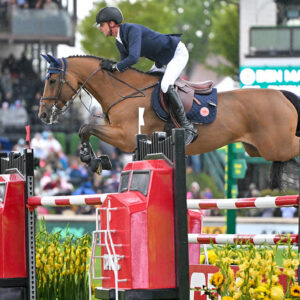
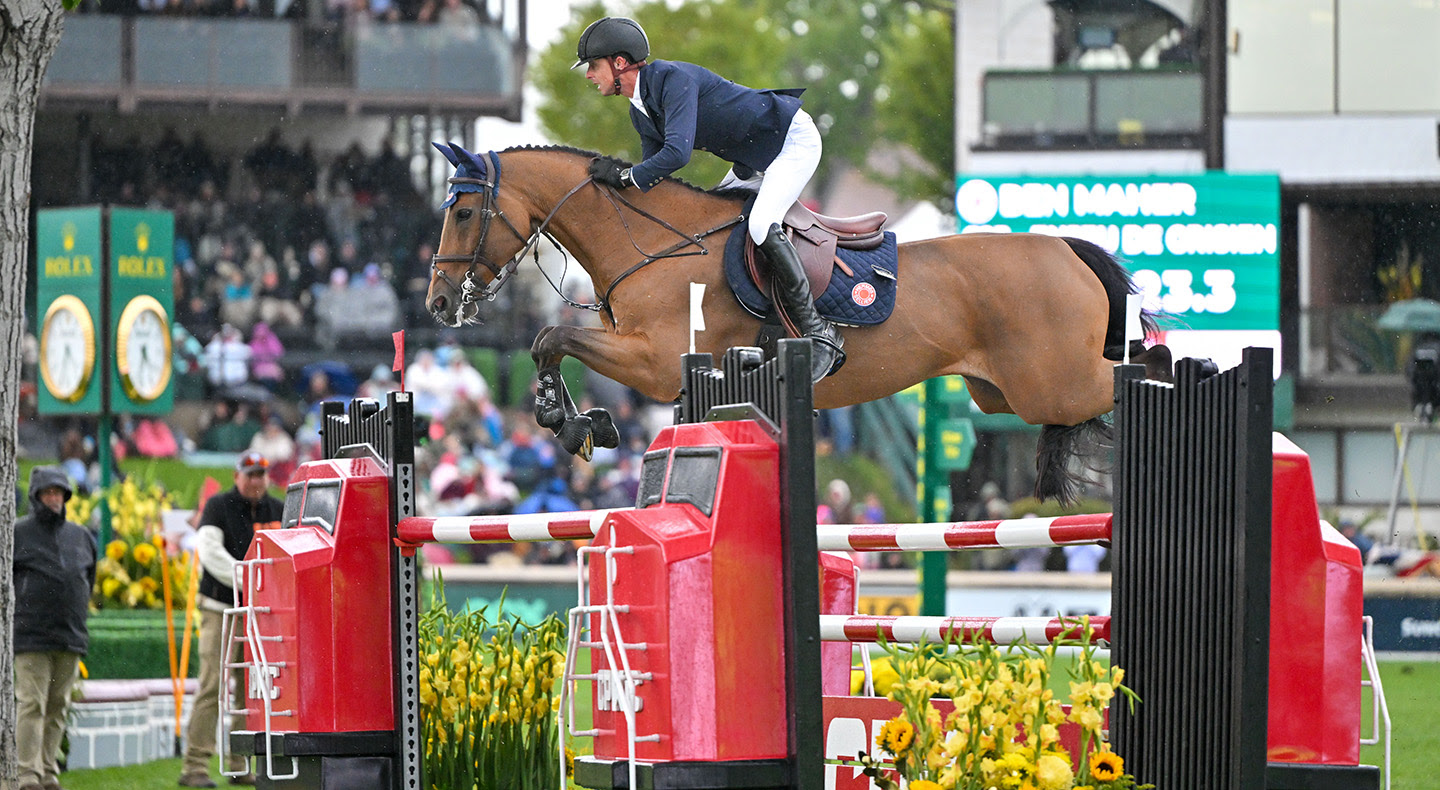
I don’t know if my interlocutor is being performative (I suspect she is), but she clings to her opinion that Luciana Diniz, one of only four clears, was right to withdraw her mount Vertigo du Desert from the jump off and let the three remaining riders—Max Kühner, Christian Ahlmann, and Pieter Devos—battle it out for the win.
I cling to my desire to find everything wrong with the Rolex Grand Prix Ville de Dinard, because of a feud I had with the show organizers last year over parking. Well, it started over parking, but I was able to augment and mutate it into something much bigger over the course of that pink-bedecked week.
“And there WOULD have been six if the stupid time allowed weren’t so tight and if they had just adjusted it up to 85 instead of 84, we would have had Shane Sweetnam and Luke Dee—Luke Dee, everyone’s favorite upstart New Zealander—in the jump off!
“And what about Vogel and what about Lillie?” I continue. “They both had the last fence chasing that stupid time!”
She is looking at the results. “Well, Vogel had a time of 81.53 and Lillie had a time of 81.92—they could have slowed for the last fence, so I really don’t know what you’re talking about.”
“Did you know they have no whiskey in the VIP out there?” Changing the subject might work, I thought. “Last year I ordered whiskey like a normal person seeking hospitality and they had to run out of the tent to procure me some—”
“So nice of them to run out of the tent,” she interjects.
“—and a solid 45 minutes later they showed up with a tiny glass that I threw back instantly and of course I asked for more but it never came as the class was over and I was up and out of the tent before another 45 minutes had passed!”
There is no point to it. I’m speaking to a person who is French and she and I both know that rudeness, especially to an obnoxious American, is an integral part of their cultural heritage. Instead of cherishing and respecting that heritage, here I was protesting against it and not just in the moment (somewhat understandable), but a whole year later!
And let’s be frank: that spot near the ocean IS a sort of paradise. While there, I wrote a poetical little article about sitting in a chair and looking out to sea, because that is what I spent a week last year doing, while the covid virus replicated inside me.
I was turning delirious, hot and flushed and miserable. I became so ill I could not rise from the bed, except to crawl to the shower, where I sat under the hot spray, trying to clear my head.
A covid test came back negative, but later I was told that the tests can’t be trusted because the virus has mutated so much that false negatives are routine.
It must have been covid, after all, because I lost my appetite and that is something that has never happened to me in my whole long life, a life that has been defined by a lusty appetite.
‘I know my appetites, as the French say.’ I often quote this line from Anna Karenina, and yet for two weeks last August, I forgot them.
What I found instead was a thousand little reasons to be aggrieved, as if I were the President of the United States.
I also found a thousand little reasons to be delighted in this coastal town in Brittany. I tried to write them up, but when I mentioned a dog getting loose on the showgrounds and chasing Henrik von Eckermann, I committed a sin worthy of endless commentary on Facebook: a lackadaisical attitude towards his death, a death he barely avoided, it was pointed out, and for which I must be condemned, even though it didn’t happen.
I was a little happy, because surely the dog getting loose and chasing von Eckermann was more a reason to condemn the show than me, and I was eager to find company in my misery and resentment.
“This article rambled all over the place,” said a commenter mad about the dog. I pointed out in the same thread how embarrassed she will be to have made a comment showing such little perception when I win a Pulitzer or Nobel, and besides (this I did not write but kept to myself), the article did not “ramble all over the place,” but actually, if a criticism were to be levied, “went nowhere.”
Kinda like this article.
So let’s get back to the meat of this thing: the Rolex Grand Prix Ville de Dinard.
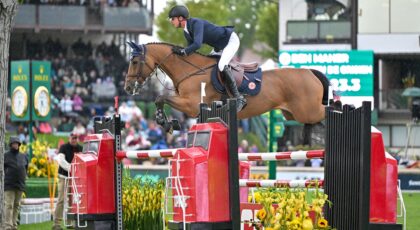
The time allowed was set at 83 seconds and it was clear early that hardly anyone would be fast enough to make it. But, to throw a wrench in the whole of the proceedings (to my mind), a lightning-fast Max Kühner of Austria, third to go, laid out a clear round at 82.70, which proved to everyone that time the time was achievable, so the judges chose to lengthen the time by only one second to 84, instead of my wished-for 85.
Well-played, dude.
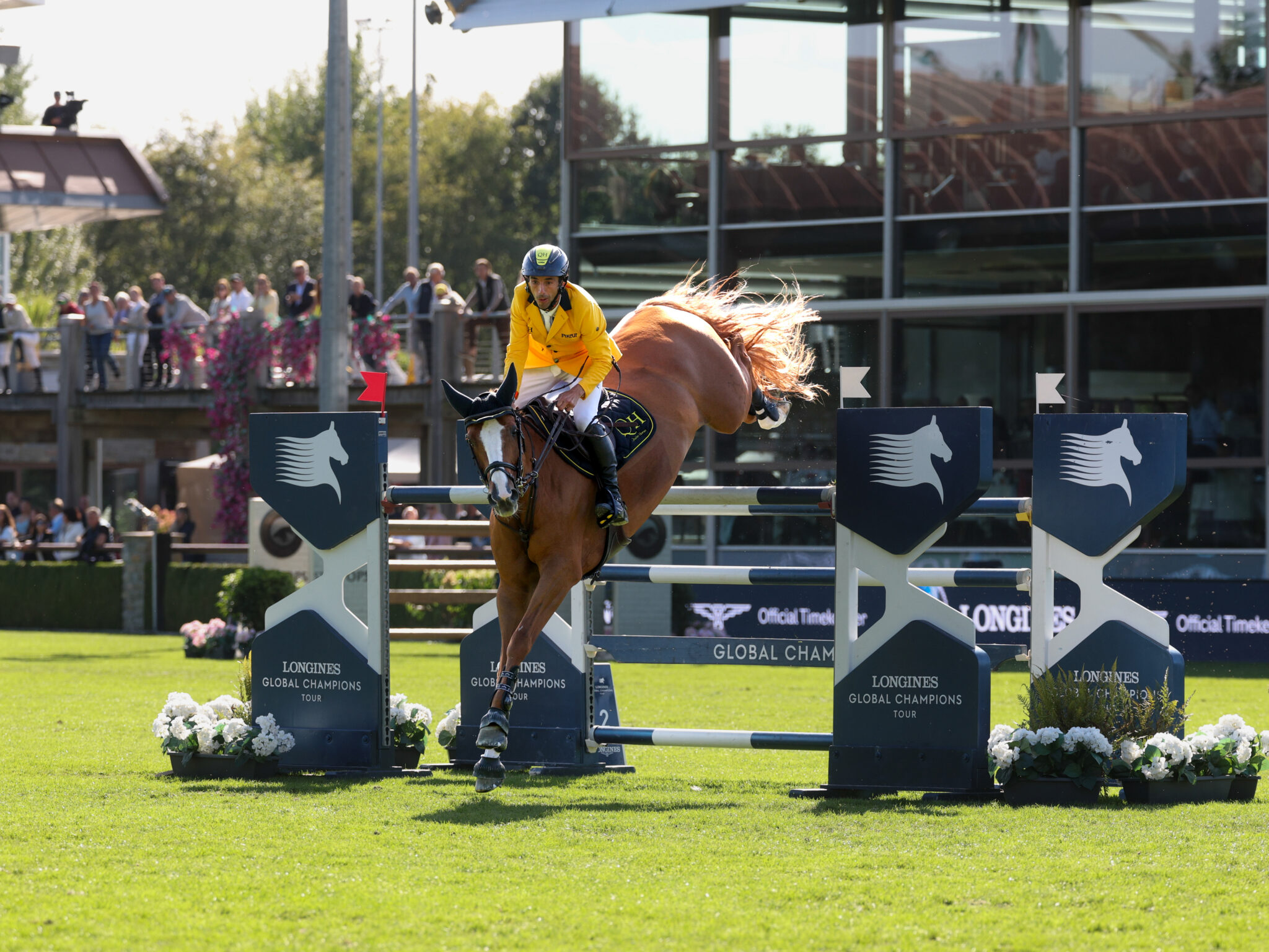
What was less well-played was the crazy angle Kühner took at that oxer in the jump off, so acute that the horse grabbed the back rail and Kühner, first to go, settled into third place, handed to him (in my mind) by the withdrawing Brazilian.
His time of 44.92 was nearly five seconds faster than Ahlmann, clear and in second at 49.08, and nearly two seconds faster than the winner, Pieter Devos, at 47.42.
That’s the unfortunate curse of going first in a jump off. If you’re any kind of competitor, you’re going to blitz it and make them chase. But sometimes when you blitz it, you gather up some faults.
But before I wind up this article that both “rambles all over the place” while “going nowhere,” I have to mention the best part of today’s result: Devos bred the horse he rode to victory!
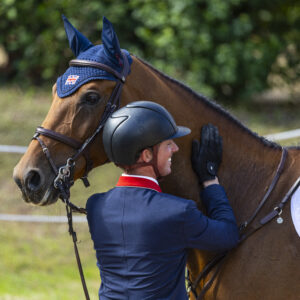
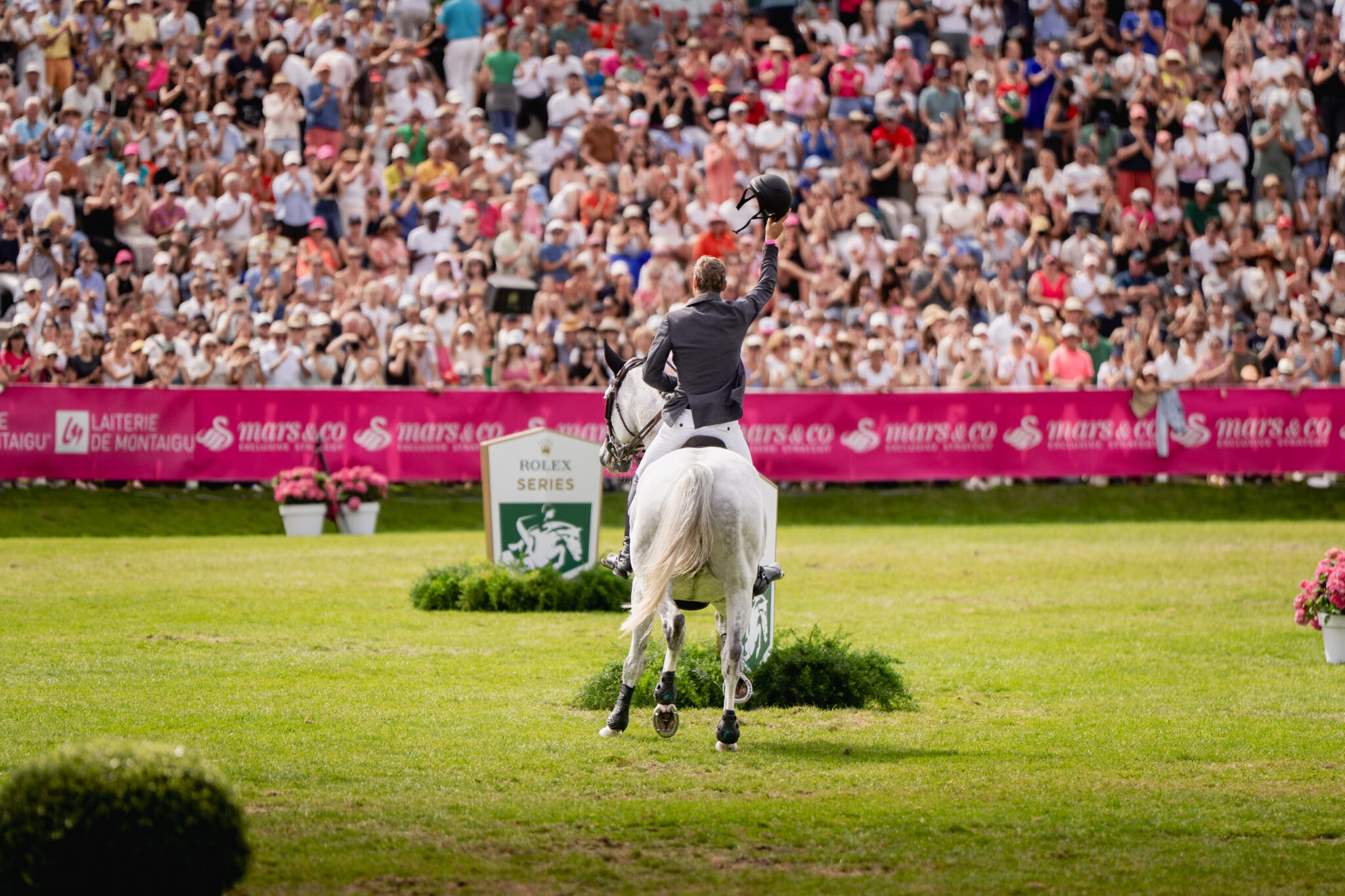
“It’s a very special feeling,” says Devos of his mount Primo Dv, an 11-year-old gelding by Vigo D’Arsouilles out of a Heartbreaker mare. “He’s such a trier and he always does his best so it’s so nice for him to have a Grand Prix on his list.”
Devos claims that before today there had been a bit of mockery: “Normally he is very careful, but he’s not the fastest horse, so everybody is always a bit laughing with me that I have not so fast a horse.
“The time allowed was unbelievably short in the first round and we could manage to be more than one second in the time allowed, so that was already for me a little victory. I thought it was realistically impossible for me to go in the time allowed.”
And to also have the win? “It’s super happy!”