
 September 27, 2025
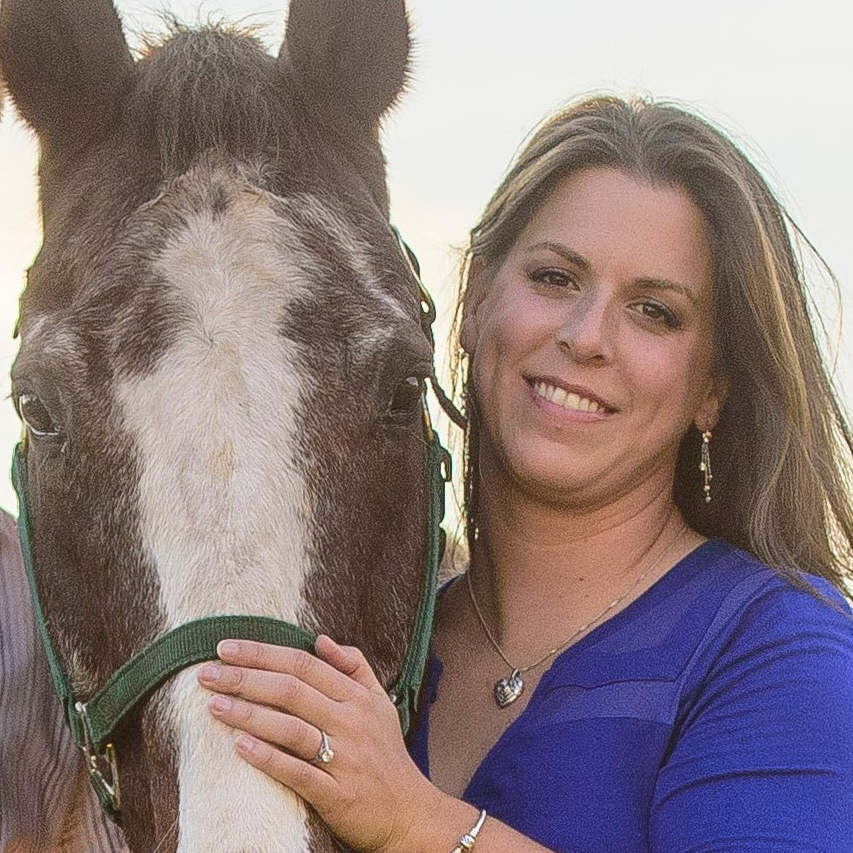
In today’s challenging times, many people find it harder to make ends meet. For some owners, these circumstances make it difficult or even impossible to properly care for their horse. That is where the Owner to Owner (O2O) Program run by Days End Farm Horse Rescue (DEFHR) in Woodbine, MD comes in. Here, Brittney Vallot, the O2O Program’s Owner Assistance Manager, explains how the program was developed and the extensive support it offers to help owners decide the next steps for their horse during what can be a stressful time. As told to Alice Collins.
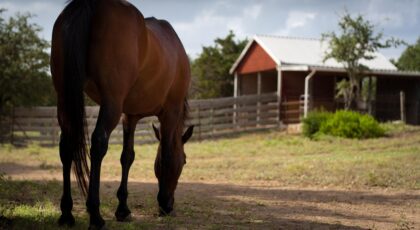
In May 2024, the elderly owners of Zippin’ To The Doctor (Doc) reached out to the Owner to Owner Program at Days End Farm Horse Rescue for help rehoming him because they needed to move into a smaller living arrangement.
Doc, a registered bay Quarter Horse, was in his early 20s and had been born, raised, and trained by his owners. He had a successful career in both the English and Western show worlds, but hadn’t been ridden in several years. When I met him, I could tell he had been very well trained and appeared to be sound and healthy, but it was unclear how he would fare going back under saddle at his age.
One month after entering our O2O program, he found a home with Candy Cole of High Ridge Farm in Manchester, MD. A licensed Maryland Horse Discovery Center, offering a safe, friendly, educational experience, High Ridge is big on community outreach and caters to children through lesson programs and camps. They have taken several other horses from our O2O Program over the years, and we were elated when they took Doc in.
Data shows that, on average, horses are transitioned between homes seven times during their lifespan. Each time they are transitioned, they face an increased risk of falling into an unsafe situation. When an owner decides they can no longer keep their horse for any reason, it can be unclear where to turn. Our goal with the O20 Program is to provide expert advice to help owners explore their options and take appropriate steps to keep their horse safe.
In 2018, the Maryland Horse Council launched the program, originally called the Maryland Equine Transitions Service (METS).
As one of the first horse councils in the United States to oppose horse slaughter, it also recognized the need for an alternative solution for surplus horses that would otherwise go to slaughter. After evaluating options for a brick-and-mortar shelter facility, they decided on a system where horses would stay with their owners while the program helped find safe, new homes.
Along with providing resources and support to owners, the program helped reduce the burden on Maryland’s equine rescue facilities, which frequently received surrender calls but couldn’t fulfill the requests due to limited space and/or funding.
DEFHR played a significant role in launching the program and continued to serve as both fiscal sponsor and program advisor through 2021.
In 2022, the Maryland Horse Council faced challenges in maintaining funding and operations for the program, but recognized its positive impact on the community of horses and owners. To keep the program going, DEFHR agreed to adopt METS in February 2022, gradually rebranding it as the Owner to Owner Program.
The O2O Program aligns seamlessly with DEFHR’s mission to provide quality care and treatment for horses through intervention, education, and outreach. We believe that increasing education and awareness within the horse community helps prevent horses from falling into unsafe situations. Often, owners are unaware of the dangers horses can face during transitions. Owners who are tight on cash and time may be desperate to unload their horse. So, when someone offers to take it right away, the horse may get moved on without the necessary checks to ensure the new home is safe and well-prepared to care for it. This raises their risk of ending up with people with less than good intentions who may flip them for a quick buck, send them to auction (and potentially slaughter as a result), or allow them to fall into a neglect or abuse situation.
Many of the calls we handle involve educating owners about these dangers and informing them about the support available for rehoming or humane euthanasia, so they can hopefully prevent their horse from being put at risk.
Sometimes owners don’t want to give up their horse, so we look for options that might help them keep it. That could include suggesting ways to lower their care costs or referring them to programs that assist with vet, feed, and hay expenses.
About 95% of owners who reach out to the O2O Program are seeking a new home for their horse. To qualify for rehoming assistance through our program, owners must be willing to ask no more than $2,000 for their horse, and it must be located in Maryland. All services we provide during the assistance are free of charge for horses listed at under $750, with a small donation encouraged for those listed between $750 and $2,000.
When an owner contacts us, their first step is to complete an application and a detailed form about their horse, including information on feed, medications, supplements, farrier care, vaccinations, behavior both on the ground and under saddle, and more.
Then, we call the owner to review the information and ensure we understand as much as possible about their horse. We dig down and learn about the horse’s abilities; for example, are they rideable? Do they have a condition or take medication? Can they be a companion? We might also visit the owner and horse if we need to verify information or collect photos and videos.
Our goal is to collect enough information to accurately advertise the horse and help us answer any questions about whether the horse might be a good match for interested buyers.
To promote a horse, we list it on our website, several other horse listing platforms, and social media. Interested parties contact us directly, and we typically ask questions to determine their suitability for the horse and vice versa.
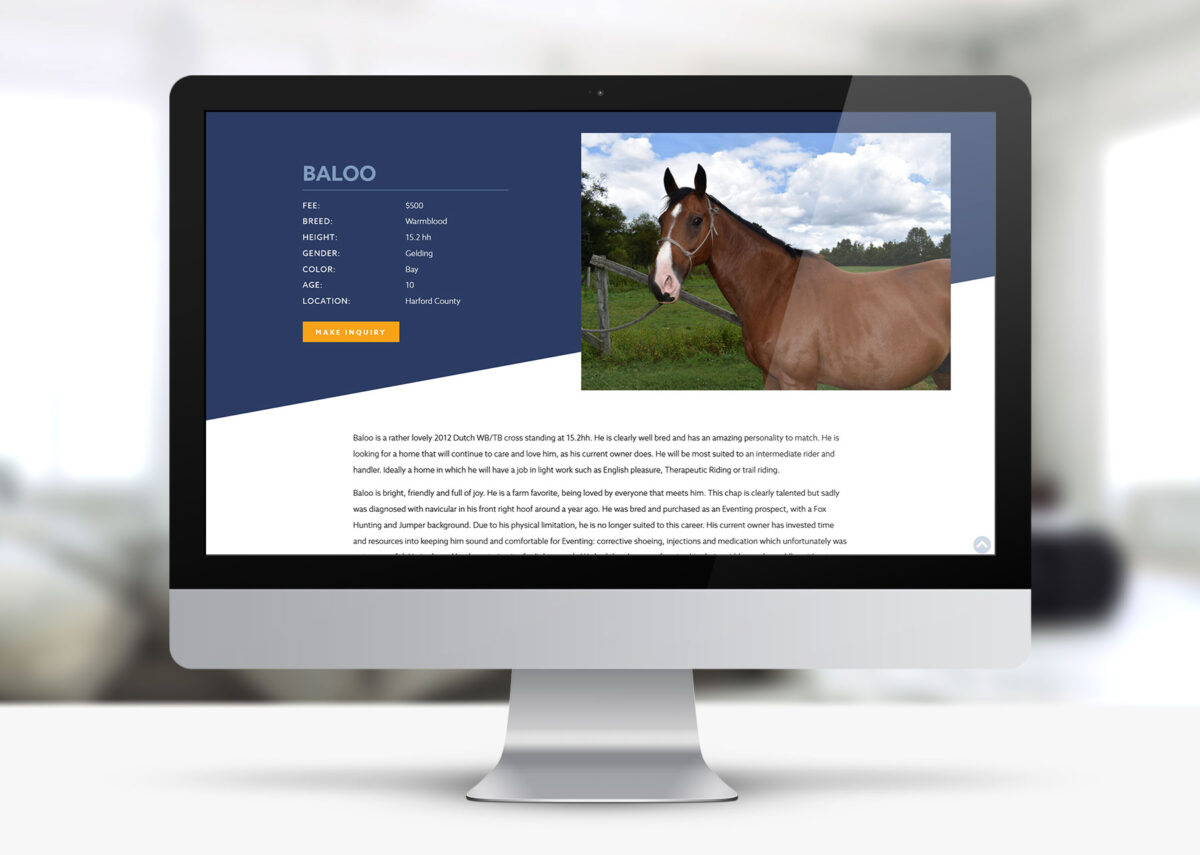
Those interested in pursuing the horse further must complete an application, which includes all their contact information, their barn’s information if they plan to board the horse, and a vet, a farrier, and two personal references.
We follow up with their references, taking detailed notes, and then provide the owner with the application and our reference notes to review. It is then up to the owner to decide whether to contact the applicant to discuss the possibilities (for which we offer sample questions to help guide their conversation with the applicant) or politely decline.
Owners are not required to consider any applicants we refer to them.
We keep the owner’s identity confidential throughout the process until they choose to contact the applicant for further discussion. Rehoming can be a difficult decision, and our system helps owners make informed choices about their horse’s future. We are always available to assist in making the process as smooth as possible.
Although most of the help we offer centers on rehoming, we also recommend considering humane euthanasia as a responsible choice if there is a quality-of-life issue or an urgent situation. Instead of sending the horse to auction or giving them to anyone willing to take it, euthanasia is a responsible ownership decision when no safe rehoming options are available.
We often advise owners on end-of-life decisions and inform them that we can offer financial assistance if needed. In such cases, we pay the veterinarian directly for the procedure, reducing some of the owner’s expenses. We also provide financial help for the basic removal of the horse once it has been euthanized.
DEFHR has been in this industry for many years, which makes us very aware of the bad situations horses can end up in, and that’s what we strive to prevent. Our hands-on experience gives us a unique perspective and drives everything we do in this program. DEFHR is so well known in Maryland that we receive calls almost daily from owners asking for assistance; this year alone, we have already had 118 (and counting) calls.
We are lucky to be able to use DEFHR’s extensive local and statewide network of contacts and social media channels to promote everything the O2O Program does. We also have a dedicated Facebook page where we feature available horses, share success stories of horses we’ve helped place, and explain the assistance we can provide.
Most importantly, we want people to know that if or when they call the O2O Program, they will be met with an open-minded, non-judgmental response. We don’t want owners who are struggling with their circumstances to avoid reaching out to us out of fear of being judged or accused of maltreatment. Our priority and greatest concern is the horse, but we also care deeply about the physical and emotional well-being of the owners seeking assistance. Owners should not hesitate to get in touch with us. We want to help in any way we can.
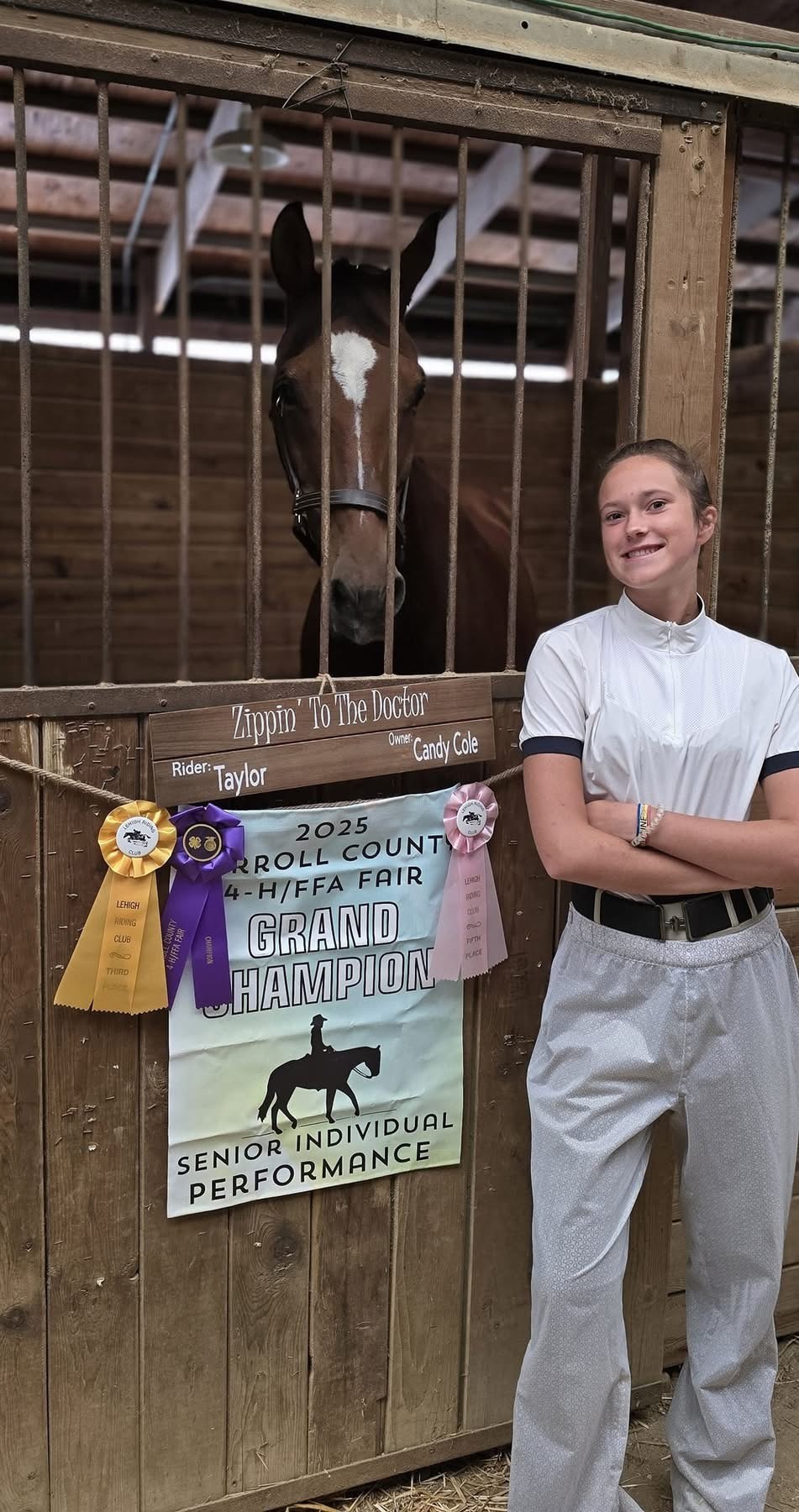
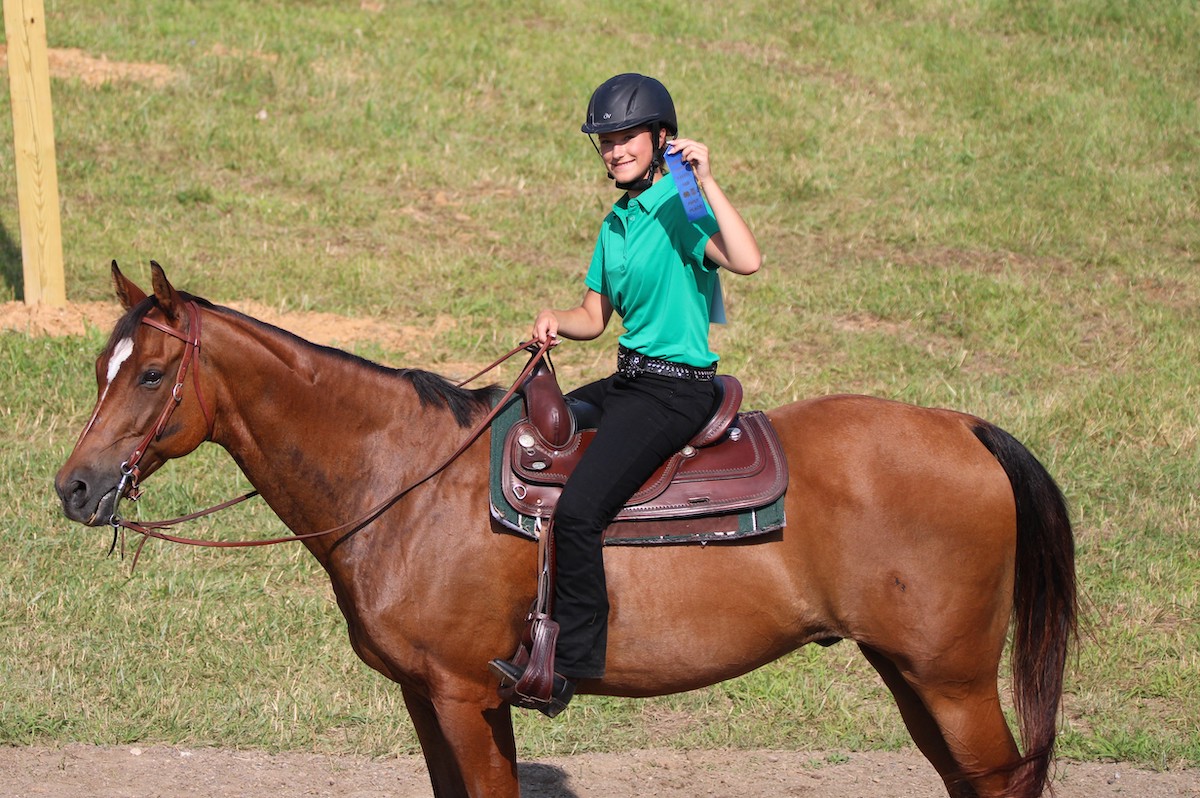
Remember Zippin’ To The Doctor? This summer, the High Ridge Farm team took Doc to some shows, including the Maryland State Fair, where he was crowned champion in the senior individual performance division. He has proven to be a lovely horse with a super rehoming story.
If you would like advice or assistance from DEFHR’s Owner to Owner Program, please call Brittney Vallot at 301-854-5037 x1011 or email owner2owner@defhr.org. You can read more about the program here and browse horses currently available through the Owner to Owner program here.