
 August 3, 2026
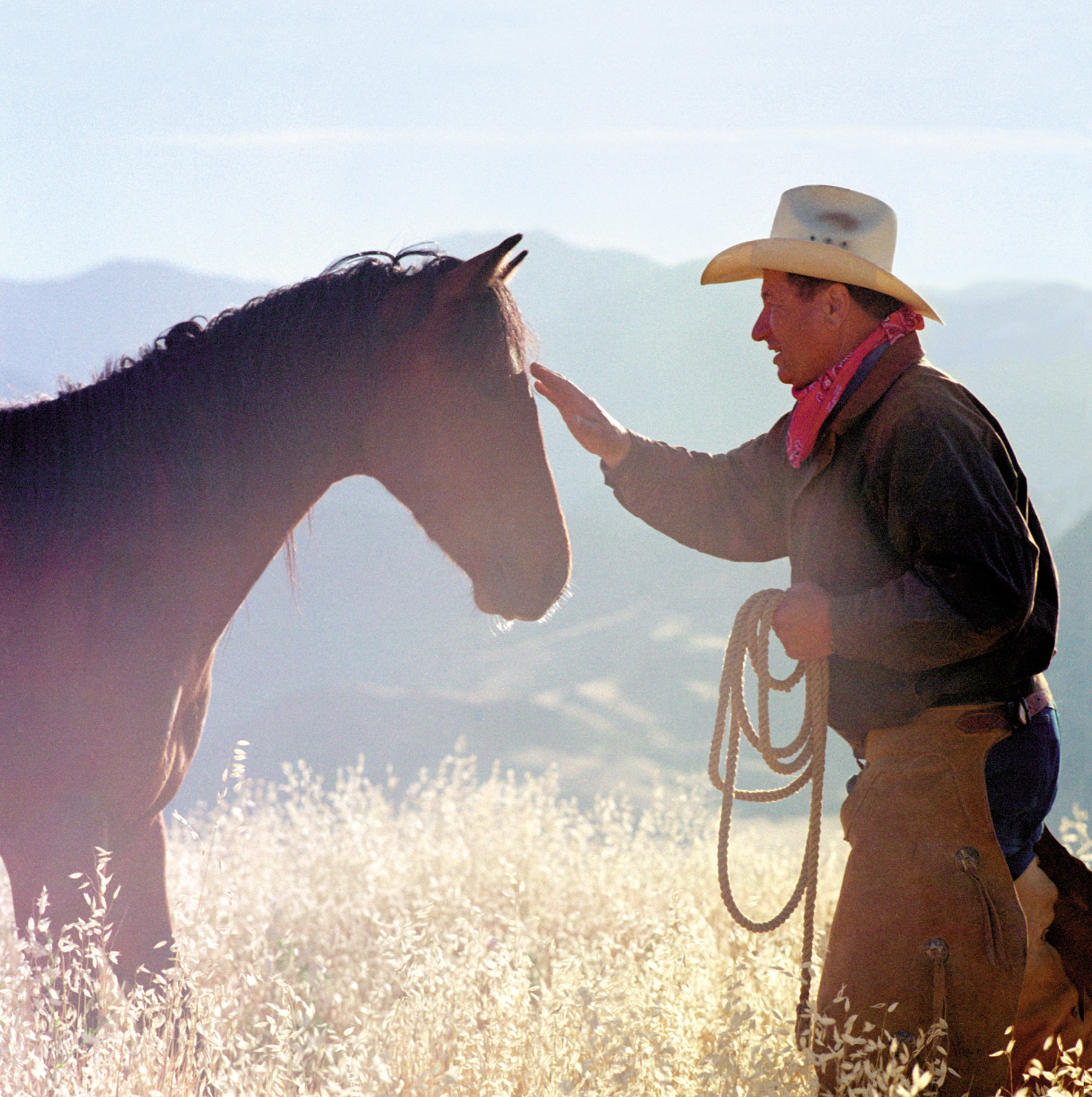
On July 31, pioneering natural horseman, author, and cowboy Monty Roberts passed away at his home in Solvang, California, due to complications from an autoimmune disease. He was 91 years old.
Born in 1935 in Salinas, California, Roberts’ father was a horse trainer and his mother taught riding lessons. After learning to ride and rope by the age of four, Roberts went on to double as a child rider in Hollywood films for actors including Mickey Rooney and Elizabeth Taylor in National Velvet.
Though he won numerous rodeo championships as a child, and later as a member of the California Polytechnic State University, San Luis Obispo college rodeo team, Roberts had early doubts about the harsh, sometimes violent methods employed by his trainer-father and his contemporaries while breaking horses.
At the age of seven, according to his autobiography, The Man Who Listens to Horses, Roberts attempted to show his father the work he’d done starting a young horse with gentler methods. In response, his father beat him with a chain so badly he needed to be hospitalized, telling him, “What the hell am I raising here?”
Undeterred, Roberts was sent to Nevada at age 13, where he had the opportunity to observe wild horses during a round-up for the Salinas Rodeo Association’s Wild Horse Race. By studying the horses’ body language while interacting with one another—how they turned their bodies and heads, for example; or how they moved their mouths and flicked their ears to show relaxation, annoyance, fear, or affection—Roberts began laying the groundwork for his own join-up methodology and a career that would span eight decades.
This week, Roberts’ daughter Debbie Roberts Loucks announced her father’s passing on Instagram, writing:
“He dedicated his life to changing the way people understand and work with horses. His mission reached far beyond horsemanship. He believed that true leadership is built on communication, patience, empathy, and respect; lessons that have touched the lives of countless people around the world.”
One of those people, of course, was none other than Queen Elizabeth II, who in the late 1980s stumbled across a racing magazine feature about a California cowboy who used kinder, gentler methods to break horses. She decided to seek the horseman out, and a connection was eventually made through Roberts’ neighbor, John Bowles, in Santa Barbara.
“[Bowles played] jokes on people all the time,” Roberts recalled to Horse Network in 2022. “He called me on the phone and he said, ‘Morning, [Sir John Millar] is here, and [we] want to talk to you because the Queen would like to see your work.’
“I said, ‘Well, John, I’m easy to find,’” the laconic Roberts, said, noting that he lived just six miles down the road. “[Later], I went to the guest room window, and watched a limousine Mercedes show up in the front door. John [Bowles] is 6’6”, and he got out the [one] side, and this little guy [Sir John Millar], 5’3”, got out on the [other] side, with a tweed suit, and a white mustache, and a hat that was from England.
“[I thought], He went right to central casting and got this guy!”
Determined to play it straight, Roberts gave the men a tour of his Santa Ynez Valley farm. Then, he introduced Sir John Millar to his system.
After watching a few previously untrained thoroughbreds have big breakthroughs with Roberts in real-time, Millar had seen enough. He informed the two men that the Queen would want to see all this for herself, and a date was set for Roberts to visit the U.K. in April of the following year.
As the story goes, upon his arrival at Windsor Castle, Roberts found more than 20 untrained horses belonging to the Queen Mother awaiting him in the fields outside the castle. When the training sessions began two days later, the soundproof glass gallery in the royal riding hall prevented Roberts from hearing what was being said throughout his session—although he knew the Royals were watching.
When the day ended, the Queen Mother came down from the gallery. “The tears were streaming down her face, and she said, ‘That’s the most beautiful thing I’ve ever seen,’” Roberts recounted.
Queen Elizabeth II was equally impressed, arranging a tour for the cowboy on a month-long journey around the U.K., where Roberts was introduced to nearly 100 horses that needed backing and training. “[The Queen] didn’t know my concepts, so that was a surprise to her. But she traveled through the younger part of her life believing that violence was not the answer to training horses,” Roberts explained.
“She was so pleased to find that [non-violence] was also the answer [to my methods], as opposed to just being a good thing to do.”
Eventually, Queen Elizabeth II requested—or rather, according to Roberts, commanded—that he write a book detailing his methods, released in 1997 as, The Man Who Listens to Horses. Their friendship continued for many years after through more than 200 phone calls and numerous visits across the pond.
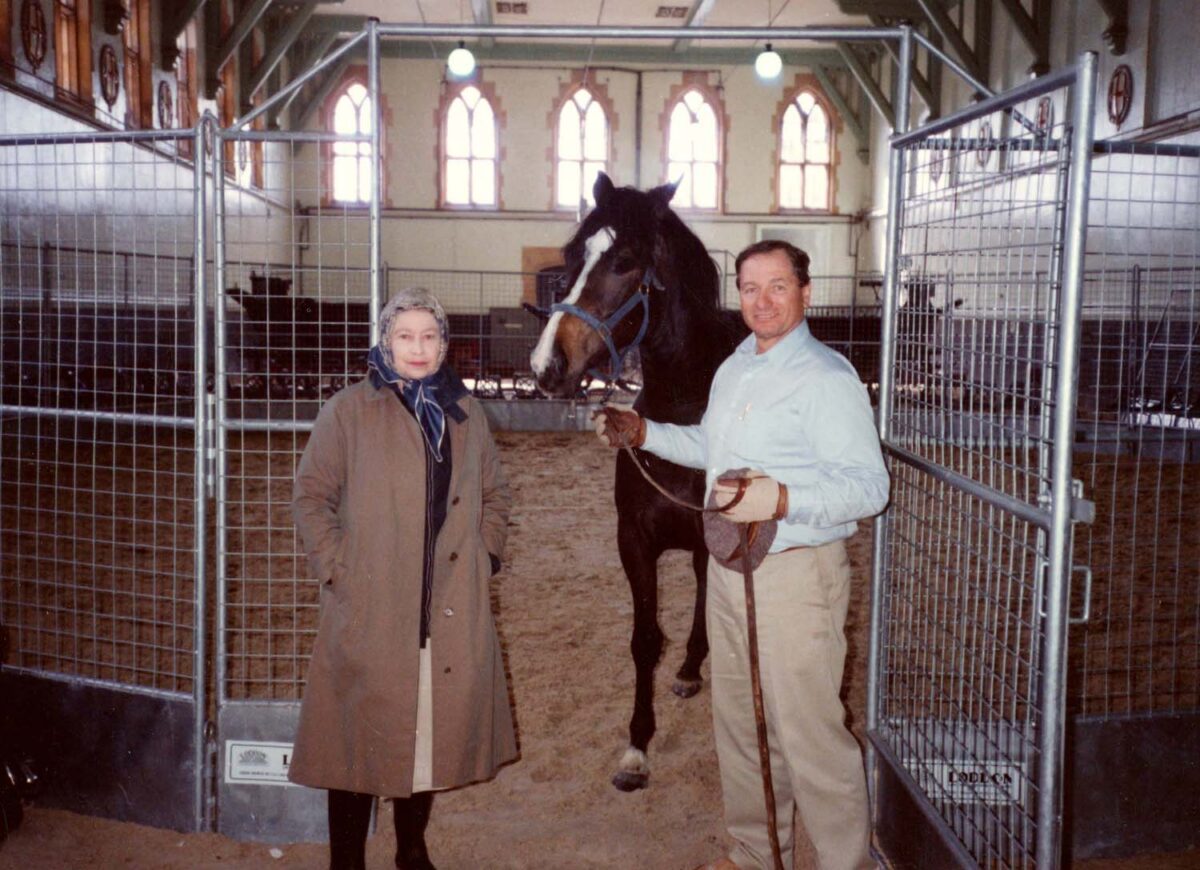
The Queen’s confidence in Roberts inspired him to travel the world, sharing his work, backing, and training ‘problem’ horses. Among them was the famous racehorse, Lomitas, owned by the Jacobs family of Gestüt Fährhof stud racing farm in Germany, who had been all but banned from the track due to dangerous antics.
With Roberts’ retraining, Lomitas went on to win Horse of the Year, and later sired three generations of offspring that, according to Roberts, earned more than $50 million in winnings.
Roberts also worked with polo legend Adolfo Cambiaso, helping to revolutionize how polo ponies in Argentina were backed and trained. Prior to his work with Cambiaso, Roberts said, the sport had staggeringly high fatality rates among ponies in the early phase of their careers.
For the majority of his life, Roberts was on the road as many as 300 days a year, crisscrossing North America and beyond to put on clinics and live demonstrations. He continued to train and share his methodology well into his 80s.
Roberts was predeceased by his favorite horse, the American mustang Shy Boy, who died in March at the age of 33.
“While our hearts are broken, we also find comfort in knowing that [my father’s] legacy lives on,” Robert Loucks wrote in her tribute. “[Every] time someone chooses compassion over force, listens before asking, and seeks a better partnership with their horse.”