
 December 30, 2025
“Did you see the jump off in Mechelen?” I said to the riders, sitting down to lunch at my farm in Wellington.
I knew none of them had watched it, all being busy training and riding that morning. It was a chance for me to show off superior awareness of the goings-on in our sport, and greater dedication to it than they, who had spent the morning on the backs of field animals, and not in their beds watching a feed streamed in from Belgium.
“You know when you’re in a jump off,” I said haughtily to the riders, having never been in a jump off, “and you have the choice to go slow, a stroll around the park, in order to ensure a clear, or to go fast chancing a rail but grabbing the best time?”
I asked because that’s how the World Cup qualifier unfolded in Mechelen.
All he had to do was go clear.
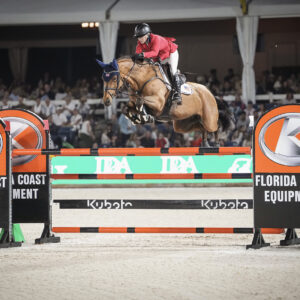
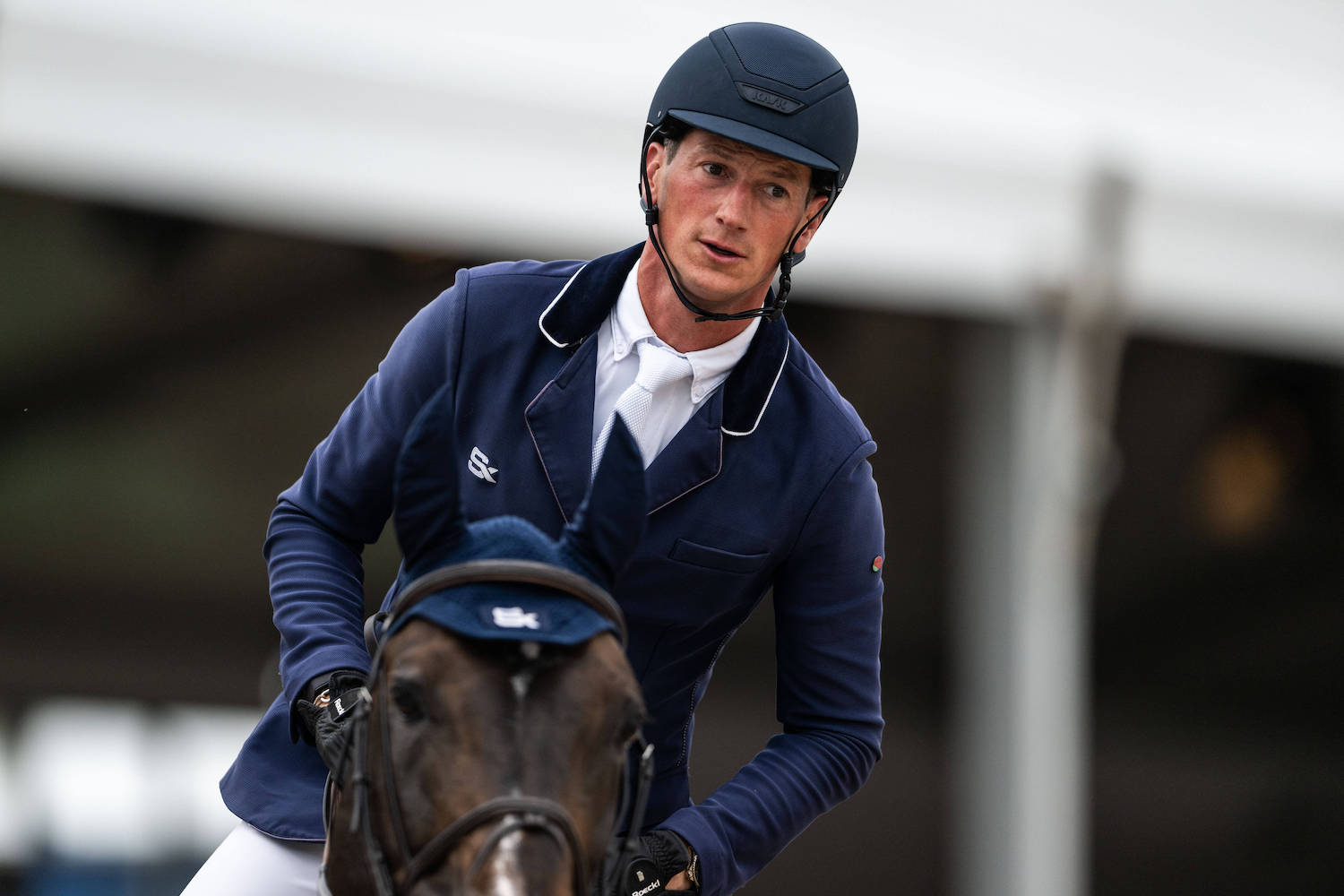
Daniel Deusser, nickname Double D, former child BMX racer, Olympian, World Cup Final and Aachen Grand Prix winner, was last to go in the jump off.
There were only five in it. And all four before him had managed to knock a rail.
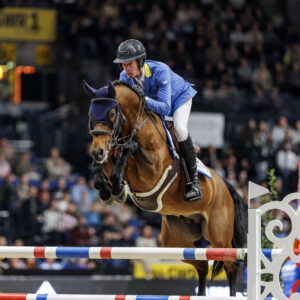
The first rider to go, Marcus Westergren of Sweden, had no choice but to chance it all blitzing around the jump off course. It was a fast time and a laudable performance on a less experienced horse, 11-year-old stallion Airco de l’Espirit Z, but in trying to set a fast first-to-go time, he knocked a rail.
Gilles Thomas, 5th in the world, was next with his 9-year-old Emerald mare, Qalista DN. He also went for speed and tight inside turns, improving on Westergren’s performance time-wise, but equaling him in faults.
Third to go was Patrick Stühlmeyer on a Gestüt Lewtiz owned-and-bred stallion Baloutaire PS. He took it slower, going for the clear, and he knocked a rail. He slid into third place behind Thomas and Westergren.
Fourth was William Greve on the glorious stallion Grandorado TN NOP. He took it even slower, nearly a stroll around my metaphorical park, but still! A rail.
I’ve never been to Mechelen, though I’m told it’s a beautiful Christmas-themed show. Electric Christmas trees hung from the overhead rafters of the arena in a festive display.
The ring I saw on the livestream was long and unexpectedly narrow. A course set for an agile and nimble horse. The course designer had blanketed the course with that scariest-of-all-scary jumps: the delicate vertical. In the first round, he started with one, added a particularly nasty one at jump 3 (skinny as well), another at 8, a horrible plank-topped thing at 11, and made the penultimate obstacle a triple when the horses were nice and tired.
The course resulted in five retirements, a slew of four-faulters, and only five clears.
The last clear was Deusser on Otello de Guldenboom, sired by former ride of Deusser’s, Tobago Z, and winner of the 2025 Rolex Grand Prix Ville de La Baule, that most glorious of Grands Prix at the most glorious of horse shows.
And he made it seem easy in that first round, the way Deusser has a tendency to do. He appears to be going slow, when really he’s going fast. He makes it look casual, when really he’s out for the kill.
That’s why we all knew the ending to this one, even before it came.
And that’s why, when Deusser entered the ring and went neither fast nor slow but something in-between, and knocked a rail like everyone else, and slid into fourth place just off the podium, Gilles Thomas and team jumped all over themselves in sweet surprise. And I said what I said at lunch, while everyone ate their ham sandwiches with camembert and roasted asparagus soup.
“It was so stupid! You have to choose to go either fast or slow, not something in between—”
“That’s Deusser for you,” said one, laughing at me. “He doesn’t know what he’s doing.”
“Yeah, he needs more experience, he really needs to up his game,” said another, laughing at me.
The third said nothing, judiciously sparing me and enjoying her sandwich, but still laughing.
“He might be a great rider,” I continued, digging my hole of humiliation deeper, “But he’s a sh-t strategist.”
I had grown irate at the mockery. Two of these arrogant riders had been to the Olympics and the third should have been.
I wondered if they knew my personal motto. I had formed it when I was walking down the street in that famous writing town, Iowa City, and a car had almost hit me. I remember standing in the street, watching the car grow smaller in the distance, and waving my pen above my head (I had it in hand, so dedicated was I to craft in those days), and shouting after it: “If the pen is indeed mightier than the sword, you’ve got a problem!”
I never did write whatever-was-gonna-vanquish that driver. But I have written this article. Consider it a warning.