
 March 4, 2026
Mackenzie Drazan Cook is an amateur equestrian and the wife of American Olympic show jumper Karl Cook. After losing her teenage sister to suicide, Mackenzie founded the nonprofit TEAM and the digital platform MiResource. This is her story.
Trigger Warning: This story contains discussions of suicide and disordered eating.
Life with my sister, Shelby, was hilarious. She was genuinely funny, the kind of kid who could make you laugh without ever making anyone else the target. She had this warm, kind humor that pulled people in.
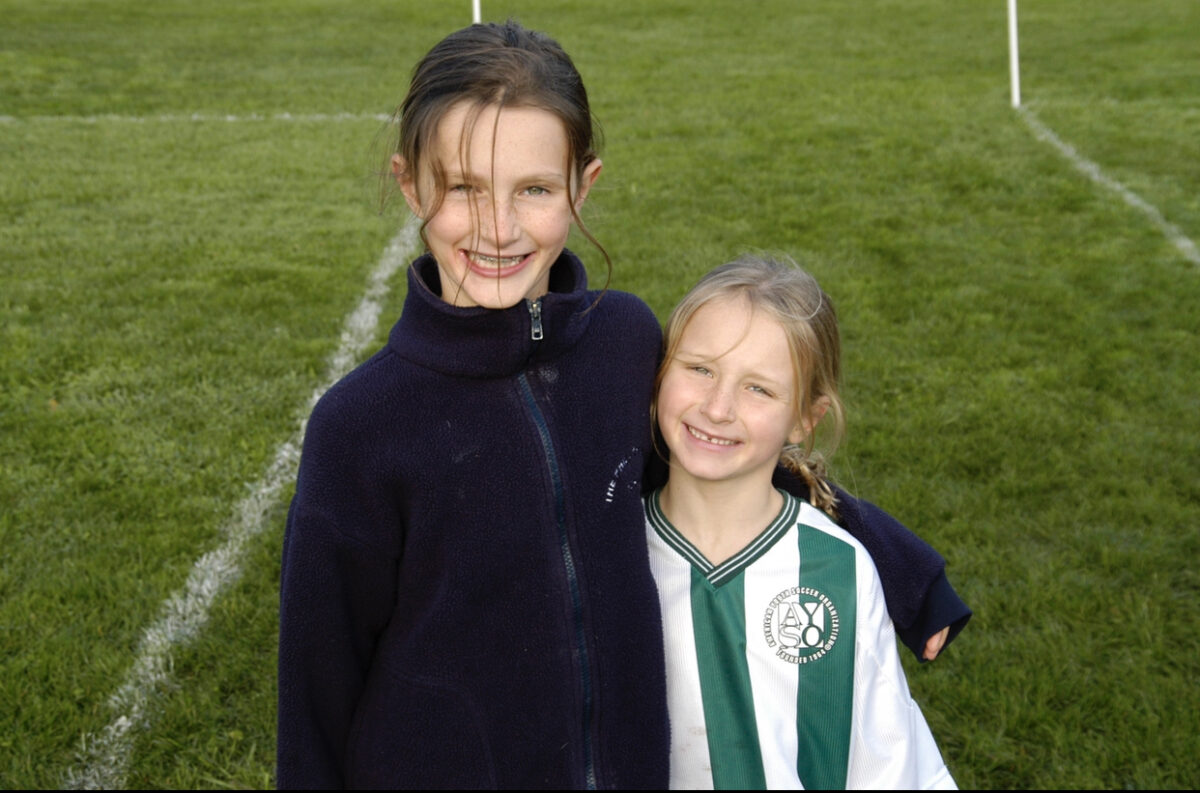
We were two years apart and constantly doing something. We built makeshift ziplines, set up obstacle courses, and turned our house into a gathering spot. There were always kids around because Shelby made everything more fun.
And then there were the horses.
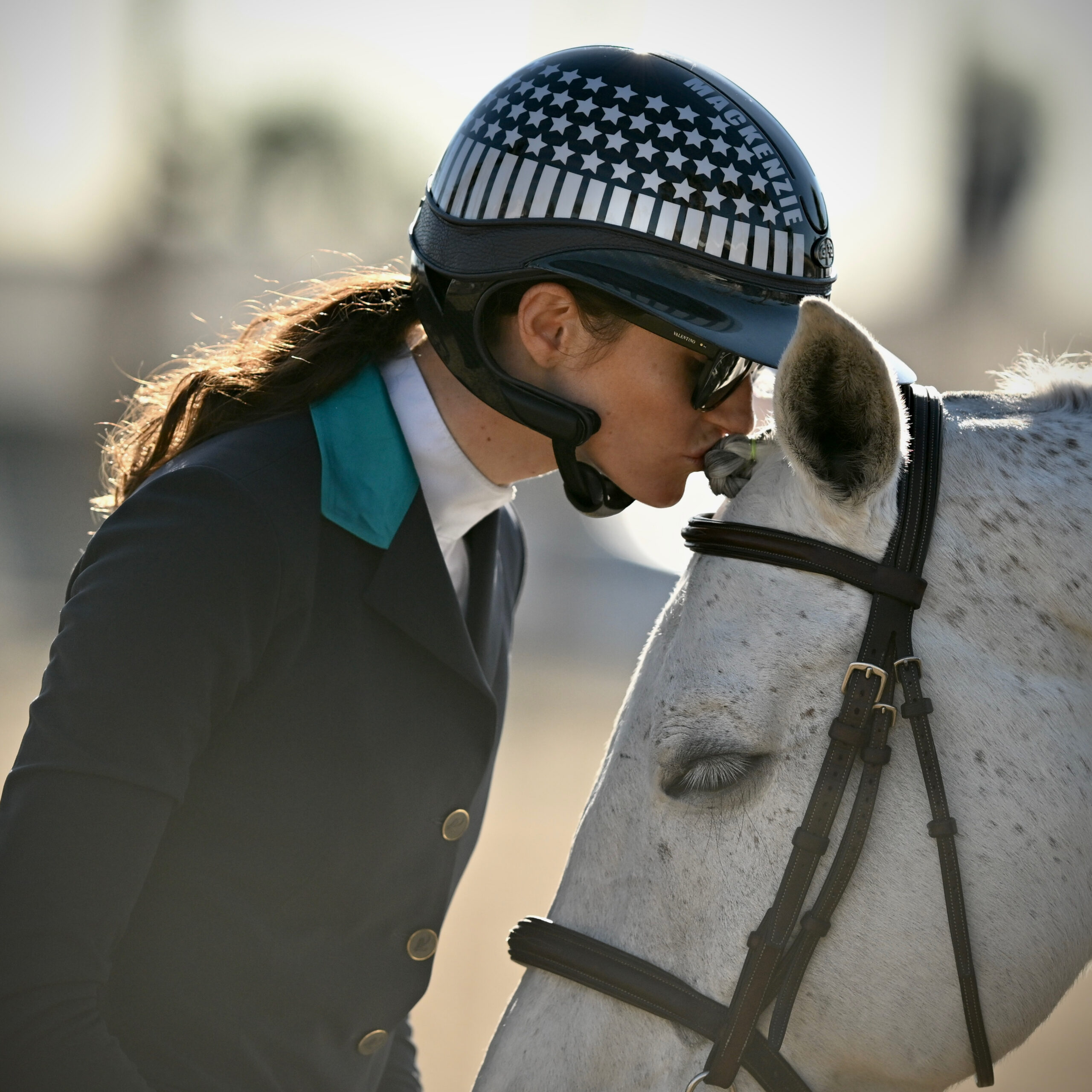
Our childhood was horse-centric from the start. Our mom grew up riding on a farm in Colorado. I was on a pony by age one. Shelby and I grew up going to the barn together, riding, learning, competing, and living for that world. If we weren’t at the barn, we were at home with our Breyer horses or jumping “people jumps” in the yard.
We were both driven and competitive, but it was a loving rivalry. We had different strengths. Shelby was funnier than I was, and smarter. She was also a better rider. I was shy, while Shelby was naturally outgoing.



As we got older, our paths diverged. I started modeling around 14 or 15, and for a while school and travel took over my life. Shelby had no interest in any of that.
She became serious about soccer in addition to riding. She was also a beautiful writer. She wrote Harry Potter fan fiction and built an online following early, back before it was common to be “known” on the internet. At the time, she got bullied for it. Today, she probably would have been celebrated.
From the outside, Shelby looked like a kid who was thriving. She had straight A’s. Lots of friends. She was talented in sports. Warm, funny, and socially connected. That image matters, because it shaped how people responded when things started to change.
By her early teen years, she was not thriving.
At first, the changes were subtle. The activities that used to bring her real joy started to feel flat. She stopped wanting to spend time with friends. She would still go if our parents pushed her, but you could tell she was just going through the motions. The energy that made her Shelby was still there, but it was harder to reach.
In the early stages, my parents faced a question that so many families face: is this a hard teenage stretch, or is this something that requires professional help?
It’s an impossible question when you’re in it.
As a support person, you’re balancing love and vigilance. You don’t want to overreact. You don’t want to underreact. You’re trying to interpret a person you know better than anyone, while also realizing they may be becoming someone you don’t recognize.
Over time, it became clear that Shelby was struggling in a way that was not “just being a teenager.” She became deeply depressed. She developed an eating disorder.
We were a medical family. Many people on my dad’s side are doctors. We were well connected in the healthcare system, and I assumed that would mean we could figure it out quickly.
We couldn’t.
Mental healthcare does not behave like the rest of medicine. It’s fragmented. It’s harder to access. It’s harder to evaluate. And it’s hard to know who is actually equipped to help, even when you’re surrounded by smart, capable people who are trying their best.
We started where many families start, with Shelby’s pediatrician. But even from the beginning, it felt like we were always behind. We were learning a new system while Shelby’s needs were getting more urgent. We were trying to make good decisions with incomplete information, under immense pressure.
When she was 17, Shelby took her own life.
****
After Shelby died, I started paying attention to how we talk about mental health. We use “mental wellness” and “mental health” interchangeably now, and I understand why. We’re trying to reduce stigma, and people want language that feels accessible.
But those terms cover very different realities.
A lot of people will interact with therapy the way they interact with physical therapy or short-term medical care. You hit a rough patch. You learn skills. You get support. Sometimes medication is part of it for a period of time. For many people, therapy is not a life sentence. It’s a tool. You use it, and you move forward stronger.
Shelby’s case was different. Even among clinically diagnosable conditions, hers was complicated. She had treatment-resistant depression and an eating disorder. Near the end, there were questions about whether she may have had a form of bipolar disorder and might have been misdiagnosed earlier.
She tried. She went to the appointments. She took what was prescribed. Her care team tried different medications. But she never got meaningful relief. The intensity of what she lived with was hard to comprehend if you haven’t been close to it. It wasn’t just sadness. It was a level of suffering that no one should have to carry.
And then, as a support person, a second problem hits: even when you love someone deeply, it can be hard to know what to do in the day-to-day.
I struggled most with the eating disorder side of it. In my 19-year-old brain, it looked like a simple equation: food in equals survival. I wanted to lock her in a room and feed her. That sounds extreme, and it was, but it’s also honest. When someone you love is deteriorating, your mind grabs for anything that feels concrete and solvable.
What I didn’t understand then was that loving someone through severe mental illness is often a loop of love, fear, frustration, and helplessness. You’re trying. You’re exhausted. You say the wrong thing. You overcorrect. You blame yourself. You start monitoring every facial expression and every pause, trying to read the future.
I remember one day lying in bed with Shelby feeling completely hopeless. I told her, “I love you so much, and I have no idea how to help you.”
And she said, “You don’t have to know. Just you laying here with me and telling me that you love me, that’s what I need.”
It was so simple. I wish I had understood earlier that being a support person doesn’t mean being a clinician. It means being present. It means keeping the person connected to life and letting professionals do the clinical work.
****
Overcoming trauma is an exercise in resilience, and I think that’s often misunderstood. Some people are naturally more resilient than others. But resilience is also a skill. You can build it over time. You can learn healthier responses to stress. You can learn how to keep yourself steady when someone you love is not steady.
After Shelby’s death, I was diagnosed with PTSD. At first, I tried to minimize what I was feeling. I had a narrow idea of what “counts” as trauma. I thought: I didn’t go to war, so how can I have PTSD?
What I eventually learned is that your brain doesn’t care whether your trauma fits someone else’s ranking system. If you’re in pain, it’s worth addressing. And when you do address it, you can come out the other side stronger.
I call that the Cockroach Club: that feeling that you survived something you didn’t think you could survive. It doesn’t make you invincible. It makes you more durable. It changes what you believe you can handle.
People sometimes think asking for help is weakness, or embarrassing, or selfish. I see it as the opposite. Getting help is a way of taking responsibility for your life and your relationships. It’s how you keep showing up for the people you love without breaking.
It’s like the airplane safety rule: put your own oxygen mask on first. You cannot support anyone well if you’re depleted or drowning. My mom started therapy right away. In hindsight, I respect her for that more than I can express.
I wish I had also been in therapy while Shelby was alive. I think I would have been a better support person if I’d had a professional place to process what was happening. I was the “big sister,” but I was only 17 when Shelby’s illness peaked and 19 when she died. I wasn’t a parent. I wasn’t really an adult. And my parents were trying to protect Shelby’s privacy, which meant I didn’t feel like I could talk to many people about what was going on.
But humans don’t get through hard things alone. We’re social animals. We need support and community, especially in the moments when everything feels unsafe.
For me, Karl (my now husband) was an important outlet. We have a five-year age gap and we didn’t share the same friend group—he gave me a place to talk without worrying about what would ripple back into our world.
And I had the horses. Riding was an escape when my emotions were too big. It was a place where my body could do something honest and demanding, even when my brain felt stuck. I don’t romanticize that fact, but I do credit it. Horses kept me connected to the present.

****
After Shelby died, I replayed everything. What did we miss? What should we have done differently? How do families do this “right”?
Over time, I landed on two conclusions.
First: if you’re supporting someone you love, your job is to love them, encourage professional care, and stay with them through that process. It is not your job to fix them. That’s what clinicians are for.
Second: even after someone makes the brave decision to get help, finding the right help can be brutal.
People talk about “getting help” like it’s one step. In reality, it’s at least two mountains.
Mountain one is the decision: “I need help.” That is a big, brave moment.
Mountain two is access: figuring out who to call, who is qualified, who is taking new clients, who takes your insurance, who is a good fit, and how to get an appointment without spending weeks in voicemail loops. Even if you’re well-connected medically, the mental health system can make you feel powerless very fast.
That’s the gap I set out to close.
Shelby died in October of 2014. In August of 2015, I launched TEAM, a nonprofit that provides free resources for people trying to support someone they love through anxiety, addiction, self-harm, bipolar disorder, and more. TEAM is meant to meet you in the moment when you’re scared and you don’t know what to say. We offer plain, practical guides: what a condition can look like, how treatment works, and how to show up without making things worse.
But information is only half the equation. The other half is access.
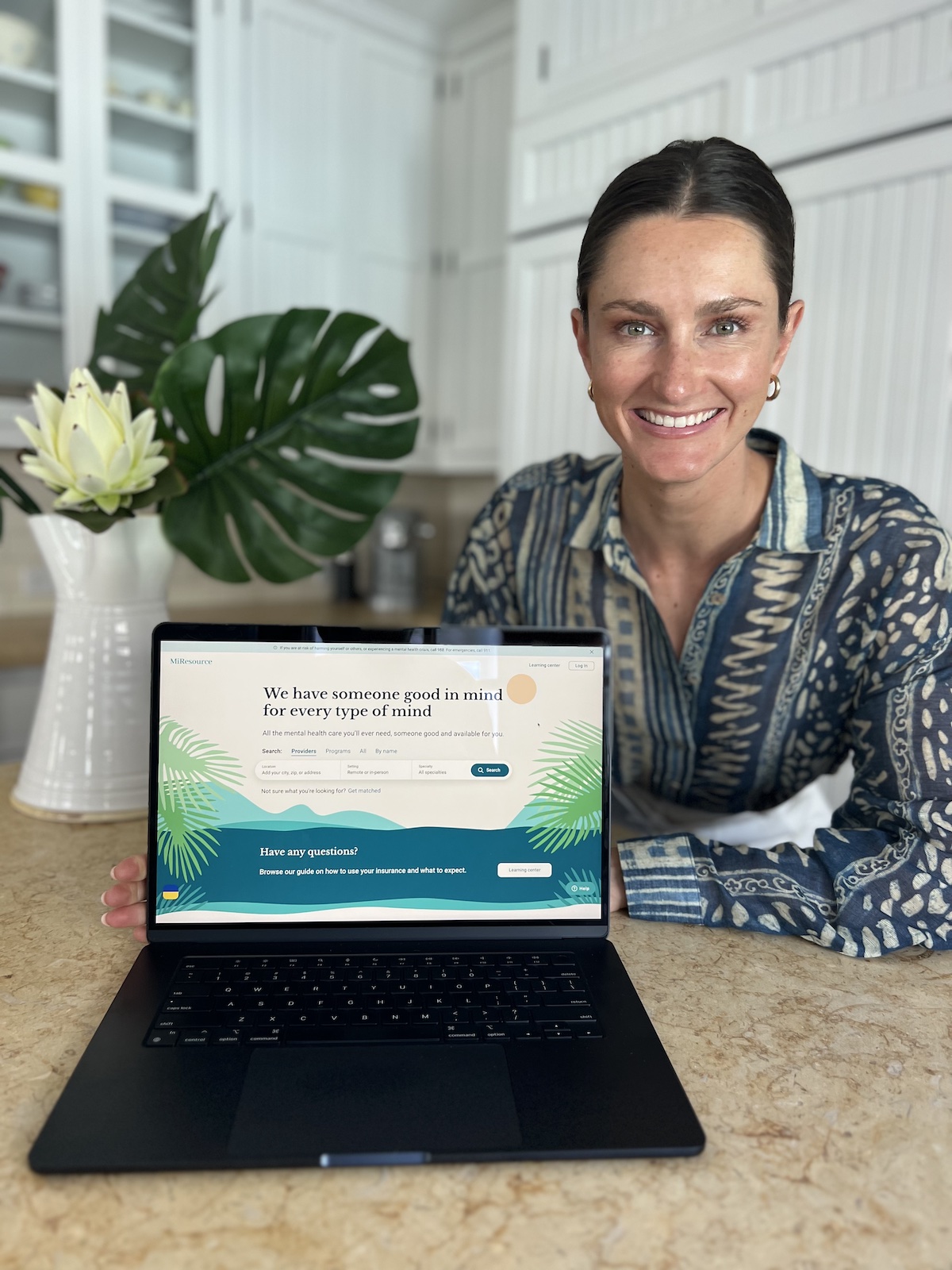
That’s why I started MiResource in 2017: to make it easier to connect people to appropriate, high-quality care once they are ready. MiResource helps families and care seekers find clinicians who match clinical needs, accept insurance, and are actually taking new clients. We work with a vetted network shaped by the referral patterns of hundreds of case managers across university counseling centers nationwide.
This work is not abstract for me. It is personal. I know what it’s like to be terrified, determined, and exhausted, and still not know which door to knock on next. I know what it’s like to watch a family do everything they can and still feel like the system is winning.
Building TEAM and MiResource was part grief, part focus, part survival. Over time, it became something else too: a way to reduce the odds that another family ends up where mine did.
It has been more than ten years since Shelby died. I still miss her. I still think about what might have been possible if the system were easier to navigate, and if support people had clearer tools earlier.
I also know this: deciding to get care is brave, and for many people it’s not forever. Therapy can be a tool you pick up and put down as your life changes. Getting help can be the start of becoming more fully yourself again.
If we can make the system easier to use, more people will take that first step, and more people will be able to stay alive long enough for it to help.
MiResource.com is a free, nationwide platform that can help you find professional mental health care that meets all of your needs. To learn more about how you can support someone who is struggling with their mental health, visit myteam.org.
If you or someone you know is in suicidal crisis or emotional distress, call or text 988 to reach the Suicide and Crisis Lifeline in the United States. It is free, confidential, and available 24/7.
This story is brought to you by Three Mares, a collective of equestrian brands that donates 100 percent of its profits to organizations working to make equestrian sport more accessible, safe, and inclusive for all athletes.